E-Paper



UP polls: Turnout in GB Nagar dips, Ghaziabad bottom of Phase 1 pile
Polling was held on Thursday in 58 assembly seats across 11 districts of western Uttar Pradesh in the first phase. The counting of votes will be on March 10.

 Prefer HTon Google


When polling under the first phase of the seven-phase Uttar Pradesh assembly elections ended on Thursday, Gautam Budh Nagar recorded a voter turnout of 57.07%, marginally lower than 58.05% in the 2017 elections, even as Ghaziabad district brought up the bottom of the pile among 11 districts that voted on the day.
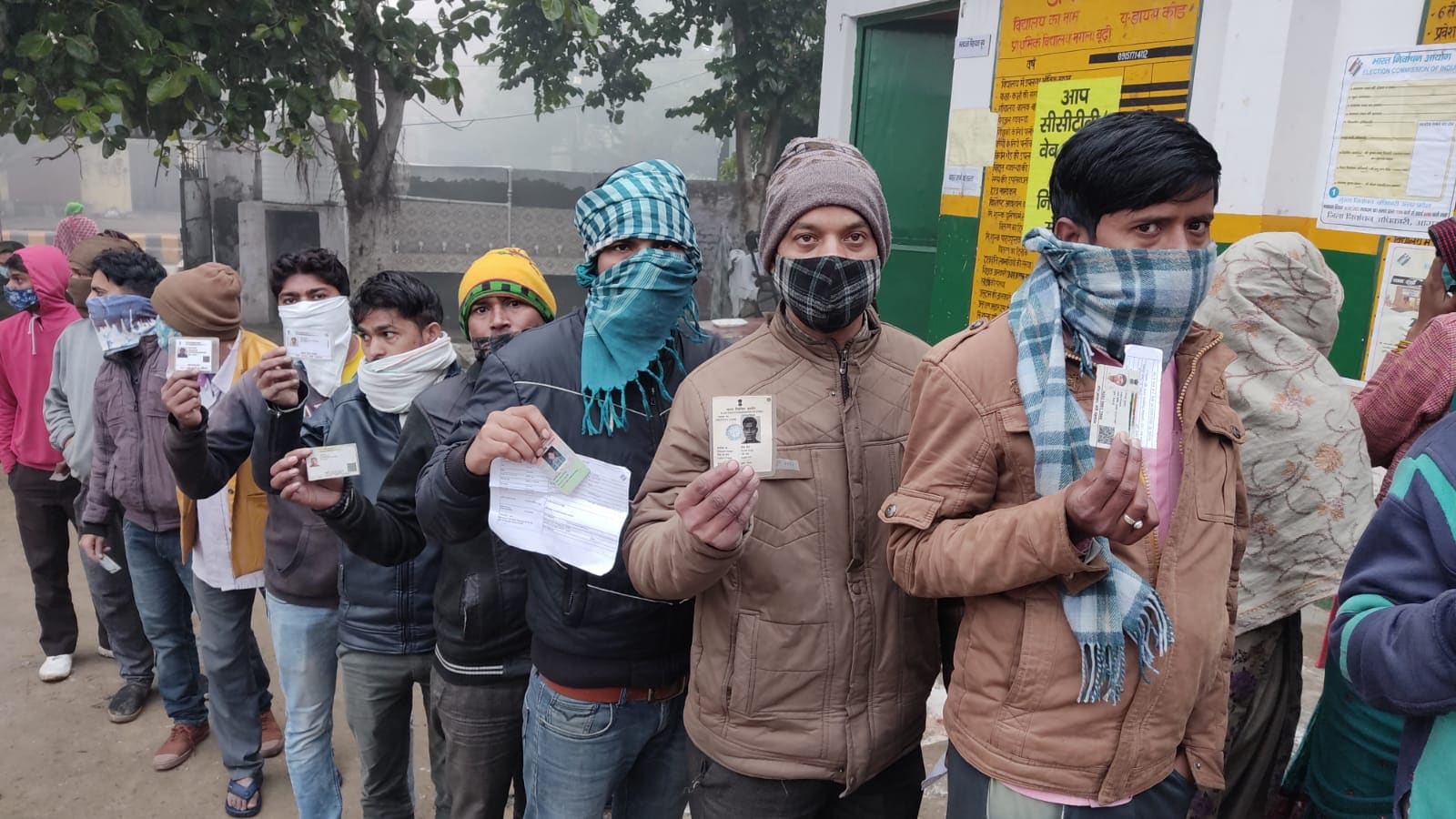
But it was Noida which bucked the trend of the past few elections to register a voter turnout of above 50% -- 50.1% to be exact -- for the first time in over a decade.
Catch all latest updates related to assembly elections here
Polling was held on Thursday in 58 assembly seats across 11 districts of western Uttar Pradesh in the first phase. The counting of votes will be on March 10.
In Gautam Budh Nagar, a district with nearly 1.67 million voters, polling was held across 1,840 polling booths in 566 centres, including 250 model polling booths. According to district election officials, there were 755 polling booths in Noida, 665 in Dadri and 420 in Jewar. There are 39 candidates in the fray in the district -- 12 in Jewar, 13 in Noida and 14 in Dadri.
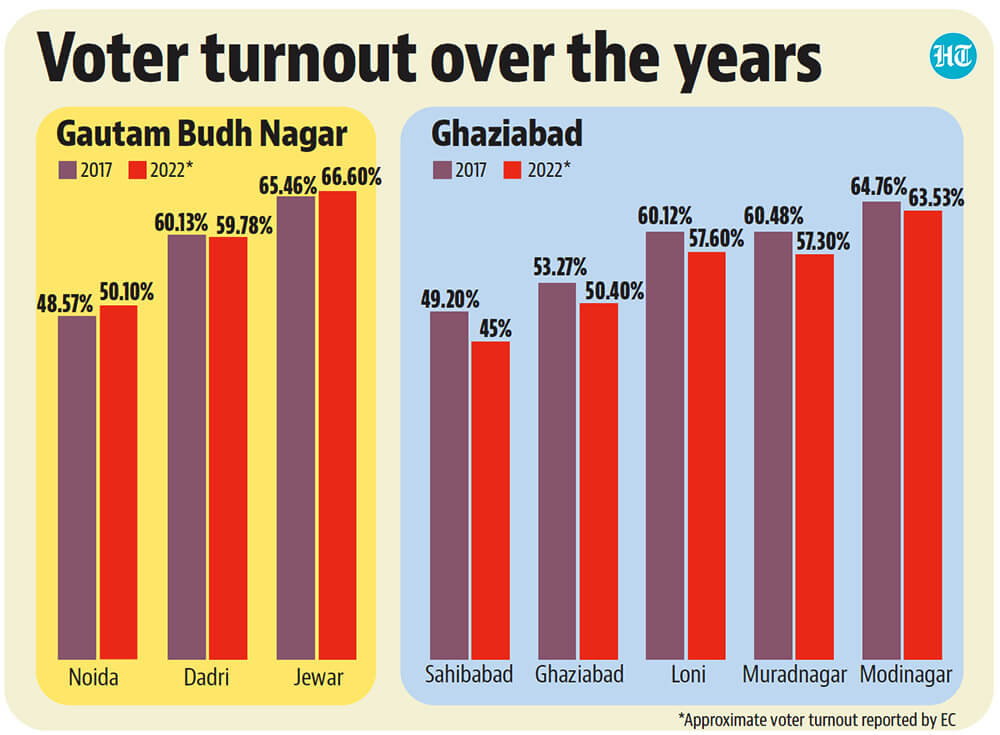
As in the past, Jewar recorded the highest voter turnout in the district at 66.6%. In the 2017 elections, too, the assembly segment had topped the voter turnout with a polling percentage of 65.46.
Noida at 50.1%, saw a marginal rise in the polling percentage from the last elections when it was 48.57%.
At 59.78%, Dadri’s voter turnout was lower than that of the 2017 elections when it was 60.13%.
In Noida, the polling percentage crossed 50% after over a decade. In the past two assembly elections, the polling was 48.57% (in 2017) and 48.98% (in 2012). Before that, the Noida assembly segment was part of Ghaziabad and Bulandshahr districts. Officials said increased polling may be because of the efforts undertaken by the administration to create voter awareness.
Also Read | UP polls begin with first-class turnout
“We undertook several measures, both online and offline, to ensure that the polling percentage increased this time. There were more model polling booths this year and we also ensured that all booths had basic facilities such as clean drinking water and comfortable waiting areas. We held several webinars, and also circulated posters and messages from the DM’s office among residents,” said Shailendra Bahadur Singh, nodal officer for the systematic voters’ education and electoral participation (SVEEP) programme in Noida.
Meanwhile, in Dadri, the total voter turnout remained lower than in the previous election.
According to the provisional figures released by the Election Commission of India until 9pm, Ghaziabad recorded a voter turnout of 53.61%. The highest turnout--69.42%--was recorded in Shamli.
ECI’s provisional figures also indicated that Sahibabad constituency in Ghaziabad recorded the lowest voter turnout--45%-- among all 58 constituencies in the 11 districts on Thursday.
Of Ghaziabad’s remaining constituencies, Loni recorded a 61.87% voter turnout, Muradnagar 57.30%, Ghaziabad 50.40% and Modinagar 63.53%.
The turnout in each of these constituencies is lower than during the last election in 2012. Sahibabad recorded 49.20% voting turnout in 2012, Ghaziabad 53.27%, Loni 60.12%, Muradnagar 60.48% during the 2012 assembly election.