
 E-Paper



Gurugram’s fighting spirit has persisted for centuries
Villages in then Gurgaon district, and the city itself, played a significant role in the 1857 revolt. There are records of persons from the city serving in the first world war.


It is a good time to recall the freedom fighters and military martyrs of Gurugram soon after our celebrations of Independence Day. Villages in Gurugram district and the town itself played a significant role in the First War of Independence in 1857. Also, there are several records showing the active involvement of army men from Gurugram during World War I.
In May 1857, when freedom fighters from Meerut entered Delhi, the post of collector and the district magistrate of then Gurgaon was held by W. Ford of the Bengal Civil Service. Considering its proximity to Delhi, Gurgaon was an area that required special control by the British in the circumstances. However, there was active outcry in Gurgaon area during this period.
To quote historian KC Yadav from his book ‘Roll of Honour: Haryana’s Martyrs of 1857’ “the people of Gurgaon rose up (13 May, 1857), and destroyed all vestiges of the British Rule from their district. The flames of rebellion flared up in the most virulent form in Mewat, Ahirwal and Brija regions under the inspiring leadership of Sadruddin, Rao Tula Ram and Raja Nahar Singh respectively. The people of Farrukhnagar were led by their Nawab Ahmed Ali Khan.”
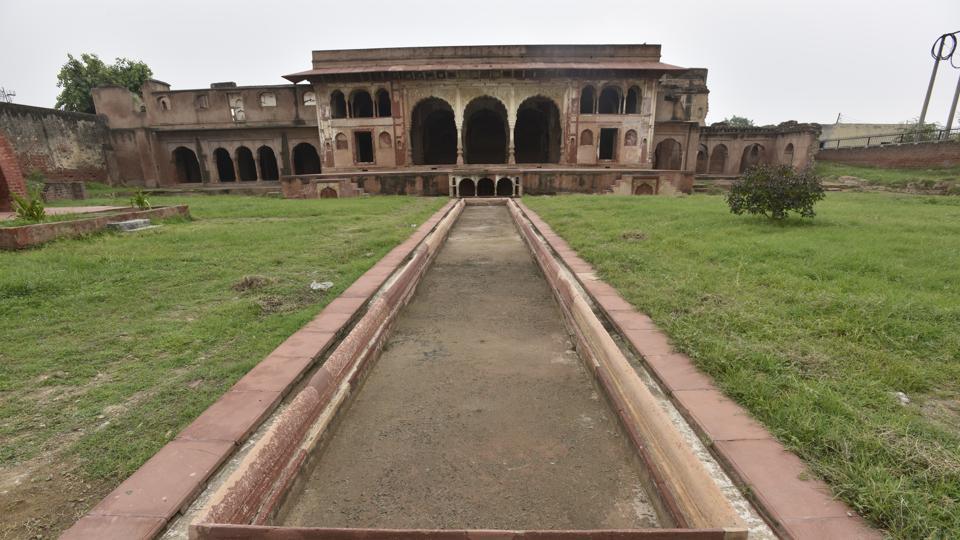
The commemoration for the Nawab in Farrukhnagar is present in the plaque placed later by the Haryana government within the Sheesh Mahal complex. Yadav’s book also records that Gurgaon saw 474 persons killed, among which 328 could be identified and notes the destruction of nine villages in the district. After an exhaustive research of India archives, Punjab archives and Haryana archives, he has listed 37 martyrs from Gurgaon district, among which four were hanged by the British, while the rest were shot dead. These martyrs were from the Rajput, Bania, Saini, Meo and Muslim communities.
The impact of this involvement in 1857 weighed heavily on Gurgaon as the British decided to stop further development in the area at that time. While the first Gurgaon District Gazetteer printed in 1883-84 mentions, “The station of Gurgaon became the administrative headquarters of the District, consists of public offices, the dwellings of Sadar Bazar and the settlement of Jacombpura, which was laid out by a former Deputy Commissioner, Mr. Jacomb, in 1861, for the accommodation of government servants”. It further mentions that “at the turn of twentieth century Gurgaon continued to be lacking in terms of developments as the British government were not in the favour of its development after 1857”.
It is interesting to again see the contribution of people of Gurugram (earlier Gurgaon) in the British military during World War I and the changing strategy of the British after that. This policy of ignoring Gurgaon district was modified after World War I, in which people of the district contributed substantially with manpower and money. Dr. Jagdish Yadav, another well-known historian of the region mentions about the martyrs of Haryana in World War I in his research work. In the district-wise enrolment of persons during the war period 1914-18, he mentions that Gurgaon district had a total of 124,290 male recruits between ages 18-35 years, 12,481 soldiers in the army as recorded on August 4, 1914, 17,700 army persons from Gurgaon recruited during the war, with 30,181 as the total number of soldiers during war. There were 314 fatal causalities from the army recruits of Gurgaon district during World War I. Among the five institutions involved in recruitment from Haryana, two were from Gurgaon, including Vernacular Middle School in Guryani (30 enlisted and 16 other recruits obtained) and the District Board High School (35 enlisted) in Gurgaon.
Post-World War I, Gurgaon saw more development, with the city also becoming a prominent grain market. The British also integrated Gurgaon into the Punjab Province where it served as district and tehsil headquarters until 1966 when it became part of Haryana.
Shikha Jain is state convenor, INTACH, Haryana Chapter, and member of the Heritage Committees under the ministries of culture and HRD. She is the co-editor of the book ‘Haryana: Cultural Heritage Guide’ and the director of DRONAH


