
 E-Paper



From battery waste to energy independence: India's critical minerals opportunity
This article is authored by Chetan Jain, senior vice president – business operations, LOHUM.

 Prefer HTon Google


India’s fast-growing electric vehicle (EV) and energy storage sectors offer a tremendous opportunity: transforming battery waste into a strategic resource to reduce dependence on imported critical minerals. Despite having a vast domestic market, India still heavily relies on imports—especially from China—for key battery materials like lithium, cobalt, and nickel. As demand for these metals surges toward 2030, India stands at a crucial crossroads to build a robust recycling ecosystem aligned with the National Critical Minerals Mission (NCMM), positioning itself for long-term energy security and sovereignty.
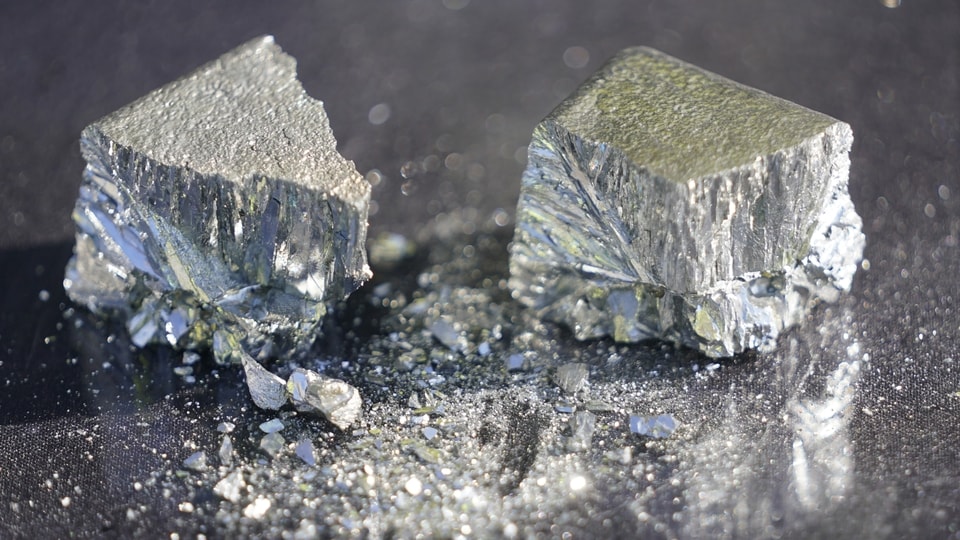
Critical minerals are essential to modern technologies—from EVs and smartphones to renewable energy and defence systems. But with global supply chains heavily dominated by China, India faces significant geopolitical risks. China’s control over mineral processing and its tightening export regulations have exposed vulnerabilities in India’s energy transition roadmap.
In response, India has adopted a comprehensive strategy covering 30 critical minerals: boosting domestic exploration, acquiring overseas resources, and ramping up recycling infrastructure. Backed by a ₹34,300 crore investment, the NCMM seeks to strengthen local supply chains, foster research and development (R&D), and establish strategic reserves both domestically and internationally.
Although India has large mineral reserves, only a fraction has been explored. This untapped potential offers a compelling opportunity for global partnerships and investments. India possesses reserves of critical minerals such as copper and potentially cobalt, and unlocking these in an efficient, sustainable manner could bolster the global supply chain.
To ensure recycled materials play a pivotal role, India has introduced policies like Extended Producer Responsibility (EPR) and the Battery Waste Management Rules (BWMR) 2022. These mandates require producers to meet escalating annual recycling targets for lithium-ion batteries, thereby reintegrating recovered metals into the production cycle.
India is witnessing a gradual shift from informal to formal battery recycling. According to BDO India, domestic recyclers could supply up to 48% of the country’s lithium-ion battery demand by 2030. This transition is powered by growing private investments and policy incentives, including tax exemptions on critical mineral imports and urban mining initiatives announced in the 2025 Union Budget. End-of-life batteries are a rich source of lithium, cobalt, and nickel—metals that are becoming increasingly scarce. Tapping into this resource pool is essential to narrowing the supply-demand gap and achieving energy transition targets.
As global demand for critical minerals is expected to hit $80 billion by 2040 (IEA), countries worldwide—including Japan, Canada, Australia, and EU members—are actively building resilient supply chains. India’s global alliances, such as the India-US Initiative on Critical and Emerging Technologies (iCET) and its partnership with Australia on critical minerals research (IACMRP), underscore the importance of international collaboration.
Interestingly, several minerals—like lithium, cobalt, nickel, and vanadium—are listed as critical by multiple major economies, reinforcing the need for collective recycling strategies and global coordination.
Despite promising initiatives, India faces several execution hurdles:
- Geopolitical Constraints: As more nations impose export controls, securing mineral assets abroad becomes more complex and time-consuming.
- Climate Finance Shortfalls: India and other developing nations called for $1 trillion in annual climate finance at COP29, but only $300 billion was pledged—starting 2035.
- Reverse Logistics Gaps: A large portion of India's informal waste sector remains outside formal collection systems. Innovative approaches like GST-linked digital tracking can help bring these players into the fold.
- Technological Lag: China’s edge in hydrometallurgy—an advanced, eco-friendly recycling process—poses a challenge. However, India is rapidly catching up through targeted investments in critical mineral technologies.
- Policy Bottlenecks: High GST (up to 18%) on battery scrap hampers recycler profitability. Reducing this to 5% could incentivise formal recycling.
India’s strategy includes short-, mid-, and long-term goals:
- By 2025-26: Scale artificial intelligence (AI)-based battery diagnostics to lower repurposing costs; implement EPR 2.0 with internet of things (IoT)-enabled waste tracking.
- By 2026-28: Establish large-scale lithium recycling hubs and launch a Critical Minerals Trading Platform.
- By 2030: Achieve high recycling rates, formalise reverse supply chains, and build a BRICS-led Mineral Security Framework.
Recycling battery waste could save India billions in imports, create substantial employment in urban mining, and cement its status as the recycling hub of the Global South. Public Sector Undertakings (PSUs) such as KABIL, ONGC Videsh, and Coal India are playing a critical role in acquiring overseas assets, while the NCMM’s funding drives domestic integration.
However, India’s funding still lags global benchmarks. The European Union (EU) has proposed a €10 billion fund, and the US has allocated $400 billion through the Inflation Reduction Act. Scaling India's commitment over time will be essential to strengthening recycling infrastructure, driving R&D in hydrometallurgy, and integrating informal workers through IoT-linked systems.
To unlock the full potential of battery recycling, India must overcome regulatory, technological, and financial hurdles while accelerating domestic capability building. A phased strategy—driven by AI, supported by global alliances, and backed by policy—can convert India’s battery waste burden into an economic and strategic asset.
With the right blend of vision, partnerships, and innovation, India can turn its critical minerals challenge into a sustainable competitive advantage—ensuring energy sovereignty and a resilient green-tech future.
This article is authored by Chetan Jain, senior vice president – business operations, LOHUM.


