
 E-Paper



France at a critical political crossroad
This article is authored by Perceval Gaillard, Member of Parliament, Nouveau Populaire Front, France.

 Prefer HTon Google


By deciding to dissolve the French national assembly, against the advice of his main political supporters, following the defeat in the European elections and then by refusing to recognise the result of the legislative elections which saw the coalition of the Left (the New Popular Front) come out on top, President Emmanuel Macron has plunged France into a political and institutional crisis.
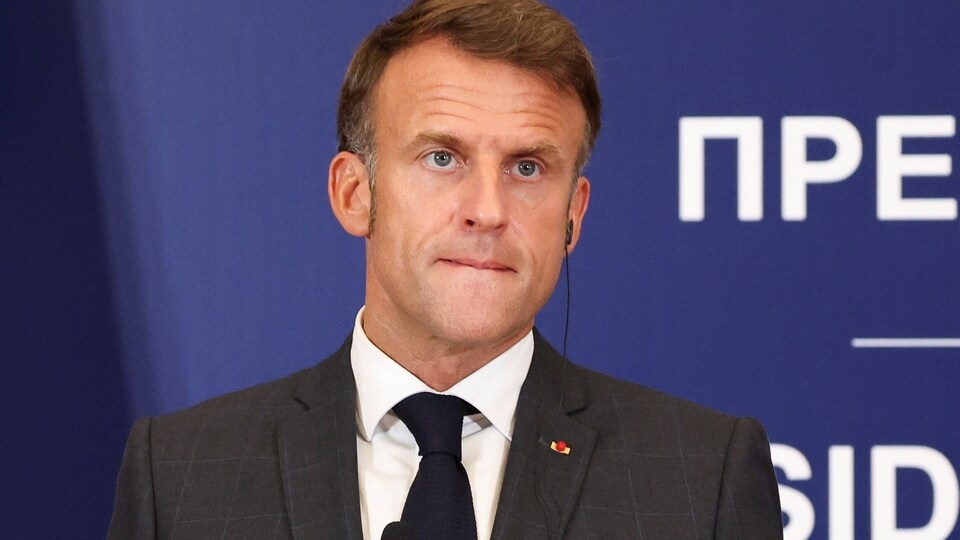
This political crisis has the potential to erode some of the long-held tenets of the 5th Republic. Characterised by long-standing stability, the institutions of the 5th Republic created by General Charles de Gaulle in 1958 have weathered many political crises, relying heavily on a bipartisanship which guaranteed, ultimately, the institutional, economic and social stability necessary in any parliamentary democracy.
Initiated in 1986, according to the historian Mathias Bernard, the regime crisis, in fact, accelerated considerably from 2007 which already saw a break up and recomposition of the French political spectrum . The two political camps which traditionally shared power (Republican Right/Socialist Left), have gradually collapsed from 2017, evident in the presidential elections of 2017 and then 2022.
It is in this context that three political blocs were formed, organised around three major political figures; the far-Right bloc led by Marine Le Pen (National Rally), the radical, ecological and social Left bloc organised around Jean-Luc Mélenchon (New Popular Front) and the central bloc organised around Macron (Together).
This tripartite French political field corresponds to the new sociological, political and electoral reality of the country. Macron came to power in 2017, creating a central bloc composed largely of those who already governed the country. Macronism is based on the dictum of changing everything while keeping things the same.
Promising to resist the rising tide of the far-Right, Marcon was re-elected in 2022, thanks in large part to Left-wing votes in the second round against the far Right. He then implemented part of the latter's programme, notably through the immigration law, with the aim, it would seem, of favouring the extreme Right in order to find himself facing it again during the second round.
The national assembly was dissolved the very evening of the result of the European elections. The Left united in record time and the French public came out to vote in record numbers, upturning all forecasts which projected the National Rally as likely to obtain an absolute majority in the national assembly.
Paralysed by the result of the legislative elections which saw the Left come out on top, the formation of the new government was delayed. There is now a Right-wing prime minister in the assembly. The road map is clear: Continue to pursue the same policies which were rejected by the majority of the population.
The vote on the budget is fast approaching. The New Popular Front, through its leader Jean-Luc Mélenchon, has already announced that it will not support a government. A dismissal process was initiated in the national assembly which will be studied by the law commission on October 2.
Marine le Pen must manage a very strong contradiction: She is in agreement with the policy pursued on the economic and social level but cannot officially provide her support to the presidential camp because she would lose a large part of her electorate who are anti-Macron.
If the National Rally votes for the budget, it would de facto become a party supporting the government, which would ruin its chances of winning the next presidential election. If it votes to censure the government at the time of the budget, it risks overthrowing a government, which only happened once in the 5th Republic/ It could also be perceived as a force of disorder at a time when it is trying to appear as a force of political stability.
This is how we find ourselves in the current situation with a paralysed parliament and the office of the president considerably weakened.
The dissolution of the national assembly possible from July 2025 will in no way resolve the situation, rather it would only further fragment the French political spectrum, creating conditions for unrest as that seen during the yellow vest crisis in 2018. In the French system, only a presidential election can succeed in clarifying things. We will have to wait and see whether an early election will be called. In any case, many people in France (political actors in particular who are organising themselves accordingly) envisage that the next presidential election will take place before 2027 as planned. And this, in itself, is the most obvious symptom of an institutional and political crisis such as France has not experienced since 1962.
This article is authored by Perceval Gaillard, Member of Parliament, Nouveau Populaire Front, France.


