
 E-Paper



Effect of hotter summers on dengue proliferation
This article is authored by Dr Melih Küreç, head of medical affairs & patient services, Takeda.

 Prefer HTon Google


The latest seasonal outlook from the India Meteorological Department (IMD) anticipates that many parts of India are set to experience above-normal temperatures and an increased number of heatwave days during the hot weather season from April to June 2026, possibly making it one of the hottest years on record for the country. At the same time, the IMD has noted the return of El Niño, a weather pattern that is expected to exacerbate the heat by driving higher temperatures and lower rainfall.
With summers come familiar health risks for most of which we are prepared such as heatstroke and dehydration. These are the direct and visible effects of extreme heat. However, there are also other serious health risks that require equal attention. While preventive measures are already in place, gaps in awareness still remain. For example, rising temperatures enable conditions that make vector-borne diseases spread more easily.
The State of Global Climate 2025 report by the World Meteorological Organization indicated that rising temperatures, shifting rainfall, and humidity are reshaping when and where dengue will spread. Dengue is now the world’s fastest growing mosquito-borne viral disease, putting nearly half of the world’s population at risk.
The impact of dengue on families is significant. When dengue patients require hospitalisation the cost in India can range from around ₹20,000 to several lakhs, with nearly 80% borne directly by patients and their families. Adults can lose between five and 32 workdays, while children may miss four to 11 school days, adding to the strain on household finances and caregiving. During outbreaks, the pressure on healthcare systems becomes visible. Hospitals across India report near full bed occupancy, emergency departments are stretched, admissions are delayed, and elective procedures often postponed due to the surge in dengue cases. Therefore, it becomes critical to understand its risk and take timely prevention measures.
Rising temperatures are a primary driver behind changing dengue patterns in India. Dengue carrying mosquitoes thrive in warmer conditions, where temperature influences how quickly they develop, how often they bite, and how efficiently the virus multiplies. Even a one-degree Celsius rise can increase the risk of dengue infection by up to 13%.
At the same time, irregular rainfall and higher humidity are creating more breeding opportunities, in dense urban environments. Together, these factors are extending the transmission window and pushing dengue into areas that were previously considered low risk. For example, outbreaks have recently been reported in Himalayan foothill towns that were once considered low risk. In India, rising temperatures have also contributed to dengue cases being reported in higher-altitude regions such as Himachal Pradesh, as well as parts of the Northeastern states, where dengue was previously uncommon.
Dengue is also now being reported beyond the monsoon months. The scale of risk is expected to grow further. By 2050, an estimated 1.5 billion Indians could be living in dengue risk zones, the largest at-risk population of any country in the world.
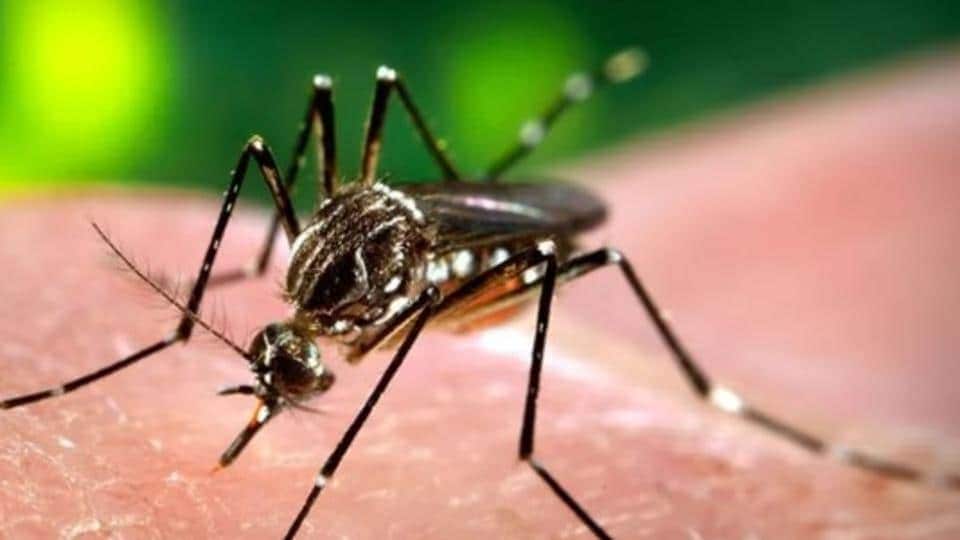
It is important to note that even a small puddle of water can become a breeding ground for the Aedes mosquito that carries dengue. This is because of the adaptable nature of the mosquito. It can lay eggs that survive without water for several months. These eggs remain in place through dry periods and hatch quickly once water collects again. Even brief, unseasonal rainfall, can trigger a sudden surge of mosquito breeding in neighbourhoods. Most mosquito breeding happens in and around homes, colleges, schools and workplaces. Dengue mosquitoes breed in clean, fresh water, not in drains or dirty water. This turns everyday objects and locations, into risk zones for mosquito breeding. For example, in many parts of North India, water coolers that store water for long periods can become breeding sites for dengue mosquitoes if not cleaned regularly. Similarly, dripping air conditioners can allow water to collect in trays or surrounding areas. Construction sites with poor drainage systems before the monsoon can also lead to water accumulation, creating ideal conditions for mosquito breeding. Even birdbaths or birdfeeders which are commonly used in parks and homes during summers can turn into mosquito breeding sites.
Currently, the only preventive measure for dengue is mosquito control. The common mosquito control measures are spraying, fogging, and breeding site elimination. However, dengue often spreads in clusters, where even a small number of infected mosquitoes can drive transmission within households and neighbourhoods. As a result, reducing mosquito populations does not always lead to a proportional decline in cases.
Over time, these tools themselves have also become less reliable. Long term use of fogging and spraying has led to resistant mosquito strains. Aedes mosquitoes are adapting, showing increased outdoor biting, changes in resting behaviour, and in some settings, extended activity beyond daytime hours. Even when breeding sites are cleared, mosquitoes can return within days. Bed nets offer limited protection as Aedes mosquitoes bite during the day, and protective clothing is often impractical in India’s heat and humidity.
At the same time, rapid urbanisation and climate change are accelerating the creation of breeding sites faster than they can be eliminated. This shows that prevention against dengue must begin well before transmission risk rises, with greater investment in awareness, stronger surveillance, and closer collaboration with public health systems.
The months before the monsoon are the most critical window for action. Regular household checks for stagnant water, awareness in schools and workplaces, and better coordination across city systems can reduce risk early.
The WHO has called for a coordinated, integrated approach to dengue control, one that brings together vector control, community participation, early detection, and preventive measures working in parallel. These combined efforts can add an important layer of protection by helping reduce disease severity and hospitalisation. India has shown that this is possible when health departments, municipal bodies, and local authorities act together and in time.
Observed every year on May 16, National Dengue Day serves as an important reminder of the need for pre-monsoon preventive measures, sustained public awareness, and coordinated action to help reduce India’s growing dengue burden as the disease continues to expand across geographies and seasons.
This article is authored by Dr Melih Küreç, head of medical affairs & patient services, Takeda.


