
 E-Paper



AI’s impact on real-world aspects yet to be understood: Hillary Clinton at Mumbai Climate Week
Hillary Clinton at Mumbai Climate Week urges global AI regulation, warns of risks to labour, energy, and climate while highlighting healthcare advances

 Prefer HTon Google


Mumbai: Former US Secretary of State Hillary Clinton on Wednesday said the impact of artificial intelligence (AI) on several real-world aspects is yet to be understood, warning against complacency over its potential risks and calling for stronger regulatory safeguards, while attending the second day of Mumbai Climate Week
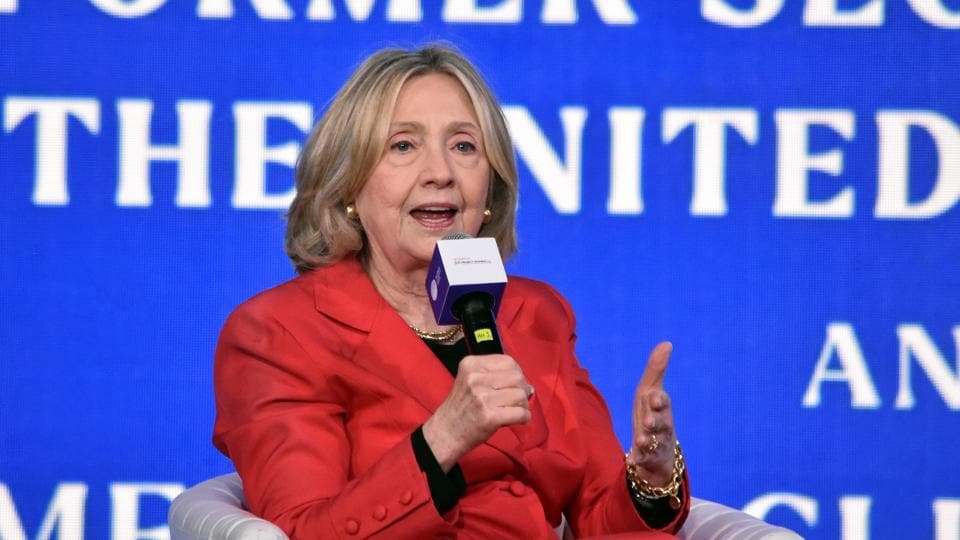
“We’ve got to do much more to understand more deeply the interconnectivity between AI and climate, and really AI in everything,” Clinton said, responding to a question posed by Shloka Nath, CEO of the India Climate Collaborative, on the advantages of AI in optimising renewable energy grids and providing hyperlocal flood projections, as well as how climate change and AI could reshape labour markets and migration at an unprecedented scale, and the energy and water demands required to run large data server complexes.
Clinton said that beyond everyday conversations about AI or asking questions to ChatGPT and Gemini, the most significant advances in artificial intelligence have been in healthcare; however, it would be naïve not to recognise the potential threats posed by AI and its rapid development.
“I mean, we even hear from the people who run these big companies. They don’t have any idea what is going to happen. They don’t know how these technical advances are going to impact humanity. So if the people creating them don’t know, then we have an obligation to say, let’s slow down and figure out how we’re going to manage this,” said Clinton while taking questions from the audience during a 30-minute fireside chat.
Referring to the displacement in labour markets due to the disappearance of certain jobs caused by AI, and questioning whether existing power grids can handle the increased load, she called for a clear plan to ensure that AI delivers a positive impact for people around the world.
“So, I think that the AI conversations that are happening are important. But governments need to be ready to demand answers,” said Clinton. “The people running these companies are the richest people in the world. These companies are extremely powerful. They want to shape the future. They want to shape the politics of the future in every country in the world, but especially powerful leading countries like India. They want to be the determiners of how you respond to them instead of people, through their elected governments, determining how they should respond to us. So I think this is a big challenge for governments, but it should also be a challenge for the rest of us to push our governments to respond to.”
She called for the need to organise and regulate AI. “Because (what) we learned with social media, we learned too late. Why are countries now regulating social media to try to prevent them from influencing our children? Because we have evidence that children have been negatively affected by social media.”
She spoke about rising anxiety, depression, and suicide among children with high social media usage, and highlighted the resulting loss of attention span. Citing the impact of a recent ban on smartphones in schools in New York, Clinton said improved attention spans have returned to classrooms.
“We’re seeing more engagement between students and teachers. We’re seeing students actually talk to each other, not walk around with their heads down looking at their screens. So we learned. It was a hard lesson. It took a decade to learn that lesson,” said Clinton.
“So let’s not let AI influence us negatively and then learn the lessons, and it may be too late to try to do anything about energy, water, labour markets, unemployment, hallucinations, [or] delusions that AI promotes. Let’s figure out how we can deal with that ahead of time and try to shape it rather than be shaped by it.”
Meanwhile, the India AI Impact Summit 2026 continues in Delhi.


