
 E-Paper



Delhi air pollution: NDMC doubles parking fee in NCR amid GRAP-II | Check new rates
The parking fee for cars and two-wheelers in Delhi have been doubled by New Delhi Municipal Corporation amid GRAP-II due to rising pollution levels in capital.

 Prefer HTon Google


In view of the rising pollution levels across Delhi-NCR, the New Delhi Municipal Corporation (NDMC) has doubled the parking fee for all cars and two wheelers till the revocation of stage-II of the GRAP in the national capital.
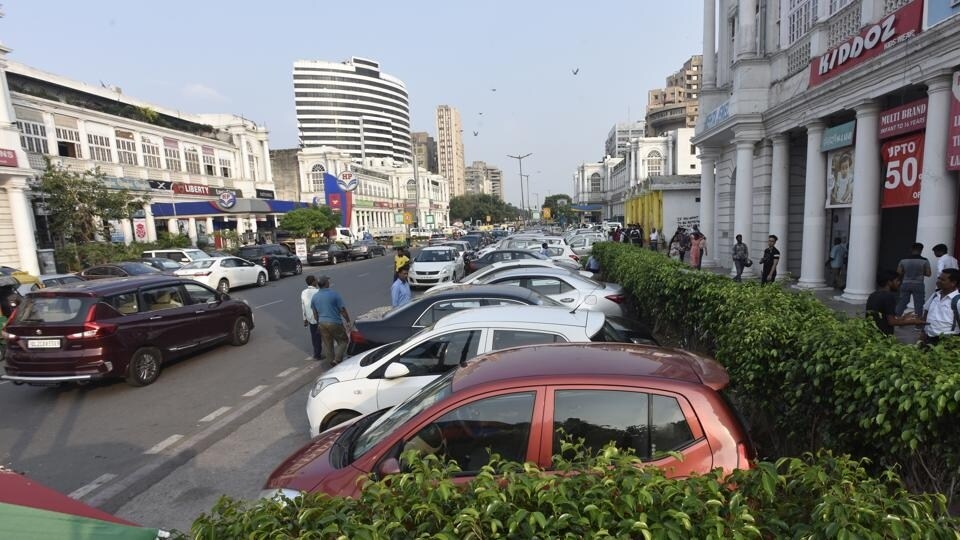
The NDMC, in its notice, said, “Keeping in view the climatic conditions, the parking fees (off road/indoor) have been enhanced to twice of the existing fees for the parking managed by NDMC till the revocation of stage II of the GRAP.”
This doubling of parking rates is expected to encourage the citizens to rely more on public transport, leading to reduction in pollution levels amid ‘very poor’ AQI in Delhi.
The enhancement of parking charges will not be implemented for the on-street parking sites and monthly pass holders, the NDMC order said. The corporation further directed for strict compliance with immediate effect.
For the Municipal Corporation of Delhi (MCD), which manages around 96 per cent of the city's geographical area, the parking charges have not been hiked so far as the proposal for the increase is pending clearance before the House.
Read more: Supreme Court pulls up Centre over stubble burning amid air pollution: ‘Environment laws toothless’
New parking charges as per NDMC order
Under the normal parking charges for surface parking at the NDMC parking lots, four-wheelers are charged ₹20 per hour (with a maximum of ₹100 for a day), while two-wheelers are charged ₹10 per hour.
These parking rates have been doubled with immediate effect, which means that four wheelers will now pay ₹40 per hour and maximum ₹200 per day, while two wheelers will be charged ₹20 per hour.
In care of multilevel parking at an NDMC lot, four wheelers will pay ₹20 for four hours while two wheelers will pay ₹10 for four hours.
The deterioration in air quality led to prompting enforcement of Stage II of the Graded Response Action Plan (GRAP) in the national capital, which enforces a ban on the use of coal and firewood, including tandoors in hotels, restaurants, and open eateries, as well as diesel generator sets, except for emergency and essential services.
(With inputs from PTI)


