
 E-Paper



Delhi excise policy case: HC to pass order staying trial court remarks against CBI
A bench of justice Swarana Kanta Sharma said that she would also pass an order directing the trial court to defer the money laundering case

 Prefer HTon Google


The Delhi high court on Monday said it would pass an order staying the observations of the trial court against the Central Bureau of Investigation (CBI) and its investigating officer while discharging former chief minister Arvind Kejriwal and 22 others in the now-scrapped 2021–22 Delhi excise policy case, even as it issued notice in the agency’s appeal.
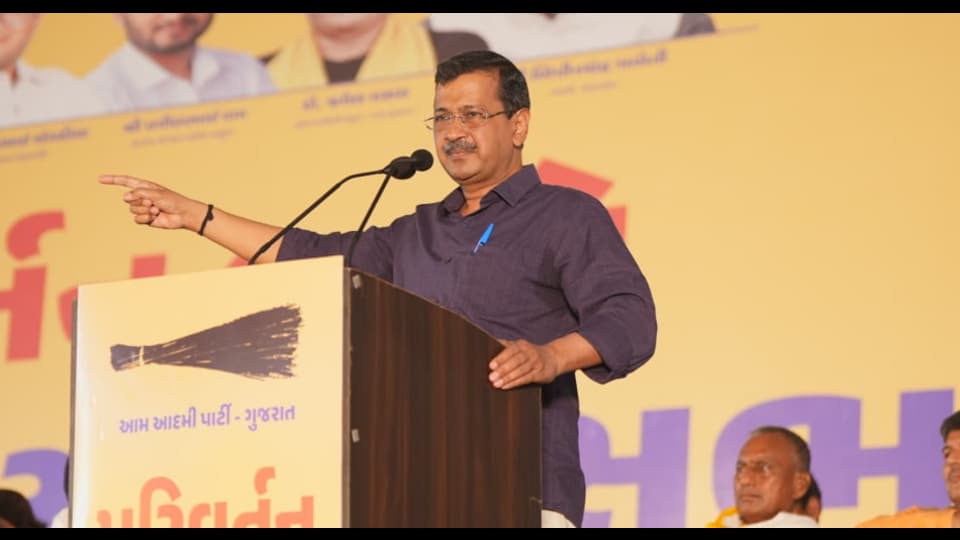
A bench of justice Swarana Kanta Sharma said that she would also pass an order directing the trial court to defer the money laundering case that stemmed from the CBI case and await the outcome of its appeal against the February 27 verdict.
On February 27, the trial court discharged the 23 accused, concluding that the CBI’s material did not even disclose a prima facie case, let alone a grave suspicion.
Special judge Jitendra Singh held that the excise policy case, as sought to be projected by CBI, did not survive judicial scrutiny, stood discredited in its entirety, and the alleged conspiracy was nothing more than a speculative construct resting on conjecture and surmises and lacked any admissible evidence. He directed a departmental inquiry against the “erring investigating officer” who framed charges against the accused in the absence of material evidence.
“I will pass an order. I will say that whatever observations are made against the agency and the investigation officer should be stayed. I’ll ask the trial court to defer the proceedings in the ED [Enforcement Directorate] case to a date after a date given by this court and await the outcome in this case [CBI’s appeal],” Justice Sharma said.
She directed the accused to file their response and fixed March 16 as the next date of hearing in the agency’s appeal. “In the meantime, I’ll also issue a fresh notice. List for further hearing on March 16,” she said.
This came after solicitor general Tushar Mehta, who appeared for the CBI, argued that the trial court’s order effectively turned the fundamentals of criminal law on its head and amounted to “an acquittal without trial.”
Describing the Delhi excise policy case as one of the biggest scams in the history of the capital and a matter of national shame, he said that the agency had conducted the investigation scientifically and established every aspect of the alleged criminal conspiracy through substantial corroborative material, including digital evidence and witness statements.
Mehta said the verdict was passed by “ignoring” the evidence gathered by the agency. He added the author of verdict seemed to be more conversant in “constitutional law” rather than “criminal law.”
“The [trial court] judge says that there is no collaborative material, but there is substantial collaborative material which cannot be brushed away. This order is an order of acquittal without trial. There are 164 witnesses who discuss how the conspiracy was established, how the bribe was paid, and to whom the bribe was paid.”
He added that the findings were “inherently wrong” and the agency collected documents, examined witnesses, collected emails, WhatsApp chats, and its evidence was not in the air. “The findings are inherently wrong, perverse, and factually incorrect. Speedy justice is a goal, but it should not result in miscarriage. The entire case in which the most scientific investigation is conducted goes in vain.”
Mehta urged the high court to stay the “adverse observations” and also pass an order to the effect that the February 27 verdict should not impact the money laundering case that had stemmed from the CBI case.
No lawyer appeared for the accused before the high court on advance notice.
Kejriwal, Manish Sisodia, and Sanjay Singh were among the prominent Aam Aadmi Party (AAP) leaders arrested in connection with the excise policy case. The CBI alleged kickbacks were paid.
The policy was rolled out for the 2021-22 financial year in November 2021, marking the exit of the government from retail sales of alcohol and allowing private companies to bid for licences.
The policy was scrapped after lieutenant governor Vinai Kumar Saxena ordered an investigation into alleged financial irregularities. The AAP denied wrongdoing and accused the Bharatiya Janata Party (BJP)-led Union government of targeting political rivals.
Sisodia was arrested in February 2023 and spent about 17 months in jail before getting bail from the Supreme Court. Kejriwal was arrested in March 2024 before the general elections. He campaigned on interim bail, and was granted regular bail in September 2024.
The CBI alleged the policy was altered to favour a group of liquor businessmen known as the “South Group” in exchange for bribes, which were allegedly routed to AAP’s Goa election campaign. The CBI filed five charge sheets. The ED investigated related money-laundering allegations under the Prevention of Money Laundering Act.


