E-Paper



Expat Bangladeshi Hindu group asks India to seek UN sanctions on Dhaka
The group comprises people of Bangladeshi origin settled in Europe and North America and affiliated with the Global Bengali Hindu Coalition

 Prefer HTon Google


NEW DELHI: A group of expatriate Bangladeshi Hindus urged the Indian government on Monday to call for UN sanctions on Bangladesh and “complete the unfinished population exchange” to protect Hindus and other religious minorities in the neighbouring country.
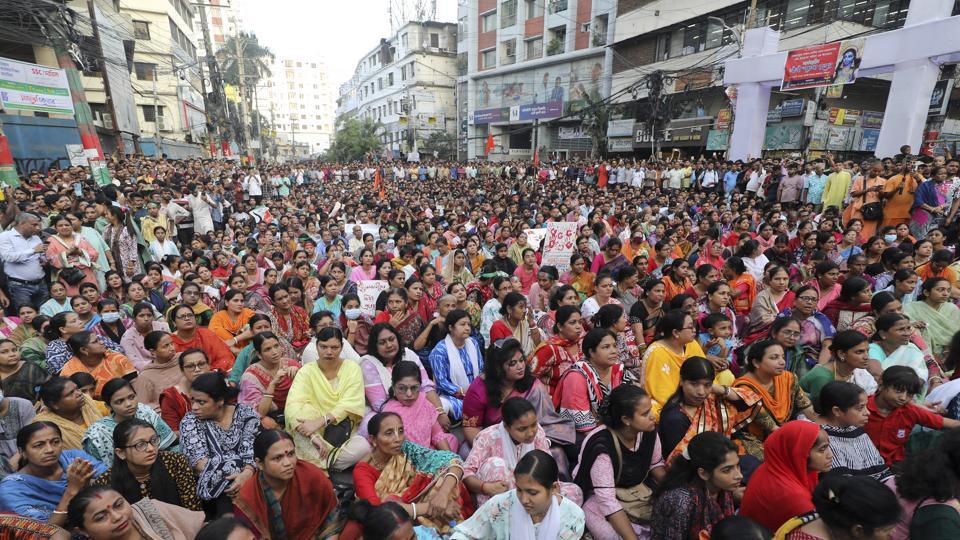
The group, comprising people of Bangladeshi origin settled in Europe and North America and affiliated with the Global Bengali Hindu Coalition, is visiting the Indian capital for meetings with the political leadership to take up the targeting of the Hindu minority in Bangladesh following the ouster of the Sheikh Hasina government in August.
Members of the group, while addressing a news conference at the Foreign Correspondents Club, outlined a five-point “call to action” to protect Hindus, other religious minorities, indigenous people and tribal groups “under the hostile and pro-jihadist illegal government in Bangladesh”.
Besides urging the Indian government to seek global intervention, including the deploying of UN peacekeeping forces in Bangladesh to protect minorities, the group called on New Delhi to seek targeted UN sanctions on the “current illegal and hostile regime in Bangladesh because of its “proven misconduct and failure to preserve human rights and dignity of religious minorities”.
The group called for completing the “unfinished population exchange with lands from the 1947 Partition, enabling the secure resettlement of displaced minorities”. A statement issued by the group didn’t provide further details regarding this proposal.
The Indian government should also push the interim administration in Bangladesh to create “protected zones in Hindu-majority regions to ensure the safety and security” of minorities, the group said.
The group also called on the Indian government to push for reassessing the peacekeeping contributions of Bangladesh, which is among the largest providers of troops for UN missions around the world. It noted that India has backed UN peacekeeping quotas for Bangladesh and said the government should reconsider this strategy.
Sitangshu Guha, the US-based leader of the group, pointed to India’s role in Bangladesh’s war of liberation in 1971 and said: “India is our best friend, it can help rescue the 20 million Hindus of Bangladesh.”
He added, “What the Indian government will do is up to the Indian government. We urge the Indian government to help the Hindu community from extinction.”
The Indian government has conveyed to Bangladesh’s interim government its concerns over the targeting of Hindus and other minorities and the arrest in November of Bangladeshi monk Chinmoy Krishna Das on sedition charges. These matters also figured when foreign secretary Vikram Misri visited Dhaka earlier this month for consultations with senior officials of the caretaker administration led by Nobel laureate Muhammad Yunus.
India-Bangladesh relations have been in free fall since former premier Sheikh Hasina stepped down in the face of widespread protests and fled to India in August. The interim government has described reports of the targeting of Hindus and their homes, shrines and business as exaggerated and said it has arrested about 80 people in connection with various incidents in recent weeks.
However, Guha and Pushpita Gupta, the Labour Party councillor for the London borough of Redbridge, said attacks on Bangladesh’s Hindus were continuing. Guha said all governments in Bangladesh, including the one led by Hasina, had failed to protect Hindus and instead “helped Islamists to flourish”.
Arun Dutta, a Canada-based member of the group, pointed to Bangladesh’s dependence on Indian goods and said: “If the trucks don’t go [from India], they will go hungry.” With the Hindu population of the erstwhile East Pakistan falling from 22% in 1951 to 7.95% in 2022, Dutta said the Hindus of present-day Bangladesh had suffered injustices since 1947 because no one had protected their interests.
The group said a report prepared by the Bangladesh United Sanatani Awakening Alliance had documented 51 instances of attacks on Hindu temples, orphanages and crematoriums between August 5 and December 21. The report said a temple in Natore Sadar upazila was robbed and the shrine’s caretaker was killed on December 20. Among the items stolen from the temple were gold ornaments, the report said.