E-Paper



Government exempts critical mineral projects from public hearing to ease clearance
India's environment ministry fast-tracks mining projects for critical minerals, exempting them from public hearings

 Prefer HTon Google


After a decision to fast-track environmental and forest clearance processes for critical minerals, all mining projects of atomic minerals and critical and strategic minerals notified in the first schedule (part B and D) of Mines and Minerals (Development and Regulation) Act will be exempt from public hearings, the union environment ministry has said.
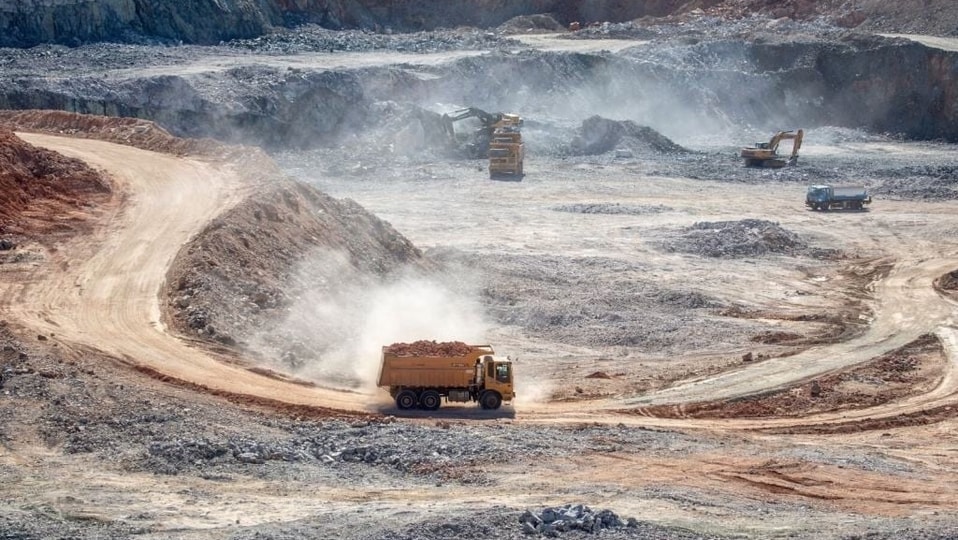
All of these projects, irrespective of the lease area, will be appraised at the central level, the ministry has said.
Some of these reserves of strategic minerals are located in border areas up north where communities are concerned about the impact on the sensitive ecology of the region.
On September 8, the ministry issued an office memorandum (OM) referring to an earlier OM dated March 13 on out of turn consideration of mining projects of all critical and strategic minerals .
“The above OM was issued since the critical and strategic minerals are essential for the advancement of many sectors in the country, including high-tech electronics, telecommunications, transport and defence. They are also vital to meet the Net Zero commitment of India by 2070,” the ministry said.
HT reported on July 16 that in a bid to fast-track forest and environmental clearances for critical or strategically important minerals, including rare earth ones, the union environment ministry is considering these proposals under a separate head in its Parivesh 2.0 portal. The separate category cannot be viewed on Parivesh website but can be accessed by those with a composite or mining licence , industry bodies said.
The ministry of mines did not respond immediately to HT’s query on how this would facilitate or expedite mining in strategic minerals.
According to the environment ministry’s September 8 OM, the defence ministry requested that the public hearing provision be bypassed for rare earth elements for use in the defence sector.
The OM referred to the use of these elements “ in production of surveillance and navigational aids (such as radar and sonar), communication and display aids (such as lasers, monitors and avionics), mounting system in armed vehicles and tanks, precision guided munitions, guidance system (that controls targeting of missiles), etc” and added that the defence ministry also mentioned the use of rare earth elements “ in manufacturing permanent magnets, which are critical for defence equipment.”
The OM referred to the scarcity of rare earth elements and the need for a steady and secure domestic supply as highlighted by the defence ministry.
Further special dispensation has been provided to critical minerals sector for compensatory afforestation under Van (Sanrakshan Evam Samvardhan) Amendment Rules, 2025. Mining of critical and strategic minerals will get special dispensation for raising compensatory afforestation over degraded forest land, minimum double in extent.
The slew of dispensations to the critical mining sector comes at a time when land is becoming a sensitive issue in the Himalayan region.
“We are concerned about land allotments and politics of land. Our only concern is that whatever projects are coming up should consider the fragile ecology of Himalayan region. There should be local representation in determining these policies,” said Kargil Democratic Alliance founder-member Sajjad Kargili during a press conference on Monday.
People for Himalaya, a collective which includes civil society organisations from most parts of Himalayas demanded a strengthened disaster response system, including fair rehabilitation under the Disaster Management Act (2005), guaranteed central government support in times of extreme events, and safe resettlement policies for communities impacted by floods and those in unsafe and vulnerable zones. Since large areas of mountain states are under the legal category of forests special provisions should be made in the Forest Conservation Act 1980 to allow their rehabilitation, it demanded. The campaign also urged the government to stop destructive mega-projects such as large dams, railway corridors, and mega solar parks in fragile mountain zones, and to scrap the Forest Conservation Act (2023) amendments which exempt projects from forest clearance. Instead, it called for strengthening the 1994 EIA Notification, ensuring rigorous, transparent, and participatory assessments.
In 2023, minister of coal and mines, G Kishan Reddy had informed Rajya Sabha that lithium deposits have been found in Reasi District of Jammu and Kashmir. Two blocks, namely Salal-Haimna Lithium, Titanium and Bauxite (Aluminous Laterite) block in Reasi district of Jammu & Kashmir and Katghora Lithium and REE block, in Korba district of Chhattisgarh were placed for auction. Out of these blocks, Katghora Lithium and REE block was auctioned successfully, while the auction of Salal-Haimna Lithium, Titanium and Bauxite (Aluminous Laterite) block has been annulled due to nonreceipt of bids.
In January, the Centre launched the National Critical Mineral Mission (NCMM) to establish a robust framework for self-reliance in the critical mineral sector. Under this mission, the Geological Survey of India (GSI) has been tasked with conducting 1,200 exploration projects from 2024-25 to 2030-31.