
 E-Paper



HistoriCity: PM Modi’s Vadnagar joins list of celebrated leader birthplaces
Vadnagar was nominated by Indian government for tentative list of United Nations Educational, Scientific and Cultural Organisation (UNESCO) World Heritage sites

 Prefer HTon Google


Throughout history, birthplaces of prominent leaders have often attracted state funding to improve infrastructure and create memorials celebrating their legacy. In line with this tradition, Vadnagar in north Gujarat, the birthplace of Prime Minister Narendra Modi, has seen a series of development projects in recent years.
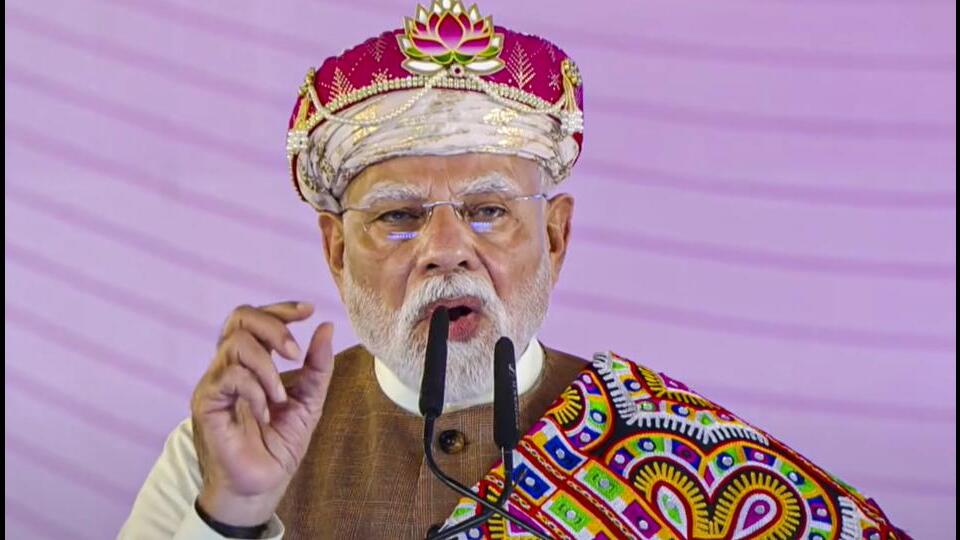
Modi, who was born in 1950 and spent the first 18 years of his life in Vadnagar, celebrated his 75th birthday less than a week ago. Perhaps the most unique gift for Vadnagar’s residents was the nomination of their town by the Indian government for the tentative list of United Nations Educational, Scientific and Cultural Organisation (UNESCO) World Heritage sites. There are 69 other Indian sites on the list, such as the Temples at Bishnupur in West Bengal (added in 1998), Kerala’s Mattanchery Palace in Ernakulam (added in 1998), and Karnataka’s Hoysala Temples at Belur and Halebidu (added in 2023).
Ancient trade and Roman Memoribilia
Since at least the last 2,000 years, trade has been taking place through Gujarat’s ports such as Lothal (Indus Valley Civilization), Surat (Suvalli), Bharuch (ancient name - Bharukachha or Barygaza), and Cambay (Khambhat). The Periplus of the Erythrean Sea, written in the 1st century CE, is brimming with details of trade commodities. It tells us that large vessels loaded with copper, sandalwood, timbers of teakwood, and logs of blackwood and ebony, iron and steel, cotton fabrics, lac dye, long pepper, wheat, rice, sesame oil, and reed honey called sacchari (sugar cane) sailed from Gujarat’s ports. The book notes that “Indo-Greek coins issued by Apollodotos and Menander were circulating in Gujarat,” and its ports imported “wine (primarily Italian), metals (lead, copper, tin), coins, red coral, storax, antimony, glass, embroidered cloth, and peridot.” We also have evidence of trade in spices, agate, and carnelian.
Vadnagar was a minor hub in comparison to others such as Patan, Valabhi, Bharuch, and others. But even so, excavations conducted by the Gujarat state archaeological department between 2006 and 2012, and by the Archaeological Survey of India (ASI) since 2014, have unearthed evidence showing that Vadnagar too was part of trade and commerce.
Also Read: Vadnagar: Ancient town that shaped Modi’s early years
According to ASI’s claims, the antiquity of the site and its surroundings goes back 2,700 years, making it one of the oldest continuously inhabited places in India, such as Varanasi, Mathura, Madurai, and others. According to UNESCO, among the objects unearthed at Vadnagar are “imitation intaglio in clay depicting a woman with a flower in the hand, a coin mould of Greco-Indian king Apollodotus II (80-65 BC), and a sealing with impression of a Roman coin belonging to Valentinian I (364-367 CE).”
Earlier this year, PM Modi caused a stir when he claimed that Chinese President Xi Jinping and he shared a historical bond. He based this on the accounts of a 7th-century Chinese traveller. He wasn’t entirely wrong — the earliest reference to Vadnagar is perhaps in the 7th-century writings of Hien Tsang, the Buddhist devotee from China who spent more than a decade in India. While it is not clear whether he visited this region himself, he nevertheless mentions Anandapura, between Valabhi and Saurashtra.
Samuel Beal translates in Si-yu-ki, Buddhist Records of the Western World, “O-nan-to-pu-lo (Anandapura): This country is about 2,000 li (1 li = half a km) in circuit, the capital about 20. The population is dense; the establishments rich. There is no chief ruler, but it is an apparition of Malava. The produce, climate, and literature and laws are the same as those of Malava. There are some ten sangharamas with less than 1,000 priests; they study the Little Vehicle of the Sammatiya school. There are several tens of Deva temples, and secretaries of different kinds frequent them. Going west from Valabhi 500 li or so, we come to the country of Su-la-ch’a (Surashtra).”
Based on certain assumptions of distances and a long fortification wall found near Vadnagar, Alexander Cunningham, considered to be the father of Indian archaeology, was the first to propose that modern Vadnagar could be the Anandapura of Tsang’s time.
The Buddhist presence waned between the 7th and 12th centuries and completely disappeared from much of western India. A land grant to Brahmanas from the 7th century further suggests that Anandapura and Vadnagar are the same place. MR Majumdar writes in the Historical and Cultural Chronology of Gujarat, “From the royal camp fixed at Anandapura, North Gujarat, the Kalchuri king Buddharaja issued a land grant to a Brahmana of Parasara gotra of Dobhaka (Dabka near Padra in Vadodara) ... in 611 AD.” There are at least three other land grants issued by various Maitraka rulers to Brahmanas from Anandapura in the 7th century.
Also Read: India submits nomination for PM’s hometown for UNESCO tag
Today’s Vadnagar resembles more a town based on Puranic lore than Buddhist teachings. The Sharmishta lake, around which it is based, remains the anchor of social and religious life. Most of the extant structures in the town date back to the Gaekwad period (18th century). However, the oldest temple, Ambaji Mata Temple, dates back to the 10th–11th century CE. The 15th-century Hatkeshwar temple is another key religious spot for Hindus, particularly devotees of Shiva. It houses a Shiva linga and is considered the main shrine for the Nagar Brahmin community, who have a close association with Vadnagar. A visit to Vadnagar would be incomplete without viewing the intricately carved Victory gateways, or Torans, that were constructed during the reign of Solanki rulers of Gujarat (9th–13th century).
The Vadnagar Archaeology Museum was inaugurated by union minister for home affairs Amit Shah in January 2025.
(HistoriCity is a column by author Valay Singh that narrates the story of a city that is in the news, by going back to its documented history, mythology and archaeological digs. The views expressed are personal.)


