E-Paper



‘Kuchupuchu, resign kar do’: No lengthy speeches, GenZ are redefining language of protest with memes, sarcasm & costumes
The way Gen Z engages online, through memes, stickers and GIFs, is how they are engaging offline at the protest that has a distinctly young demographic.

 Prefer HTon Google


Anyone who knows their memes will instantly recognise the “Subway Surfers” inspired reels coming out of the Jantar Mantar protest – of Gen Z protesters running on the streets of central Delhi with a policeman chasing after them with a lathi, all set to the tune of the 2012 online game in which the player runs endlessly dodging obstacles. Track the July 24 CJP protest here
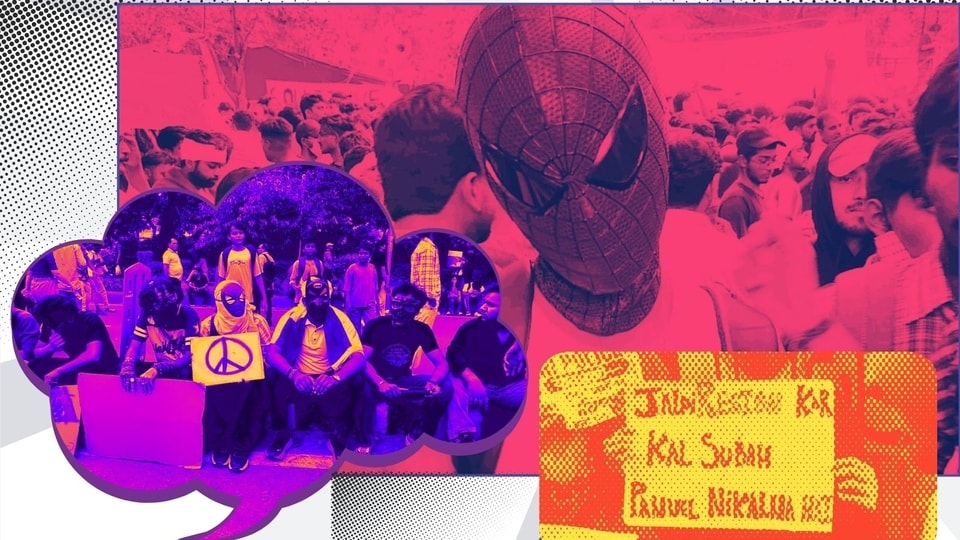
One such reel by a Delhi-based fitness influencer with the caption “Bro thought he can outrun me” has garnered 2.3 million likes on Instagram. There are 129,000 reels with the theme song on Instagram, and plenty recorded and uploaded on July 20 when tens of thousands of protesters swarmed central Delhi as part of a planned but unauthorised protest march to Parliament.
The way Gen Z engages online – through memes, stickers and GIFs – is how they are engaging offline at the protest that has seen a far younger demographic than any protest in recent history. Their posters and reels are funny, irreverent, innovative and usually offensive. A walk through the protest site, dotted with posters, is like scrolling on your phone late at night.
From cockroach costumes to viral slogans
What began as anger over repeated examination paper leaks and demands for Union education minister Dharmendra Pradhan’s resignation under the banner of the Cockroach Janta Party (CJP) has evolved into a distinctly Gen Z style of political expression – one as designed for the algorithm as for the authorities.
On social media, “Delhi baddies” are doing fit checks, “GRWM (get ready with me) videos with a dose of political messaging on the side, even doing the “Viking row” (like the Norwegian football supporters a few weeks ago) with “Row! Row! Row!” replaced by “Resign! Resign! Resign!”
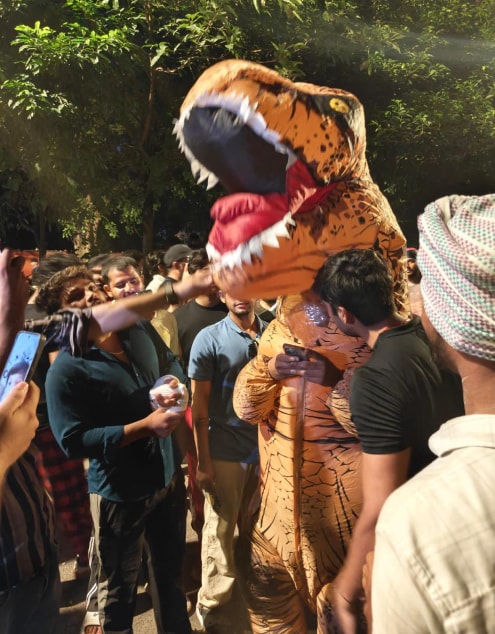
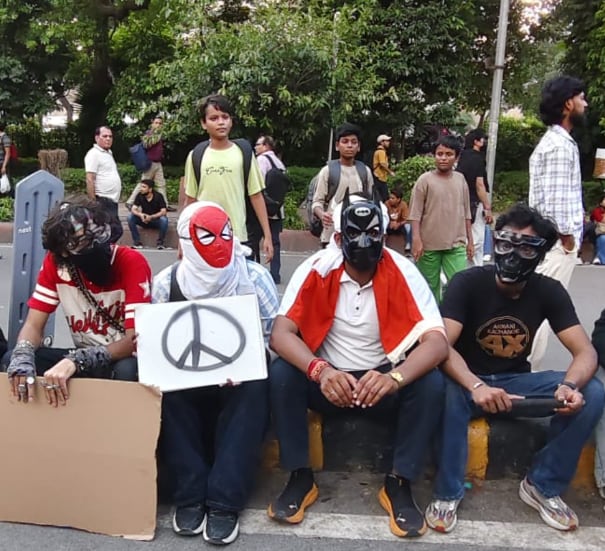
The posters are fly – “Everyone is gangsta, until the cockroaches start flying”, “Kuchupuchu tum resign dedo na.” There are protestors in cockroach and dinosaur costumes, and there is also a Spiderman and a Batman. There’s a Gandhi too, and an Ambedkar. There are videos of a protester getting his head shaved as others gather around him pretending to weep and loudly beating their chests in front of a shroud – the “education system.”
ALSO READ | CJP protest prompts rare selfie message from Modi on paper leak: Here's what PM said
Memes replace traditional slogans
Michael Jackson’s They Don’t Really Care About Us, Boney M’s Rasputin, Delhi Belly’s Bhaag DK Bose, Rang De Basanti’s title track, and Azaadi by Dub Sharma and rapper DIVINE are the soundtrack to this protest and its social media presence. Gen Z are not merely staging a protest, they are turning dissent into viral content to “break the internet.”
Unlike traditional student demonstrations dominated by ideological banners and lengthy speeches, these protests have been powered by short-form humour. Such as the viral toddler audio: “Kuchupuchu... tum resign dedo na,” replacing political sloganeering with baby-talk sarcasm.
But the messaging is sharp, if unparliamentary.
After all, at the core of the protests is deep angst over repeated paper leaks, the most recent one being of the NEET medical entrance test, which was scrapped and a re-test held. Ritwik, 21, a student from Noida, who only wanted to be identified with his first name said: “Our friends have been beaten for legitimate demands. Everyone has ignored us. Out of this frustration and anger, this creativity is coming out. Memes and reels are our language to express.”
CJP did not respond to HT’s request for a comment.
Protest humour spills beyond Delhi
Over the last two days, this humour has also stretched beyond Delhi. In Patna, as police prepared to disperse demonstrators, protesters were heard mockingly asking officers, “Tear gas ka vyavastha nahi hai? Water cannon bhi nahi? (Haven’t you made any arrangements for tear gas? You don’t even have water cannons?)” Moments later, when the water cannons were switched on, demonstrators broke into dance to the viral track “Paani Wala Dance”.
In Mumbai, videos showed detained protesters slipping out of a police van after someone quietly opened the latch, while Instagram reels overlaid the escape with the Subway Surfers soundtrack, turning a police chase into a video-game sequence with all the details – pace, distance covered and steps.
ALSO READ | 'End of hunger, beginning of accountability': Sonam Wangchuk on why he called off 26-day fast
The internet has also become the protest’s second venue especially on Instagram and Reddit. “I love whatever is wrong with our generation” is the dominant feeling. Thousands of reels celebrate protesters completing their daily step goals or sharing their Strava maps during the Parliament march, joke about sprinting away from police barricades, or compare government accountability to corporate resignation culture. One placard at Sansad Marg read, “I get it, Dharmendra bhai, mujhse bhi resign nahi ho pa raha (Dharmendra bhai, even I can’t resign).”
Another quipped, “My ex did not ignore me as much as the government has.” Even IKEA found itself dragged into the discourse through a sign declaring, “IKEA has a better Cabinet,” as did Taylor Swift when a protester in Bengaluru held a placard that said, “In India, there’s one paper leak after another but not one photo of Taylor Swift has been leaked yet.”
Humour, satire and the politics of Gen Z
Tanvir Aeijaz, associate professor of political science at Delhi University, said that in this movement, humour and satire have taken place of earlier political conversation. “Instagram and the [social media] ecosystem relies on images and short crisp messages. This generation does not give lengthy speeches but they are clear in their mind about the messaging. There is also a feeling that millennials have done something wrong which needs to be rectified. You may disagree with their ways but the humour and sarcasm is all aimed at seeking accountability... The use of humour and memes is creating a sense of fearlessness in the citizenry,” Aeijaz said.
Not every slogan lands comfortably. Some placards and slogans do cross over to profanity or sexually explicit insults, pointing at a generational willingness to shun traditional modesty and using language for its shock value – something older protest cultures largely avoided. The Gen Z protest at Jantar Mantar appears less interested in moral correctness and more in virality. They are using ridicule to counter the authority unlike the rhetoric. To be sure, the core team of CJP has repeatedly issued statements from stage asking people not to use offensive slogans. Even on Wednesday, CJP spokesperson Ashutosh Ranka instructed demonstrators to strictly stick to only four approved slogans to prevent opponents from creating a negative narrative. Ranka said negative slogans must be avoided during the demonstration, adding that government is looking for a chance to use it in their narrative”. He listed four specific slogans that will be allowed: ‘Bharat Mata ki Jai’, ‘Inquilab Zindabad’, ‘Jai Bhim’, and ‘Dharmendra Pradhan Istifa do’. But hardly anyone heeds to this advice. The protest has spilled over to a much larger area.
The main protest venue at Jantar Mantar Road also has a familiar layer beneath the memes. There are students carrying portraits of Bhagat Singh; Left organisations raising red flags, Che Guevara; and veterans of campus politics chanting traditional slogans. Faiz Ahmed Faiz’s “Bol ke Lafz Azaad hai tere” never gets old. Old iconography has not disappeared but it has acquired a new company. If millennials and boomers measured the success of a protest by column inches or television coverage, Gen Z is measuring it with shares, remixes and trending audio. And a government that has always been ahead in the social media game suddenly finds itself lagging.