
 E-Paper



How PM Modi convinced China on LAC patrolling agreement
The resumption of patrolling of both armies in the Depsang Bulge and Demchok areas of East Ladakh is a result of painstaking negotiations.

 Prefer HTon Google


The Narendra Modi-Xi Jinping détente over resolving the military friction in East Ladakh post-PLA transgression in May 2020 was actually a test of the staying power of the NDA government, the determination and commitment of the Indian Army in most trying conditions and the complete coordination between the military and Indian diplomacy.
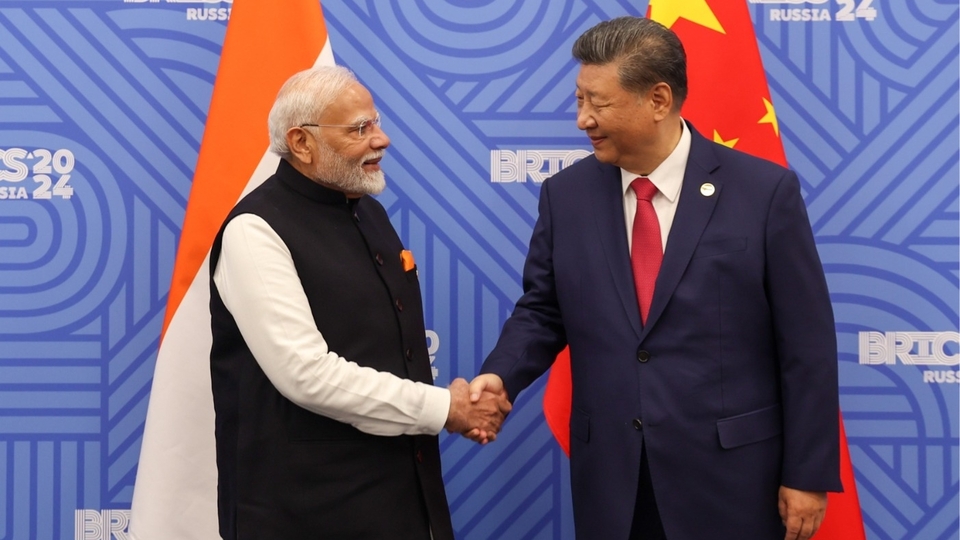
While the Modi-Xi meeting at Kazan took place with both leaders conducting themselves in appropriate manner, the delegation-level talks paved the way for Special Representative Dialogue on negotiating the de-escalation of the military buildup all along the 3488 km Line of Actual Control, while Foreign Ministers of both countries will chart a course for normalization of ties. National Security Advisor Ajit Doval will represent India in the SR dialogue, and Wang Yi, Director of the Chinese Communist Party Central Committee Commission and Foreign Minister will represent Beijing and work towards removing military friction on both sides of the LAC. Wang will also be External Affairs Minister S Jaishankar’s interlocutor in the normalization dialogue.
Watch the video here:
The resumption of patrolling of both armies in the Depsang Bulge and Demchok areas of East Ladakh is a result of painstaking negotiations between the interlocutors in the Working Mechanism for Consultation and Coordination on India-China Border Affairs (WMCC) on the diplomatic table and senior military commanders from Corps to Division level under the guidance of the high powered inter-ministerial China Study Group (CSG). The WMCC met 17 times after the June 15, 2020, bloody clash at Galwan and the military commanders met 21 times to negotiate the disengagement and resumption of patrolling.
Also read: India-China disengagement: Hectic negotiations led to restoration of patrolling rights
Although the disengagement from the Gogra-Hot Springs-Khugrang Nullah region was announced on September 9, 2022, India has been steadfast on the resumption of patrolling rights in Depsang Bulge and Demchok and made it clear that the road to normalization is dependent on fulfilment of this key military conditions. Even though the Opposition Congress has raised questions on the agreement and the buffer zones, it is learnt that the buffer zones in key friction points of Galwan, Gogra-Hot Springs-Khugrang Nullah and Pangong Tso are not permanent with the Indian Army have all intentions and commitment to patrol these zones in near future. The buffer zones were not touched in the patrolling agreement as it would have reopened the entire issue and could have created new problems. The reached patrolling agreement was confined only to the Western Sector as both the Indian Army and PLA had blocked each other in Depsang and Demchok along the 1597-kilometer boundary in East Ladakh. The agreement on the resumption of patrolling buys diplomatic space for India and ensures that China is not used as a vulnerability of India by vested powers. It also lends more credibility to Prime Minister Narendra Modi as a leader who refused to back down despite the PLA amassed all along the LAC in Western, Middle and Eastern sectors. Even though the patrolling is still to be resumed in Depsang and Demchok by the Indian Army, the agreement has led to an easing of the situation on East Ladakh LAC as well as a drop in border tension in the region.
Also read: View: October 7 is a wake-up call for Indian intelligence
With disengagement complete and patrolling resumed, both India and China will have to negotiate the de-escalation details as there are more than 50,000 troops, tanks, missiles and rocket regiments amassed on both sides of the LAC with fighter jets on standby in the hinterland bases in Tibet and Sinkiang region in China and from Srinagar to Gwalior to Tezpur on the Indian side. Both armies need to scale down their presence to the April 2020 level as a large body of troops is forwardly deployed in East Ladakh and the PLA reserve is deployed behind the lines in the Eastern sector. The big question is will the troops on both sides relocate from the LAC to their barracks or what will be their distance in time and logistics from the LAC? With the agreement still to be implemented on the ground, both armies will have to bear the arctic winters and snowstorms of East Ladakh for the fifth year running.
Although Congress is blaming the Narendra Modi government for wilting under Chinese military pressure, all the border issues with China are military legacies of the 1950s and run-up to the 1962 war. The unresolved border is a testimony to the occupation of Aksai Chin by Chinese forces while constructing the highway between Lhasa and Urumqi in 1956. It is also a reminder of weak political, military and intelligence leadership at that time, which came to know about the Tibet-Sinkiang Highway after it was announced. All military inputs from the Indian Embassy in Beijing were subsumed in the Hindi-China Bhai Bhai false narratives.
Also read: India asks Canada for evidence in Nijjar murder, and wants strong action against anti-India Khalistanis
While the conversation between PM Modi and President Xi was civil and cordial in Kazan, India will take firm and verified steps towards normalization of ties with China so that no flare-up on the border happens in the interregnum. The PLA, on the other hand, will also be restrained in taking unilateral actions on the LAC as the patrolling agreement has the sanction of President Xi, who is also Chairman of the Central Military Commission apart from being the paramount leader of China. PM Modi has given a mantra of mutual trust, mutual respect and mutual sensitivity for taking the bilateral relationship forward as the world cannot afford the cost of India and China at military loggerheads.
When Indian military patrols patrol points 10 to 13 A in Depsang and at Charding Ningling Nullah junction in Demchok in the coming days, it will remember the lessons learnt from May 2020 transgressions and how fragile is peace on the LAC. India and China will have to manage the LAC as any unilateral move will put the ties in freeze, just like the polar winters in East Ladakh. The PLA and the world at large will also remember the staying power of the political leadership and the die-hard commitment of Indian Army troopers on the ground. Both armies were on the brink of war during brave Indian Army operations south of Pangong Tso on August 29-31, 2020, when an Indian tank fired a warning volley towards advancing PLA tanks on Rechin La-Rezang La ridge.


