E-Paper



How Tata Sons will pick N Chandrasekaran's successor and who will choose him
The Trusts specifically acknowledged Chandrasekaran's contribution during a period of "significant change, growth and transformation" across the Tata group.

 Prefer HTon Google


The Tata Trusts on Thursday initiated the process of finding N Chandrasekaran's successor to lead Tata Sons, the holding company of the diversified Tata group, a day after Chandrasekaran announced that he would not seek reappointment for a third term as chairman.
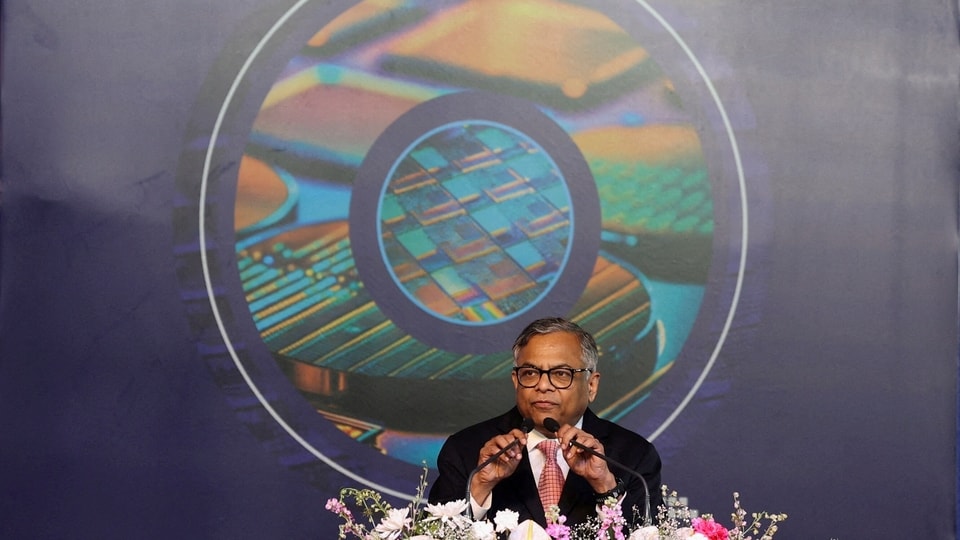
The Sir Dorabji Tata Trust (SDTT), which is among the charitable trusts that together hold nearly two-thirds of Tata Sons, said its trustees had decided to begin the process of setting up a selection committee to recommend the next chairman of the Tata Sons board, according to a PTI report.
The Trusts specifically acknowledged Chandrasekaran's contribution during a period of "significant change, growth and transformation" across the Tata group.
Deep Dive

Chandrasekaran, who has led Tata Sons since 2017, announced on Wednesday that he would not offer himself for reappointment as chairman for a third term.
The decision came amid a lack of unanimity within the Tata Sons board over his continuation, according to his statement, the report added.
Also Read | ‘Respect his decision’: Tata Trusts on Chandrasekaran’s call to step down
How will Chandrasekaran's successor be chosen?
The Tata Trusts are expected to play a central role in the appointment process because of their significant ownership of Tata Sons. The charitable trusts together own about 66% of the holding company.
Under Article 118 of the Articles of Association of Tata Sons, a selection committee has to be constituted for the appointment of the chairman, as long as the Tata charitable trusts continue to hold the required stake in Tata Sons.
The selection committee will be tasked with identifying and recommending a candidate for the position. The final appointment will then be made in accordance with the governance framework of Tata Sons.
The Sir Dorabji Tata Trust said its trustees have passed a resolution to initiate the setting up of the selection committee as soon as possible “in accordance with the Articles of Association of Tata Sons, for the purpose of recommending a person for appointment as the new Chairman of the Board of Directors.
Also Read | N Chandrasekaran's decision to step down creates immediate succession challenge for Tata Sons
What happened when Cyrus Mistry was removed?
The process of finding Chandrasekaran's successor has some similarities with the succession exercise that followed the removal of Cyrus Mistry in October 2016, although the circumstances are different.
After Mistry was removed as chairman, Tata Sons faced an immediate leadership vacuum. A five-member selection panel was subsequently formed to identify his successor.
The panel comprised Ratan Tata, Venu Srinivasan, Amit Chandra, former diplomat Ronen Sen and Lord Kumar Bhattacharyya.
The committee unanimously selected Natarajan Chandrasekaran, who was then the CEO and managing director of Tata Consultancy Services, as the next chairman of Tata Sons.
Also Read | Tata Sons Chairman N Chandrasekaran steps down, says will complete term; firm's stocks tumble
What role will Noel Tata play?
Noel Tata, who became chairman of the Tata Trusts following the death of his half-brother Ratan Tata, is also the chairman of the Sir Dorabji Tata Trust.
The Sir Dorabji Tata Trust is one of the key charitable trusts within the Tata Trusts structure and holds a significant stake in Tata Sons. Its decision to initiate the selection committee process therefore marks an important first step in determining who will eventually succeed Chandrasekaran.