
 E-Paper



Jaishankar says West, UN turned Kashmir ‘invasion’ into dispute: ‘I’ve got some question marks'
He said when West goes out into other countries, “it's in pursuance of democratic freedoms” and when other countries come into West, it's deemed "maligning".

 Prefer HTon Google


External Affairs Minister S Jaishankar on Tuesday appeared to West's double standards on the Kashmir issue, stating that what was originally an "invasion" had been reframed as a dispute. Jaishankar also emphasised the need for a "strong and fair" United Nations.
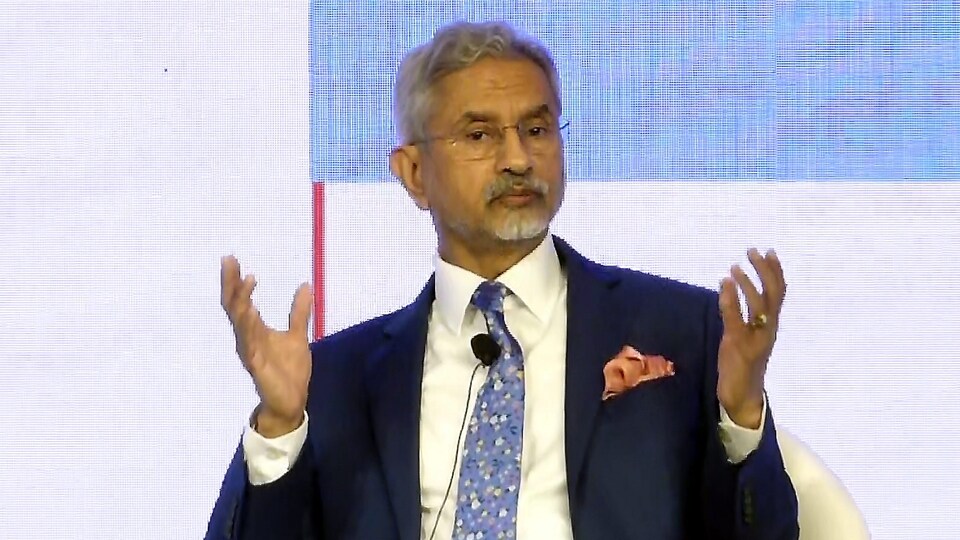
Jaishankar said when the West goes out into other countries, “it's in pursuance of democratic freedoms” and “when other countries come into the West, it seems to have a very malign intention.”
Speaking at a session of Raisina Dialogue 2025, Jaishankar criticised the United Nations for turning the Kashmir invasion into a dispute, equating the attacker and the victim.
After World War II, the longest-standing illegal presence and occupation of a territory by another country pertains to India in Kashmir, Jaishankar said, listing UK, Canada, Belgium, Australia and even the US as the "culpable parties.
“We all speak of sovereignty and territorial integrity. It's a vital principle and a bedrock of global rules. After World War II, the longest-standing illegal presence and occupation of a territory by another country pertains to India in Kashmir. We went to the UN. What was an invasion was made into a dispute. The attacker and the victim were put on par. Who were the culpable parties? UK, Canada, Belgium, Australia, USA? So pardon me, I have some question marks on that whole topic...,” Jaishankar said at the 'Thrones and Thorns: Defending the Integrity of Nations' session of Raisina Dialogue 2024.
“We speak today of political interference. When the West goes out into other countries, it's in pursuance of democratic freedoms. When other countries come into the West, it seems to have a very malign intention. If we need to have an order, there must be fairness... We need a strong UN but a strong UN requires a fair UN... A strong global order must have some basic consistency of standards,” Jaishankar said.
Listen in
"We have military coups to our east in Myanmar, they are a no, no. We have them even more regularly to the West where they seem to be okay. It's important to audit the workings of the world for the last eight decades and be honest about it and to understand today that the balances and the shareholdings in the world have changed. We need a different conversation. We need a different order...," Jaishankar said.
Jaishankar further called out the global approach to the Taliban, stating, "Take Afghanistan, so, the same Afghanistan, the same Taliban which was an outlier was welcomed in the Doha process, was welcomed in Oslo, apparently, at that time people were okay with it. Today again we’re going back saying, Taliban is doing all these not so good things. Now, if they were doing all of that, what was discussed in Oslo and Doha? You know you had a British general who described them at that time as they are country boys with their own honour code. Now, so when it suits you to deal with the Taliban, they are okay. When it is not, they are not okay. You are an extremist today, you wear a suit and tie, you are okay. You know, I think I have a problem with that all.”
The Raisina Dialogue, held in Delhi from March 17-19, is India's premier conference on geopolitics and geoeconomics, hosted by the Observer Research Foundation in partnership with the Ministry of External Affairs.


