
Sign in

Khalistan Commando chief Paramjit Panjwar gunned down in Lahore

Panjwar took charge of KCF in 1990 and crossed over to Pakistan. He raised funds via cross-border weapons smuggling and heroin trafficking.

Updated on: May 6, 2023, 15:39:24 IST
Share
Share via
  • facebook
  • twitter
  • linkedin
  • whatsapp
Copy link
  • copy link

Designated terrorist and Khalistan Commando Force (KCF) chief Paramjit Singh Panjwar alias Malik Sardar Singh was gunned down by two unidentified gunmen in Johar Town, Lahore in Pakistan this morning. He was killed while walking near his house in Sunflower Society in Johar Town around 6 am along with his gunman by two unidentified men on a motorcycle. The gunman was injured in the shootout and shifted to the hospital for treatment.
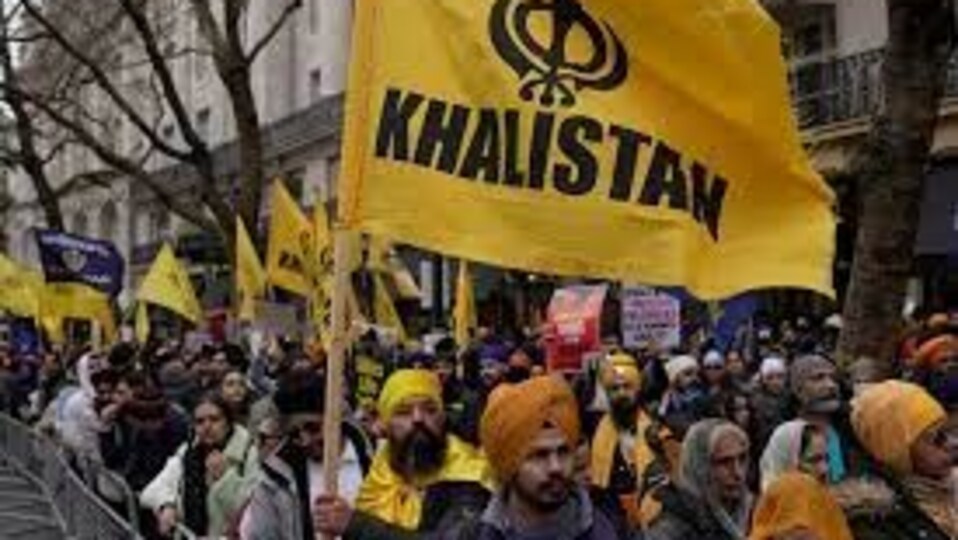
ALSO READ: Why India banned 9 Khalistan-linked terrorists in 5 countries

Despite denials by the Pakistan government, Panjwar stayed in Lahore while his wife and children relocated to Germany.

Involved in drug and weapon smuggling through drones into Indian Punjab, Paramjit was born in Panjwar village near Taran Taran. He joined the KCF after being radicalized by his cousin Labh Singh in 1986, prior to which he was working in a Central Cooperative Bank in Sohal.

Following the elimination of Labh Singh at the hands of Indian security forces, Panjwar took charge of KCF in the 1990s and crossed over to Pakistan. High on the list of most wanted terrorists sheltered by Pakistan, Panjwar kept the KCF alive by raising funds through cross-border weapons smuggling and heroin trafficking. Despite denials by the Pakistan government, Panjwar stayed in Lahore while his wife and children relocated to Germany.

  • Shishir Gupta
    ABOUT THE AUTHOR
    Shishir Gupta

    Shishir Gupta is Executive Editor at Hindustan Times and one of India's top journalists covering national security, strategic affairs, foreign policy and geopolitics. Over the past three decades, he has extensively reported on India's military, diplomatic and security landscape, covering every major conflict and national security challenge, from the 1999 Kargil War and the 2020 East Ladakh standoff to Operation Sindoor in 2025. He has also covered major terror attacks, including the IC-814 hijacking, the 26/11 Mumbai attacks and the 2025 Pahalgam terror strike, along with numerous Pakistan-backed terrorist incidents in the Kashmir Valley and across India. He has reported on national and state elections for more than three decades. A recognised authority on strategic affairs, Gupta has covered India's nuclear programme since the Pokhran-II (Shakti series) tests in May 1998 and has written extensively on global nuclear issues, Indian diplomacy and the country's expanding global outreach. He has also reported widely on international conflicts and terrorism, with a special focus on the Indian subcontinent. Gupta has interviewed Prime Minister Narendra Modi more than four times, including Modi's first interview with the print media after becoming Prime Minister in May 2014. His other interviews include three with the Dalai Lama, as well as conversations with Benjamin Netanyahu, Amit Shah, Yogi Adityanath, S. Jaishankar, Nirmala Sitharaman and Piyush Goyal. He is the author of Indian Mujahideen: The Enemy Within (Hachette, 2011) and Himalayan Face-off: Chinese Assertion and Indian Riposte (Hachette, 2014). He was awarded the Chevening-Wolfson Joint Scholarship at Wolfson College, University of Cambridge, UK, in 1998 and participated in the International Visitor Leadership Program (IVLP) of the US State Department in 2006. He received the Ben Gurion Prize from Israel in 2011 and the K. Subrahmanyam Prize for Strategic Studies in 2015 from the Manohar Parrikar Institute for Defence Studies and Analyses (MP-IDSA). Since 2024, he has hosted Point Blank, Hindustan Times' weekly YouTube show on global geopolitics.Read More