
 E-Paper



Parl panel flags crisis in education loans, raps banks for poor disbursal
A parliamentary committee warns of a crisis in education loans, citing rising costs and declining access, especially for poorer students, urging reforms.

 Prefer HTon Google


New Delhi: A parliamentary committee has warned of a “deepening crisis” in access to education loans, saying rising higher-education costs are colliding with shrinking credit availability and inconsistent banking practices that are shutting out students—especially those from poorer and rural backgrounds.
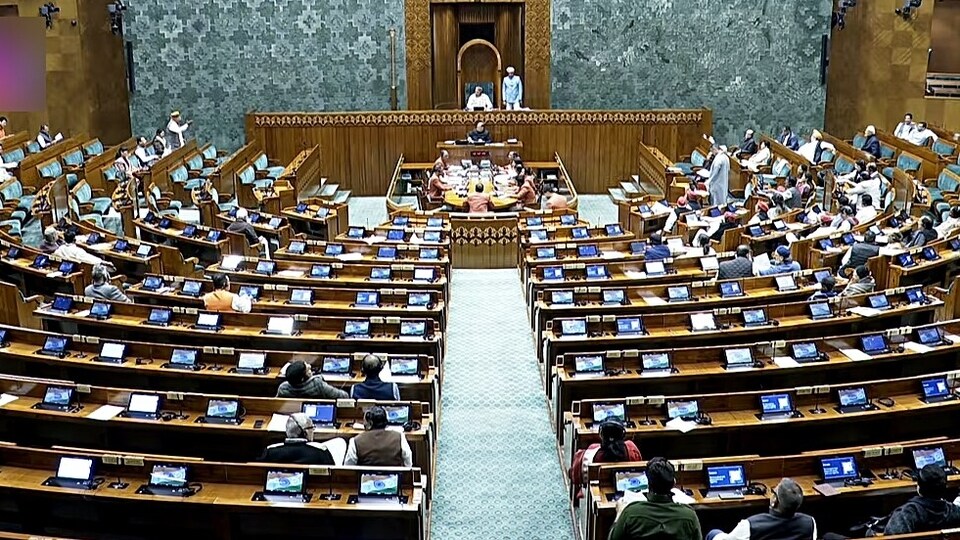
In its report tabled in Parliament on Tuesday, the Standing Committee on Education, Women, Children, Youth and Sports, chaired by Congress leader Digvijaya Singh, noted that the number of active student loans has declined from 23.36 lakh in 2014 to 20.63 lakh in 2025, even as overall outstanding loan value has nearly tripled to ₹1.37 lakh crore. The gap, the panel said, reflects steep fee inflation and shrinking access for families unable to secure bank support.
A major flashpoint in the report is the government’s PM Vidyalaxmi scheme, under which only 15% of the sanctioned ₹4,427 crore was actually disbursed between February and August 2025. Of 55,887 loan applications, banks sanctioned 30,442 but released funds in just 21,967 cases, the report said.
Several banks, the report observed, did not sanction a single loan under the scheme during the same period.
Calling this “callous” and “systemically exclusionary,” the committee recommended strict Reserve Bank of India (RBI) and Department of Financial Services (DFS) guidelines to prevent rejections and delays, and a district-wise real-time dashboard to track sanction, rejection and disbursal. The panel also sought uniform norms across public, private and cooperative banks as well as non-banking finance companies.
The panel flagged serious gaps in awareness campaigns, arguing that outreach was concentrated in IITs, IIMs and other elite institutions while rural schools, state-run schools and students without internet access remained largely unaware of loan schemes. It asked the Higher Education Department to shift its publicity focus to Class 11 and 12 students, and to use all 22 scheduled languages and short-video formats popular among young people.
Among its sharper recommendations, the committee asked the RBI to revise its decade-old cap that allows collateral-free loans only up to ₹4 lakh, calling it unviable in today’s cost environment. It pressed for collateral-free loans aligned with income-based categories, and a significant expansion of the Credit Guarantee Fund Scheme for Education Loans—from ₹7.5 lakh to ₹20 lakh—to match current fee structures.
The committee also pushed for ration-card–based eligibility criteria to replace income certificates, arguing that families receiving free rations should automatically qualify for education-loan support, with 20% of all loans reserved for this group and the government acting as guarantor.
Noting that graduates often struggle to secure jobs within a year, the report recommended extending the loan repayment moratorium to two years after course completion, and introducing flexible, income-contingent repayment models to reduce defaults and prevent borrowers from falling into distress.
The panel further urged banks to appoint trained nodal officers in every branch to assist students with applications and said an integrated grievance redressal system linked to the RBI ombudsman should be created, with compensation for delayed resolutions.
Reiterating its earlier concerns, the committee said education loans “cannot be treated purely as commercial products” and pushed for a uniform, reasonable interest-rate policy across all lenders. It also recommended opening PM Vidyalaxmi loans to students outside the 902 “Quality Higher Education Institutions,” pointing out that the vast majority of colleges fall outside the list.


