E-Paper



SC raises alarm over rising drug abuse among youth
The verdict, which came while affirming a National Investigation Agency probe against Ankush Vipan Kapoor in a Pakistan-linked heroin smuggling case, also expanded NIA’s investigative scope.

 Prefer HTon Google


The Supreme Court on Monday termed drug abuse a generational threat that could “corrode the shine of the nation’s youth” and expressed concern over substance abuse being seen as a “cool” lifestyle marker.
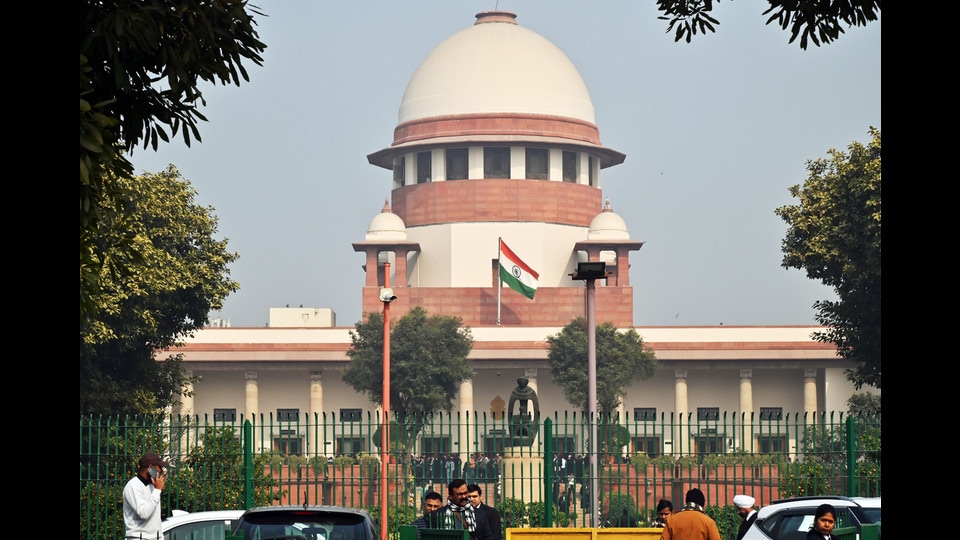
“The debilitating impact of drug trade and drug abuse is an immediate and serious concern for India...The arc and web of drug trade cannot be permitted to corrode the shine of the youth of India,” stated justices BV Nagarathna and N Kotiswar Singh, calling for immediate action from stakeholders including parents, society and state authorities.
The verdict, which came while affirming a National Investigation Agency probe against Ankush Vipan Kapoor in a Pakistan-linked heroin smuggling case, also expanded NIA’s investigative scope.
Authored by justice Nagarathna, the judgment highlighted how drug abuse impacts individuals and society, noting that India faces an unprecedented crisis transcending social, economic and geographical barriers. The court said profits from trafficking often fund terrorism and violence, destabilising society and threatening national security.
The judgment linked rising drug use among youth to peer pressure, academic stress and cultural influences glorifying substance abuse. “Escapism has become the default mechanism for dealing with life’s challenges,” the court observed, while calling upon the younger generation to exercise decisional autonomy and resist peer pressure.
Citing Article 47 of the Constitution, which places a duty on the state to improve public health and prohibit consumption of intoxicating substances, the bench said: “The ills of drug abuse seem to be shadowing the length and breadth of our country.”
The court referenced the social justice ministry’s 2019 report showing about 7.7 million opioid users, mainly in Punjab, Uttar Pradesh, Delhi and Maharashtra. “Alarmingly, the rate of opioid dependence is pacing at an unprecedented scale, partly due to the ongoing narcotic trade across the country’s borders and their consequent ease of availability,” it said.
The judgment placed significant emphasis on the role of parents and families in curbing adolescent addiction. “The most important yearning of adolescents is love and affection from parents,” justice Nagarathna noted, adding that children need emotional security and guidance from families.
“Drug abuse cannot be treated as a taboo that parents disengage from. Instead, open discussions about drug use and its ill consequences will provide children the knowledge and confidence to resist peer pressure,” the judgment stated.
The court directed schools to integrate prevention programmes and asked the National Legal Services Authority and state authorities to implement awareness initiatives in vulnerable regions. It stressed greater coordination between the National Commission for Protection of Child Rights and the Narcotics Control Bureau.
On NIA’s powers, the court said Section 8 of the NIA Act should be interpreted expansively. “The NIA, which is carrying on an investigation into any scheduled offense, can also investigate any other offense which any other accused may have committed, provided such other offense is also an offense connected with the scheduled offence under investigation,” it ruled.
The agency must report to the Centre if it identifies additional accused or offences during a probe. The government can then authorise expanding the investigation.
“On a holistic reading of Section 8, the expression ‘the accused’ cannot be restricted to only the accused in respect of whom investigation is being carried out by the NIA for any scheduled offence,” the judgment concluded.