
 E-Paper



SC ruling provides precedent as Chidambaram gets relief, Kejriwal seeks protection
This decision seems to be rapidly emerging as a critical precedent in cases involving public officials under PMLA.

 Prefer HTon Google


Senior Congress leader and former Union minister P Chidambaram on Wednesday succeeded in getting the trial proceedings against him in the Aircel-Maxis case stayed, while former Delhi chief minister Arvind Kejriwal moved the Delhi high court demanding a similar relief in the Delhi excise policy case -- developments that have put the spotlight on a November 6 Supreme Court ruling, which appears to be reshaping high-profile money laundering trials involving public servants.
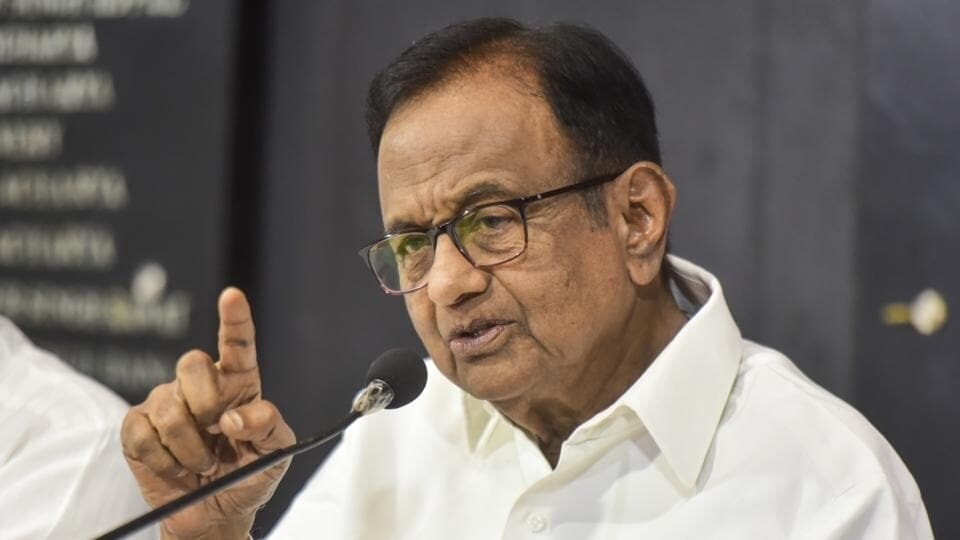
In its November 6 verdict, the top court ruled that prior sanction is mandatory to prosecute public servants in money laundering cases, establishing a key procedural safeguard under the Prevention of Money Laundering Act (PMLA) and adding a layer of accountability to such prosecutions involving public servants. This decision seems to be rapidly emerging as a critical precedent in cases involving public officials under PMLA.
Both Chidambaram and Kejriwal, in their petitions filed separately, have banked on the November 6 judgment of the Supreme Court, arguing that trial courts’ cognisance of the Enforcement Directorate (ED) charge sheets against them ought to be quashed for want of a prior sanction for prosecution since they happened to be public servants at the time of alleged offences.
While Chidambaram, in the Aircel-Maxis case, has been accused of illegally granting Foreign Investment Promotion Board (FIPB) approval as the Union finance minister during the UPA government, Kejriwal has been charge sheeted by ED over his alleged involvement in the formulation and execution of the Delhi excise policy 2021-22, which was later scrapped over allegations of irregularities and corruption. Both leaders have denied the charges.
Read more: Arvind Kejriwal seeks quashing of order over ED’s supplementary charge sheet
On Wednesday morning, justice Manoj Kumar Ohri stayed proceedings against Chidambaram in the Aircel-Maxis case, and sought ED’s response to his petition that assailed a 2022 trial court order taking cognisance of the charge sheet. Chidambaram contended that his alleged actions were performed as a public servant, and as per the November 6 Supreme Court ruling, prior sanction from the competent authority was a mandatory prerequisite for prosecution.
ED, represented by special counsel Zoheb Hossain, argued that Chidambaram’s plea was filed too late -- nearly two years after the charge sheet’s cognisance, and insisted that sanction was not required since the actions in question were not part of Chidambaram’s official duties. However, Justice Ohri granted interim relief to the former Union minister till January 22, 2025, stating, “Issue notice. Till the next date of hearing, the proceedings against the petitioner shall remain stayed.” The judge added that a detailed order will be passed later.
In a parallel development, former Delhi CM and Aam Aadmi Party convener Kejriwal filed a petition in the Delhi high court challenging a trial court’s July 2024 order that took cognisance of an ED charge sheet naming him and the AAP in the Delhi excise policy case. The ED’s charge sheet, submitted in May, accused Kejriwal of irregularities in implementing the now-scrapped policy for 2021-22.
Kejriwal’s petition highlighted the Supreme Court’s November 6 ruling in the Bibhu Prasad Acharya case, asserting that the trial court’s cognisance of the charge sheet violated the requirement of prior sanction for prosecuting a public servant. Kejriwal argued that his actions, as alleged in the case, were carried out in his capacity as the CM and thus fell under the protective ambit of the Supreme Court’s ruling.
The Supreme Court’s November 6 ruling in the Bibhu Prasad Acharya case added a significant layer of procedural accountability in PMLA prosecutions involving public servants. Delivered by a bench of justices Abhay S Oka and AG Masih, the judgment clarified the application of Section 197(1) of the Code of Criminal Procedure (CrPC) to cases under the PMLA, requiring prior sanction from a competent authority to prosecute public servants. The provision corresponds to Section 218 of the Bhartiya Nagrik Suraksha Sanhita, 2023, which has replaced the CrPC with effect from July 1.
Underscoring that Section 65 of PMLA makes CrPC provisions applicable unless inconsistent with PMLA’s provisions, the judgment added that the requirement for prior sanction is consistent with the intent to shield public servants from arbitrary or politically motivated prosecutions. Rejecting ED’s argument that PMLA’s overriding provisions under Section 71 negate the need for prior sanction, the top court stated that the harmonious application of Section 65 and Section 197(1) ensures fairness without undermining anti-corruption efforts. While the judgment protected public officials from arbitrary prosecution, it also ensured that valid prosecutions could proceed if supported by obtaining requisite sanction in the future.
This judgment stemmed from a disproportionate assets case involving two former Andhra Pradesh bureaucrats and former Andhra Pradesh chief minister YS Jaganmohan Reddy, where the Telangana high court quashed orders of cognisance against the bureaucrats due to the absence of prior sanction. The Supreme Court upheld this decision, noting that prosecuting agencies could still seek sanction to proceed in the future.
The stay secured by Chidambaram and Kejriwal’s petition seeking the same relief signals the beginning of what could be a wave of legal challenges by public servants accused of corruption and money laundering under the PMLA. These developments highlight the growing reliance on the Supreme Court’s judgment to counter prosecutions perceived as politically motivated or procedurally flawed.
Notably, this verdict also acted as an aid in the release of AAP MLA Amanatullah Khan in a money laundering case relating to the Delhi Waqf Board (DWB). On November 14, a Delhi court ordered the Okhla legislator’s release on bail noting that although ED had sufficient grounds to proceed against him, it failed to place on record sanction from the competent authority/government to prosecute him. It said that keeping Khan in custody in the absence of sanction would tantamount to illegal custody and there was no legal ground to justify Khan’s “further detention”.


