
 E-Paper



EVM VVPAT case: Supreme Court rejects pleas seeking 100% cross verification
Pleas for 100% verification of EVM-VVPAT: Supreme Court rejected pleas for paper ballot voting, complete EVM-VVPAT verification.

 Prefer HTon Google


Pleas for 100% verification of EVM-VVPAT: The Supreme Court on Friday rejected petitions seeking complete cross-verification of votes cast using Electronic Voting Machines (EVMs) with Voter Verifiable Paper Audit Trail (VVPAT). A bench of Justices Sanjiv Khanna and Dipankar Datta delivered two concurring verdicts in the matter.
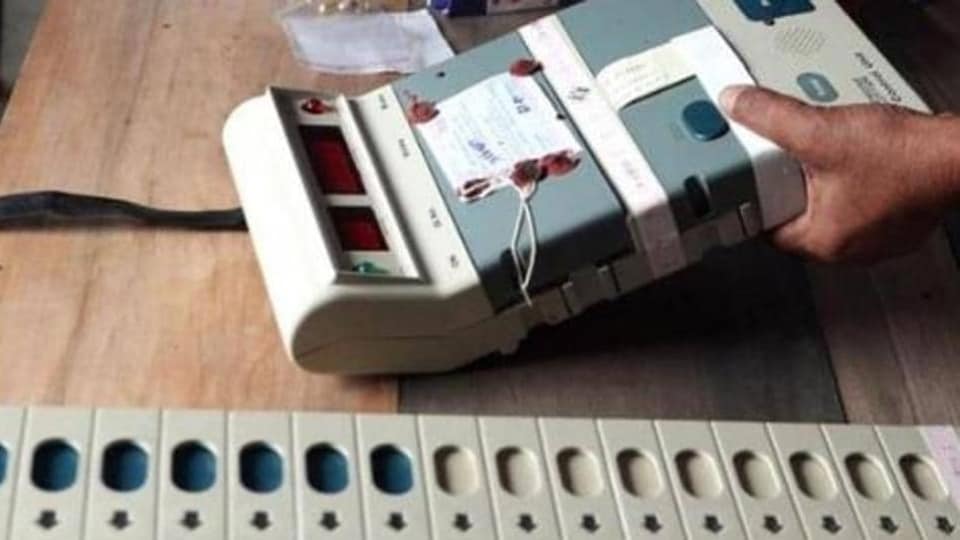
Pronouncing the judgment, Justice Khanna said the court has rejected all the petitions, including those seeking resorting back to ballot papers in elections.
The court allowed verification of the microcontroller of EVMs by the manufacturer after poll results on request of candidates who stand second and third. The apex court also said a request for verification of the microcontroller of EVMs can be made within seven days of the declaration of election results upon payment of fees.
VVPAT-EVM case: Supreme Court issued directives
The Supreme Court also issued two directions issued – containers carrying the symbol loading unit should be sealed in the presence of polling agents and candidates and be kept secured for 45 days and the control unit, ballot unit and VVPAT shall be verified by engineers of the manufacturing companies post the result of the counting on a written request to be made within seven days of the declaration of results.
What is VVPAT?
India has been using Electronic Voting Machines (EVM) since 2000 to record votes. The ballot unit is connected to a VVPAT or 'voter verifiable paper audit trail' unit which produces a paper slip that is visible to the voter via a transparent screen for about seven seconds before it gets stored in a sealed drop box.
Under the present system, the poll body counts and matches the VVPAT paper slips at five randomly selected polling stations in each state legislative assembly constituency, several of which are combined to form one parliamentary seat.
'Can't control the elections': Supreme Court
On Wednesday, the apex court had said it could not "control the elections" or issue directions simply because doubts have been raised about the efficacy of EVMs, as it reserved its judgment on the clutch of petitions, which also claimed the polling devices can be tinkered with to manipulate the results.
The court said it could not change the thought process of those doubting the advantages of polling machines and advocating going back to ballot papers.
The bench also took note of the answers to queries it posed to the Election Commission.
It sought answers from an official of the poll panel to five questions related to the functioning of EVMs, including whether the microcontrollers fitted in them are reprogrammable.
After a two-day hearing, the bench had on April 18 reserved its verdict on the pleas. However, the matter was listed again on Wednesday as the court wanted some clarifications from the EC.
NGO 'Association for Democratic Reforms', one of the petitioners, has sought reversal of the poll panel's 2017 decision to replace the transparent glass on VVPAT machines with an opaque glass through which a voter can see the slip only when the light is on for seven seconds.
The petitioners have also sought the court's direction to revert to the old system of ballot papers.
The seven-phase Lok Sabha polls began on April 19 and will conclude with the announcement of results on June 4.


