
 E-Paper



SC denies stay on Assam delimitation exercise
The current exercise was to determine the boundaries of 126 assembly seats and 14 Parliamentary constituencies


The Supreme Court on Monday refused to stay the delimitation exercise in Assam by the Election Commission, but agreed to examine a challenge to the law that permits the poll panel to arbitrarily decide on state and parliamentary seat boundaries without involving the democratically elected representatives of people.
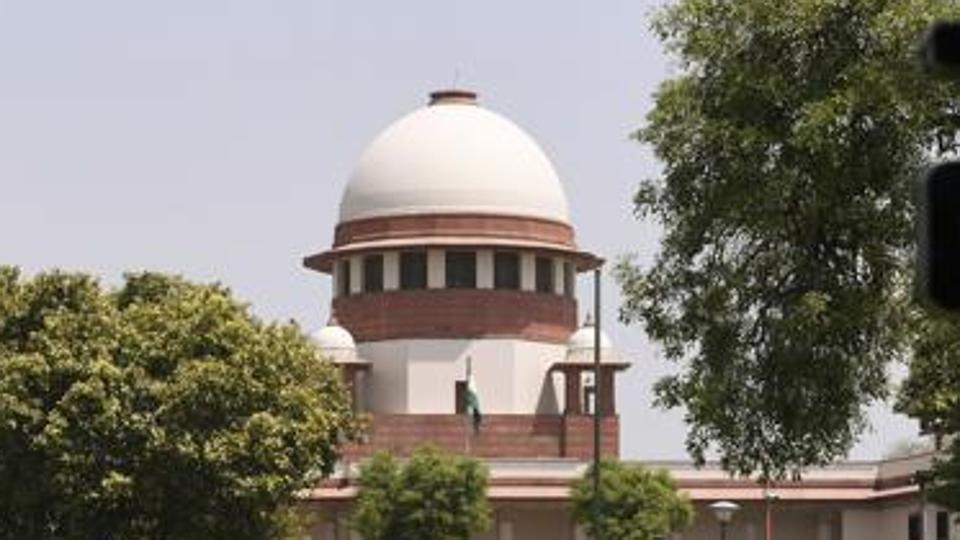
A bench headed by Chief Justice of India (CJI) Dhananjaya Y Chandrachud said, “At this stage since the delimitation has already commenced... particularly having regard to the issuance of draft proposal on June 20, it won’t be possible to interdict the process at this stage.”
The current exercise was to determine the boundaries of 126 assembly seats and 14 Parliamentary constituencies.
The court issued notice to the Centre on a fresh petition filed by 10 Opposition leaders from the state challenging the June 20 draft proposal of the Election Commission (EC) and section 8A of the Representation of Peoples Act, 1950 which gives EC power to draft delimitation of seats in Assam and three other north-eastern states of Arunachal Pradesh, Nagaland and Manipur.
The bench, also comprising justices JB Pardiwala and Manoj Misra granted three weeks for the Centre to file its response even as it refused to restrain the EC from proceeding with the final report.
The petition was argued by senior advocate Kapil Sibal who said: “This has never happened before in the history of the country. If this is allowed to take place, it will happen in the other three states as well.”
He requested the court to have the matter heard soon.
He pointed out that the unique situation with Assam was due to two 2008 amendments which introduced Section 10A and 8A to the Representation of Peoples Act. Section 10A allows President to defer the delimitation in the four states on ground of internal security or law and order. While Section 8A allowed the President to rescind any order under Section 10A in changed circumstances. With regard to Assam, this order was issued by President in February 2020 rescinding the earlier order of 2008 to defer delimitation. In December last year, the Election Commission started the delimitation exercise.
Section 8A introduced a different mechanism for these four states as in any other state, the delimitation process was done by delimitation commission headed by a former Supreme Court judge and having representation of members belonging to Parliament and Assembly in that state.
He said, “The Constitution has democracy as basic feature which is identified by its representative character. This acts as the basis for delimitation. How can you jettison the democratic process by not hearing the views of the elected representatives?”
He further stated that the power to rescind under Section 8A is given to President but the February 2020 order was issued by the Ministry of Law and Justice albeit, in the name of President. Finally, he questioned how the EC was demarcating boundaries based not on population but on density of population which is not the correct approach.
The bench said, “The constitutional challenge will merit scrutiny.”
Solicitor general Tushar Mehta appeared for Centre and agreed to file an affidavit explaining why the law is valid and how the present delimitation exercise is being carried out as per law.


