
 E-Paper



With China and Pak borders active, merit will be the criteria for new CDS appointment
In an era of cyber, information and stand-off weapon warfare, the Modi government will go beyond mere seniority in deciding the new chief of defence staff and possibly a new Army chief.

 Prefer HTon Google


On December 17, 2016, the Narendra Modi government appointed Bipin Rawat as India’s 27th Chief of Army Staff after superseding the then Eastern and Southern Army Commanders on grounds of merit, track record and vision. He went on to become the first Chief of Defence Staff on January 1, 2020, as well as Secretary of the newly created Department of Military Affairs (DMA). He lost his life in a Mi-17 V 5 helicopter crash in Conoor hills on Wednesday afternoon.
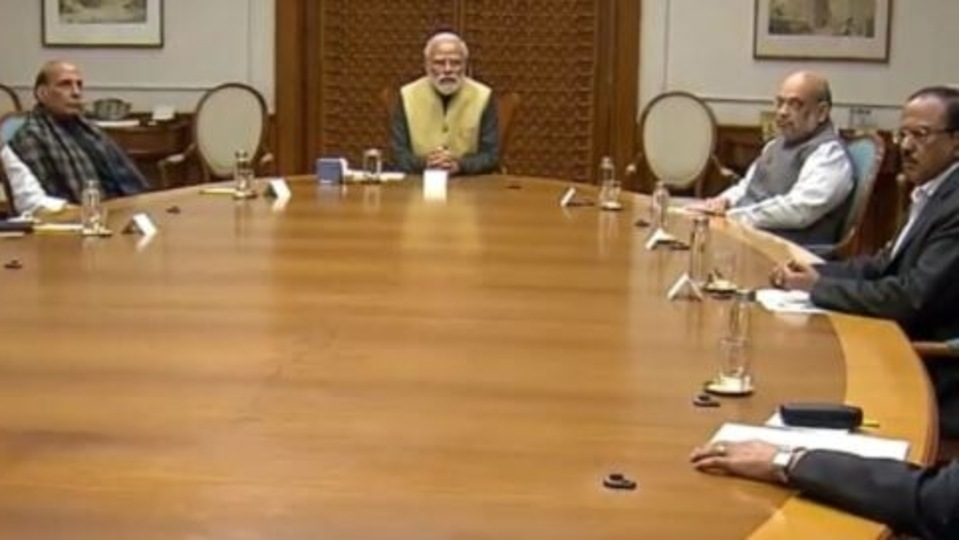
Now that the government has a task of appointing a new CDS from the Indian Army, being by far the largest of the military service, and possibly a new Chief of Army Staff, the Modi government is expected to follow the same pattern of overall merit-cum-seniority in deciding the senior-most defence officer of the country.
Given that the situation with China is tense on the Line of Actual Control (LAC) with PLA troops, tanks, rockets and missiles deployed in the Western Theatre, India will need a CDS who not only will forcefully push for the creation of military theatre commands, given the concerns in some service headquarters, as well as a General who can provide a sound single-point military advice to the government. As per rule, all the commanders in chief of the Army can be considered for the job of the CDS and seniority is not the only criteria. Simply upgrading each commander to the next step is not the way that the Modi government works as the careers of all officers under consideration will be looked at from 360 degrees and their performance during the ongoing stand-off with PLA in Ladakh. As General Rawat used to say that India is facing threat from 2.5 fronts.
Also Read | Gen Rawat to be accorded full military honours; tri-service probe ordered into chopper crash
While PM Modi will find it very difficult to match the qualities of Gen Rawat in his successor, the national security establishment will have to keep in mind the threat coming from Af-Pak region with Kabul under the military occupation of Taliban and Islamabad facing its worst economic and governance crisis with Prime Minister Imran Khan trying a leg-up on Army Chief Qamar Javed Bajwa. It is quite evident from events in Pakistan that PM Khan has turned more aggressive towards India in Kashmir and is supportive of the Taliban in Afghanistan, which appears contrary to what Gen Bajwa thinks as he fears worst radicalization in Pakistan with both Deobandi (Tehreek-e-Taliban, Pakistan) and Barelvi (Tehreek-e-Labbaik) Sunni sects up in arms.
The decision of new appointments to the post of CDS and Army Chief will also have to be taken in light of the fact that 21st-century warfare is all about cyber and information warfare with Beijing not averse to spending huge sums of money and dole out stupendous freebies to get intelligence or spread misinformation. Gone are the days of infantry maneuvers and tank battles, the era of stand-off weapons has dawned with armed drones, ballistic missiles and long-range air defence systems. The situation has got more complicated with Beijing glaring at Taiwan, Australia, Japan, the US, India and even Lithuania with junior diplomats issuing threats to sovereign nations as part of wolf warrior diplomacy. The task of appointment of the new CDS or even the Army chief is not easy lest the Modi government takes a deep dive in selection. And perhaps it will.


