
 E-Paper



Gro pro: How India is making room for new kinds of shrooms

 Prefer HTon Google


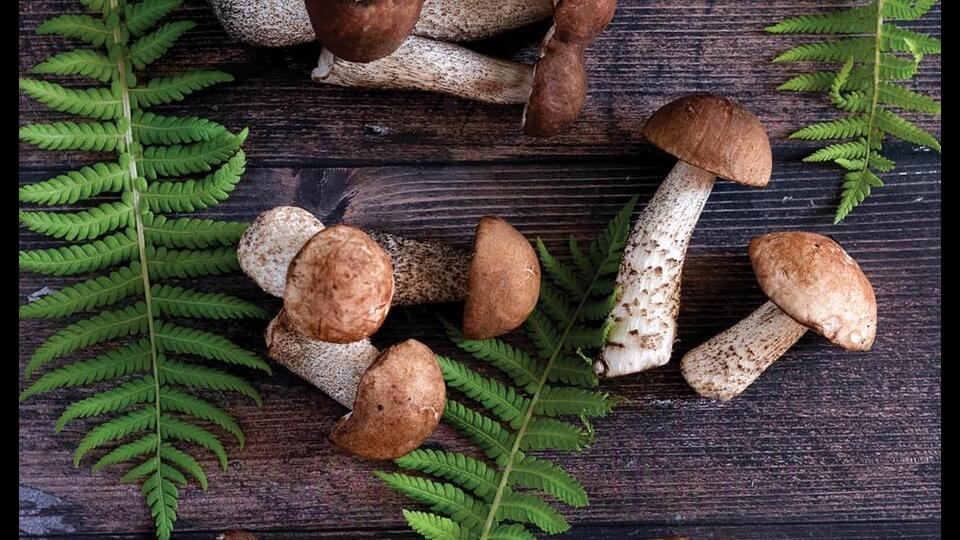
India grows a staggering variety of mushrooms. Yet, we can’t move past the button variety. See how some growers are putting the fun in fungi
Why aren’t we eating more mushrooms? We already know they taste good – we’ve devoured porcini puffs, gucchi biryani, enoki bibimbap and quattro-fungi pizza at trendy restaurants. We know they’re nutritious too – all fibre, no fat, packed with Vitamin D. They’re easy to grow – they spring from sawdust, dead logs, straw, coffee grounds, even cardboard sheets. They’re sustainable – they require less water, energy, and land than vegetable crops. They’re literally a precious asset – earlier this year, researchers at Goa University published research on how they synthesised gold nanoparticles from roen olmi, a wild, local mushroom variety.
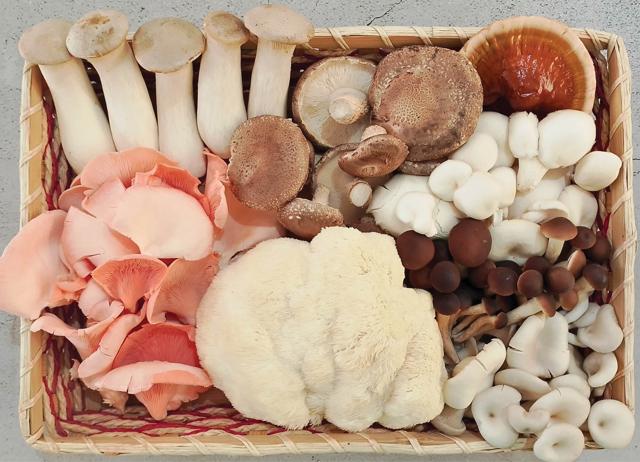
And yet, on grocery runs, all we’re picking up is the occasional tray of button mushrooms, the way we’ve been doing for three decades. Indian farmers now grow giant portobello, red reishi, nutty pioppino, oyster, shiitake, shimeji, and frightfully expensive lion’s mane. But they stubbornly refuse to break out of the gourmet aisle.
See how some farmers are hoping to change that, and make fungus among us a reality.
Growth spurt
Perhaps our hesitation springs from the fact that mushrooms are neither vegetable, nor meat; a They/Them pronoun in a world of strict binaries. People are finally getting more inclusive, says Anna Thomas, managing partner of Kerala-based farm Leena’s Mushrooms. “Earlier, demand for our oyster mushrooms would drop sharply during Onam and Christmas, because people would go vegetarian on Onam and prefer meat at Christmas,” she recalls. “Now it’s the opposite. Demand is high during both festivals.”
Mushrooms, perhaps more than any other new ingredient, work across cuisines – Korean, Japanese, Italian, French. In Bengaluru, Namrata Goenka, founder of Green Apron, which farms mushrooms and other veggies, says that trendy cafes and restaurants prefer sourcing shiitake and pioppino (the one that goes into sourdough sandwiches and on garlic toast). “It holds up well in soups, pastas, and risottos, making it appealing for chefs looking for a gourmet ingredient.”
But the real craze today is for lion’s mane, named for its long white spines that resemble the king of the jungle. At Green Apron, Goenka says she gets many requests to deliver the mushrooms fresh or in a powder, because it’s believed to have cognition- and immunity-boosting properties. Rohhann Gawde, founder of Mumbai-based The Mushroom Company, says that people will pay up to ₹1,000 for 200 gm of fresh lion’s mane. “Alzheimer’s patients consume it because some studies claim that it reduces memory loss.”
It’s possible that mushrooms seem less intimidating as medicine than main course. In Bengaluru, Nuvedo Mushrooms sells mushroom powders and tinctures that aim to improve stamina, energy levels, and sleep quality. Jashid Hameed, one of the founders, claims that lion’s mane liquid extract, their bestseller, improves cognitive performance, while reishi mushroom extract powder helps people sleep better. They also sell an extract made from cordyceps, aimed at enhancing stamina and lung capacity. “Regular users of our lion’s mane extract have told us that they’re able to remember OTPs, passwords, and recall words much better.”

Fungi fans
More people who’ve eaten different mushroom varieties are now getting interested in how they’re grown. Nuvedo Mushrooms conducts foraging walks in Bengaluru’s Cubbon Park and the Lalbagh Botanical Garden. Earlier this year, they published Mushrooms of Uru, the first part of a 100-variety field guide to the fungi varieties that grow in the two parks. Turns out there’s plenty, including the funny-sounding Judas’s Ear, pencil shavings, and wood ears. Hameed, along with co-founder Prithvi Kini, also manage a community of 20,000-odd self-professed mushroom geeks. They get together for fungi walks, workshops and fungi festivals. “We wanted to create a space where people could share their love and knowledge of mushrooms and build a culture around fungi,” says Kini.
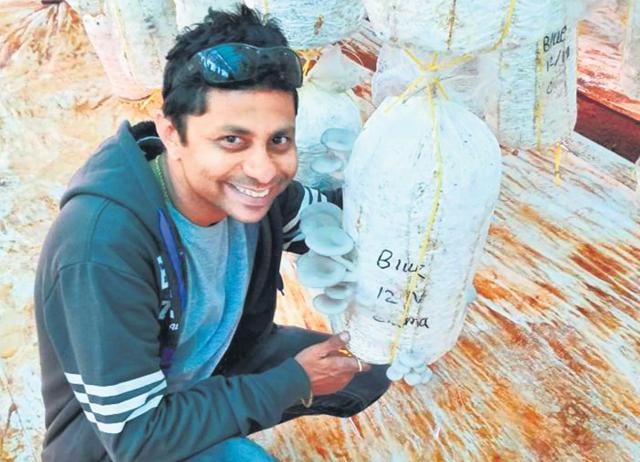
And because mushrooms don’t need acres of farmland, many enthusiasts are now growing edible varieties at home. “If you have a terrace or a storage area, you can grow several batches for your own consumption,” says Gawde. Sidharth Sood, owner of Sukoon Cafe and Bar in Lower Dharamkot, Himachal Pradesh, has been doing it since last November, growing lion’s mane and button mushrooms for his restaurant. “It’s such a beautiful experience of watching them grow. They’re like your baby,” he says. After the monsoon, he also teams up with local fungi enthusiasts to head into the mountains to forage morels, known locally as gucchi. “You have to have the eyes of a hunter to spot them in the wild,” he says. “When you find one, it’s like finding a treasure. We call it a gift from the gods because it’s so delicious.”
Slow spawn
And yet, city retailers are wary of stocking anything other than button or the occasional oyster. Goenka says it’s because they believe they will spoil faster than Indian veggies. Gawde, who supplies mostly to restaurants, believes it’s because Indian buyers view them as costly culinary experiments. “On the other hand, restaurant menus are always changing; the demand for our mushroom varieties keeps changing every winter, especially during festivals.”
Farmers are waiting it out. Goenka, formerly a patent attorney, ventured into mushroom farming in 2018 after harvesting shiitake on her 10x10-foot Bengaluru terrace. Jithu, Thomas’s husband, also began the farm as a passion project when he experimented with growing his own oyster mushrooms under the bed in 2010.
For Gawde, the fun lies in how unpredictable mushroom farming is. “They have a mind of their own,” he says. “Sometimes, there’s no growth at all for 24 hours. Then, suddenly, they burst into bloom. Our regulars know that when their orders are delayed, it’s because they’ve been fussy!”
From HT Brunch, October 12, 2024
Follow us on www.instagram.com/htbrunch


