
 E-Paper



The Tawang clash is a wake-up call. Don’t let China off the hook
To counter the hostile neighbour, much like it earlier did in both Doklam and South Pangong Tso, India needs a bolder approach that takes advantage of the terrain to ensure no more incursions

 Prefer HTon Google


If there was an assumption that the face-off between Indian and Chinese troops was limited to the Ladakh sector of the India-China border, the latest reports from Arunachal Pradesh are a wake-up call. China is engaging in a form of coercive diplomacy, engaging Indian border troops in low-intensity clashes without intending to spark a shooting war. The objectives are to convey displeasure with India’s external policies that China finds threatening, to nibble off additional territory wherever possible and to demonstrate Chinese asymmetrical power and capabilities ranged against India across the entire stretch of the border.
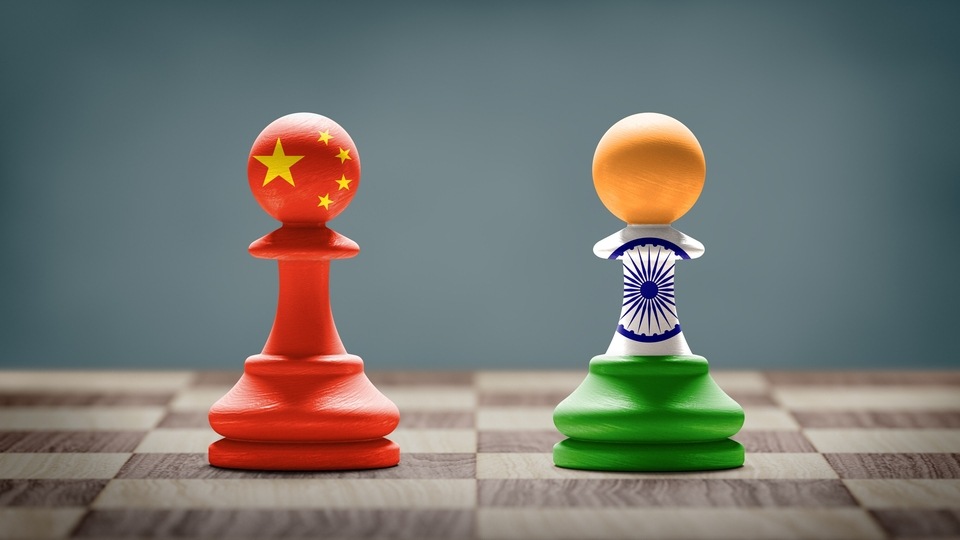
The Chinese expectation is that faced with such asymmetry, the Indian side would absorb the message intended and be restrained and prudent in its reaction. China may wish to avoid a dangerous escalation but as we witnessed in Galwan in 2020, things do not always run according to script. When physical blows are being exchanged and emotions are running high, things can and do get out of hand. The willingness of both sides to remain in communication and activate mechanisms already in place to resolve face-offs indicates that, currently, neither side wishes to risk larger scale and violent hostilities. But the Chinese do have the capacity to initiate aggressive operations along the border. India is mostly reactive and it is a matter of debate whether this is the best strategy to keep the border relatively peaceful.
The latest incident took place at Yangtse in the Tawang sector, which is a sensitive area for several reasons. While China claims the whole of Arunachal Pradesh as “southern Tibet”, it has repeatedly declared that in any eventual border settlement, Tawang must be “returned” to Tibet. Its arguments are that Tawang was forcibly occupied by India as late as 1951; that even the Dalai Lama government in Lhasa had asserted its claim on the territory; and that the fifth Dalai Lama was born in Tawang – which proves its status as Tibetan, and therefore, Chinese territory – and testifies to its religious significance for the people of Tibet. Any Chinese military activity in this sector, therefore, takes on a larger significance. This is also happening at a time when speculation is rife about the succession to the 14th Dalai Lama, who, although in good health, is in his eighties. The Tibet dimension in India-China relations is important.
If the idea is to keep India off-balance, what may have been the proximate triggers for the latest and serious incident? China was conveying its anger over the recent India-United States (US) joint military exercises that were staged in the hill-state of Uttarakhand, barely 100 kilometres from the border. The Chinese side had protested, describing these exercises as a violation of peace and tranquillity agreements between the two sides. The protest was categorically dismissed by our spokesman. If India and the US were conveying a not too subtle message that the two partners could work together to confront the Chinese threat on the border, China’s actions in Arunachal are designed to convey that it can threaten India at multiple points on the border and is not deterred by the US security partnership with India. This will generate another round of debate over partnership vs alliance with the US as the most optimal means of deterring China. India may resist entering into an alliance relationship with the US and seek to retain its room for manoeuvre. The Chinese game is to nudge, if not to compel, India to choose. India, having taken on the G20 presidency and concurrently serving as the host country for the next Shanghai Cooperation Organization (SCO) summit, wishes to convey independent agency as a major power. One can see why China would want to put a spanner in the works.
If this is a period of opportunity for India to enhance its international profile and influence, it is also a period of vulnerability. Indian diplomacy has to navigate a difficult and potentially threatening international landscape in the coming months. It may be best to avoid expressions of triumphalism and suggestions that the G20 presidency is India’s coming-out party. China will have no hesitation in spiking Indian ambitions. There would be no surprise if incidents such as Galwan and Yangtse are repeated with even greater frequency during the G20 year. Such possibilities require careful reflection and an appropriate diplomatic and military strategy.
On the military side, a bolder strategy would be to take advantage of a very variable mountainous terrain along the border, which offers several favourable points for swift ingress from the Indian side in response to Chinese incursions. This was demonstrated both at Doklam plateau at the India-Bhutan-India tri-junction and later at the South Pangong Tso in Ladakh. Both operations gave India something to bargain with in resolving the stand-off. The Indian armed forces would be best placed to judge the efficacy of such a strategy. But this appears to be a better approach than merely reacting to incursions or attempted incursions.
Finally, the Indian lexicon should drop the constant references to “differences in perception” to explain why clashes may have taken place in certain areas. The Chinese do not use such terms. Their current approach is not to clarify the Line of Actual Control (LAC), so they can say wherever they want it to be. We are clear where the LAC lies so why say that there may be a “difference in perception” which weakens our position and lets the Chinese off the hook?
Shyam Saran is a former foreign secretary and an honorary senior fellow at CPR
The views expressed are personal


