
 E-Paper



Book to Screen: The Odyssey
Nolan’s "The Odyssey" creatively diverges from Homer, omitting key scenes and reimagining characters, sparking debate over its faithfulness and depth.

 Prefer HTon Google


When Christopher Nolan adapts one of the greatest stories ever told, you’d expect even the Greek gods to take notice. But is Nolan’s The Odyssey, with its glorious set design and grand scale, just as riveting as Homer’s three-thousand-year-old epic?
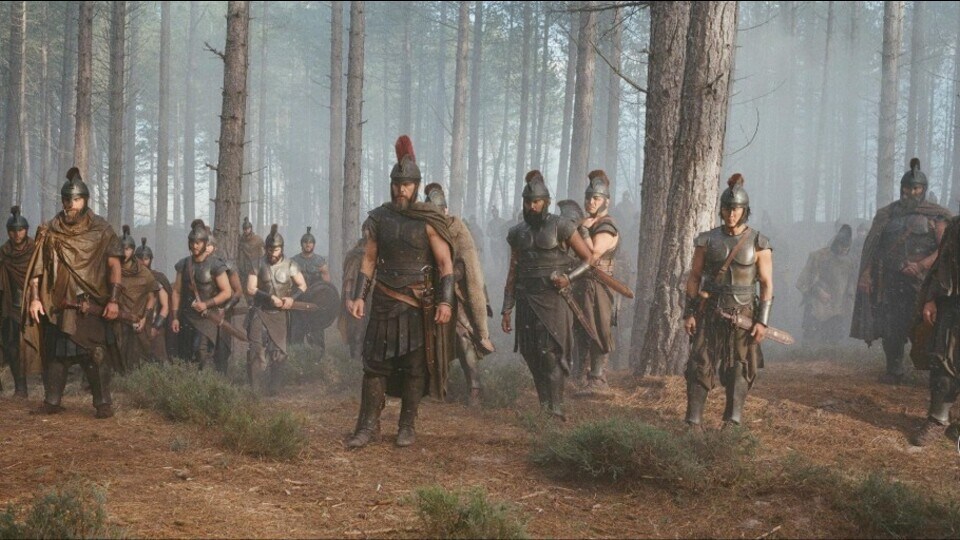
Let’s start with the film’s biggest departure from its source material. The omission of the ‘Nobody’ wordplay scene has become one of adaptation’s most hotly debated choices. Many fans of Greek myth consider it the moment where The Odyssey truly begins. For context, in the Homeric epic, when the hero and his men are stuck in the cave of Cyclops Polyphemus, Odysseus tricks them by saying his name is “Nobody”. As a result, the giant’s cries for help are ignored entirely and Odysseus and his men escape successfully. Nolan has nixed this scene from the epic because, in his opinion, the ancient Greek pun doesn’t translate naturally into modern English or realistic dialogue.
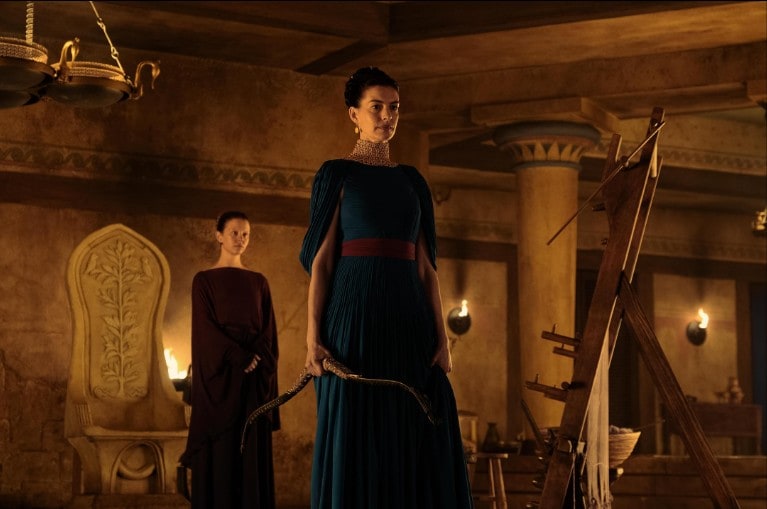
The omission significantly changes how the scene plays out in the film versus the epic. What could have been a relatively light-hearted exchange that underscored the shrewdness of Odysseus plays out as an encounter which is relatively more serious. Nolan, by stripping the encounter of its levity, encourages viewers to empathize with Polyphemus, a gentle giant who is blinded after Odysseus and his men encroach upon his home. I couldn’t help but sympathize with Polyphemus even more when Odysseus, in an unnecessary display of hubris, further provokes him by firing an entirely uncalled-for arrow. Perhaps this is Nolan’s way of making Poseidon’s curse feel earned, complicating Odysseus’ legacy by suggesting that his downfall stems as much from his own hubris as from the whims of the gods.
Another notable adaptation choice is Nolan’s decision to reimagine Odysseus as unwaveringly faithful to Penelope, the Queen of Ithaca. In the original epic, Odysseus becomes lovers with both Calypso, the nymph who keeps him trapped on the island and Circe, the witch who turns his men into pigs. In the stories that happen after The Odyssey, such as Hesiod’s Theogony, Circe and Odysseus even had multiple sons. So why did Nolan remove the romantic sub plot from his film adaptation? Was Odysseus’ faithfulness written to suit the sensibility of the modern audience? Whatever the reason, the creative decision flattens the original epic’s complication and oversimplifies Odysseus into a more conventional, unambiguously virtuous hero.
It also doesn’t help that in Nolan’s film, Calypso (played by an earnest Charlize Theron) is criminally underwritten. The romantic tension between Odysseus (Matt Damon) and Calypso is entirely missing. In the original epic, Calypso holds Odysseus captive until Hermes, at the behest of Zeus and Athena, forces her to release him. In Nolan’s film however, Calypso comes across as a nymph who has begrudgingly accepted that Odysseus will eventually leave the island when he remembers Penelope. Calypso’s desperation to hold Odysseus captive and to make him her immortal husband is entirely missing. Nolan writes her as more a guide who helps Odysseus recollect his lost memories post the Trojan war. It is a creative choice that flattens Theron’s character into a plot device that facilitates Odysseus’ emotional awakening.
Perhaps the boldest reinterpretation by Nolan is to largely sideline the Olympian gods. The lone exception is Athena — the Goddess of wisdom, strategic warfare and craftsmanship — played by a woefully underutilized Zendaya. In the original text, Athena convinces Zeus to allow Odysseus to return home, leading to Hermes repeatedly playing a key supporting role in his efforts to escape. In Nolan’s film, none of this happens. Hermes is entirely absent and there is no conversation between Athena and the God of thunder. Instead, Nolan uses nature as a manifestation of divinity. In a scene, we see Zeus punish Odysseus’s men for feasting on a flock of sheep in the form of lightning which strikes their ship.
To people in Bronze Age Greece, phenomena like thunder, earthquakes, and turbulent oceans didn’t have scientific explanations; they were viewed as the literal actions and wrath of the immortals. Nolan treats the environment as a character, making the forces of nature feel like the gods acting on the world. The film also heavily leans into Xenia, the Greek concept of Zeus’ law. Gods walked among people disguised as beggars so it forced people to treat everyone with respect. In 2026 where wealth and income inequality are on the rise, I couldn’t help but appreciate Nolan for opting for a more humanistic and rooted approach of portraying the Gods, even if the cinephile in me longed to see how he would have brought the Olympian deities to life on the IMAX screen.
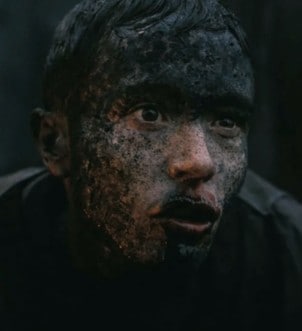
Another departure from Homer — one that deserves loud applause — is Nolan making Sinon (played by Elliot Page) a far more significant character. In the original text, Sinon doesn’t appear at all. The character originates in The Aeneid, written by Virgil nearly seven centuries after The Odyssey. By portraying Sinon as a loyal companion to Odysseus, and “the bravest man he has ever known,” Nolan seems to tip his hat to actor Elliot Page, whose decision to publicly transition has come to symbolize remarkable personal courage. It is a choice that elevates Sinon while highlighting his quiet sensitivity in stark contrast to Antinous’ (played by Robert Pattinson) brand of toxic masculinity. It is a thoughtful casting decision.
Among the film’s other, less significant but still noteworthy departures are: the Laestrygonians being portrayed as less brutal, whereas in the original epic they are cannibals who devour the Greeks; Telemachus discovering his father’s identity through the death of Argos, their faithful dog, rather than through the swineherd Eumaeus; and the omission of Achilles’ shade during Odysseus’ descent into the Underworld.
Nolan’s Helen (assayed by Lupita Nyong’o) is considerably more embittered than her Homeric counterpart. While Homer’s Helen has largely reconciled herself to life with Menelaus by the time Telemachus arrives in Sparta, Nolan’s version remains visibly haunted by the Trojan War, carrying a simmering resentment that occasionally spills over into her interactions with him. Nyong’o herself has said Nolan was interested in exploring “the cost of war” through Helen — her “rage, resentment, guilt, shame, disappointment, endurance.” It is a creative choice that improves upon the source material.
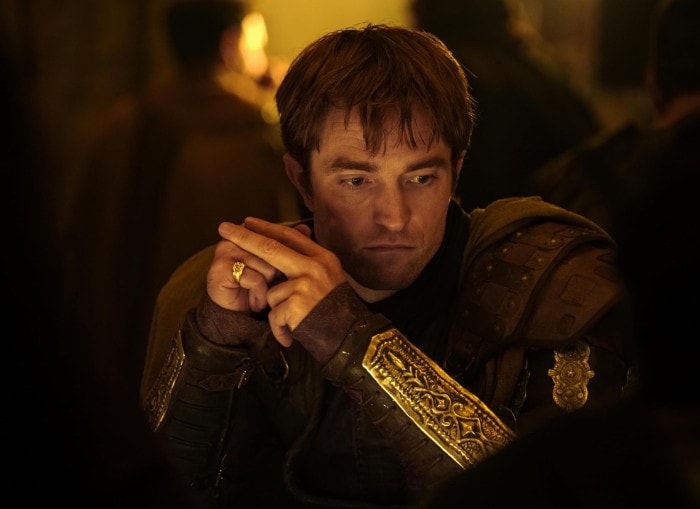
The final tweak in the film is the omission of the bed challenge. In the Homeric epic, Penelope has one final test for Odysseus to prove his identity: he must move their bed. Odysseus explains that the bed cannot be moved for it is made out of the trunk of an olive tree. Nolan omits the this entirely, presumably to allow the film to end on a high note where a valiant Odysseus kills the suitors. Nolan’s creative choice denies Penelope the right to confirm Odysseus’ identity on her own terms. The viewer is also robbed of the emotional payoff of seeing the lovers reunite over shared knowledge.
Nolan’s The Odyssey may not always steer in Homer’s direction, but its bold detours are rarely without purpose. No adaptation can hope to out-Homer Homer, and Nolan wisely doesn’t try. His Odyssey reaches Ithaca with a different map —occasionally discovering richer shores, occasionally leaving treasured landmarks behind. How you react to the film maker’s creative choices will determine whether this voyage feels like home.
Deepansh Duggal writes on art and culture. Twitter: @Deepansh75.


