
 E-Paper



Omar Musa: “We’re haunted by the ghosts of the past”
The author of Fierceland spoke about postcolonial nations, their inheritance, climate collapse, and the idea of land as something that’s alive

 Prefer HTon Google


Fierceland is deeply concerned with inheritance of land, damage, and silence. What did writing this novel teach you about the kinds of inheritances we don’t choose but still live with?
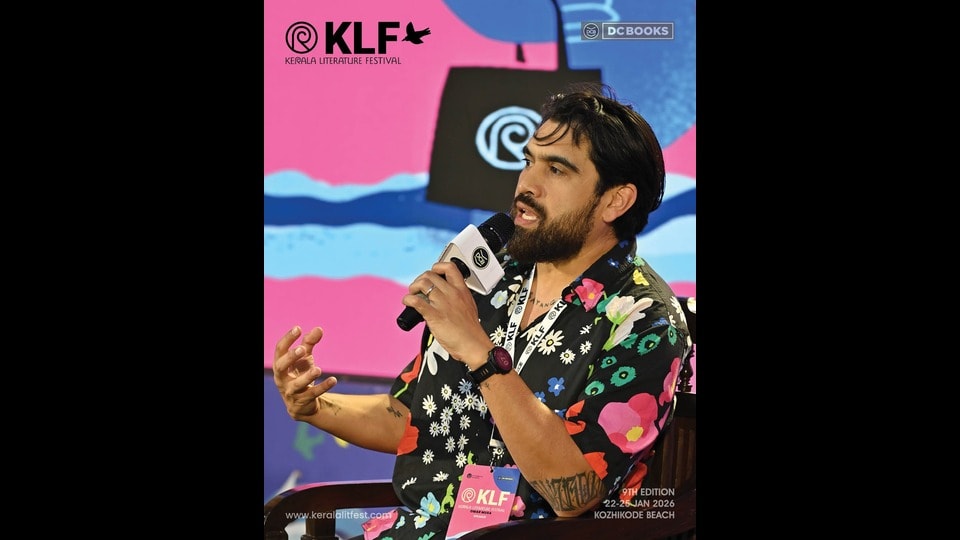
I think about it in two ways. The first is on a personal level — a very ancient, archetypal story of children inheriting the sins of the father, and how, if we are complicit in systems of oppression or exploitation, are we complicit through choice or coercion? Maybe even coercion through bloodlines.
The second is on a much broader scale. I became interested in the inheritances we have as postcolonial nations — whether it’s India, Nigeria, or Malaysia. I wanted to look at the links between these different but similar nations on a global scale. That’s why I have a section of the book set in Nigeria in the 1970s, during the oil palm trade — to show that there are deep sub currents always moving beneath the surface. They don’t exist in a vacuum in one region at one time; they’re linked across the world, especially in places colonised by an empire or even a trade company, like the East India Company.
I wanted to interrogate how the exploitation of land can be inherited by modern corporations, industries, and even governments — particularly in Malaysia, from the era of the North Borneo Trade Company.
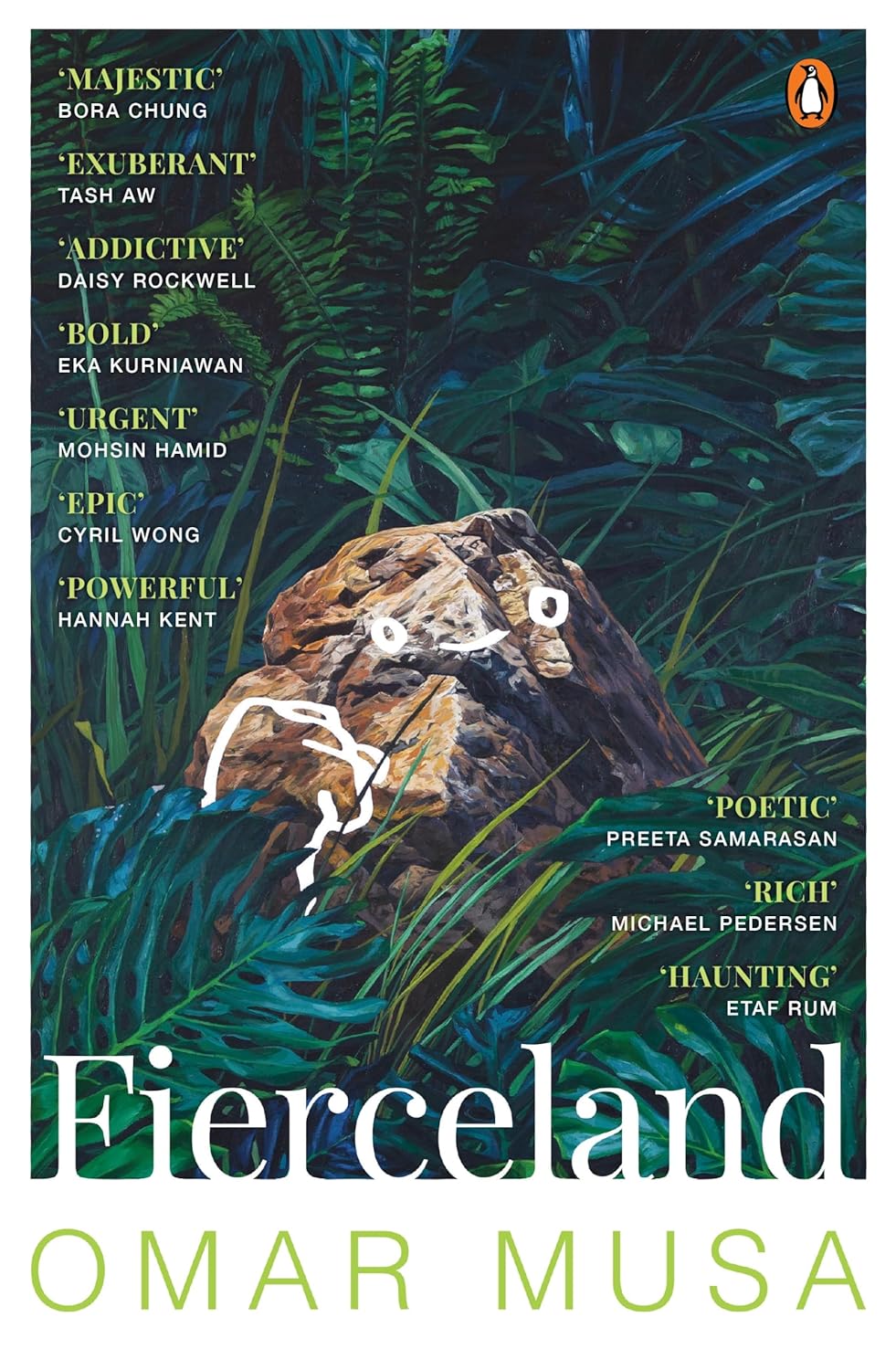
The book resists the spectacle when dealing with climate collapse, choosing instead to situate it in family life and everyday decisions. Why was it important for you to keep this crisis intimate rather than apocalyptic?
I mean, firstly, it’s a novel. It’s fiction. And I believe the best fiction is driven by human relationships and dynamics. Otherwise, it can easily drift into a polemic — and then at that point, you might as well write a non-fiction account of the palm oil trade. And there have already been many of those. I wanted to use that seemingly small window of intimate family relationships to look at broader struggles. I also think that when we’re talking about an ecological crisis, it’s important to bring it down to that level — to look at the way it affects people on a daily basis. It makes it more real. It makes it more intimate, and in some ways, hence, even more potent.
Furthermore, a lot of the people I interviewed and spoke to during the research phase of this book were people who lived on the front lines. It’s not necessarily the heads of corporations engaged in extractive practices who see the impact of climate change or environmental destruction. More often, it’s the fishermen, for example. The farmers. They see that the seasons are changing. The tides are changing. The water temperatures are changing.
Speaking to many such people over the six years I spent researching the book changed my perspective. These global issues are personal — and I wanted to reflect that.
Place in Fierceland feels morally charged rather than neutral. How do you think about land — not just as setting, but as something that remembers, resists, or at times, even implicates the people that live there?
I feel like you said it better than I could in the question itself. Place has always been important in my writing. But with Fierceland, I had certain things on my mind.
For example, in books like Heart of Darkness by Joseph Conrad, the land and the landscape provide a backdrop for the dramas of the characters — it’s perhaps used as a metaphor for the dark heart of man, or a silent witness to their behaviour. But in a place like Borneo, the forest has traditionally been understood to have its own spirit, its own agency — something to be respected, admired, and even feared.
I wanted to bring that concept to the fore, so that the land wasn’t just inert — the forest not merely something present to be acted upon or exploited. It had its own agency, its own decisions, its own playfulness, its own aggressiveness. And I felt that did it more justice than simply using it as a metaphor.
The family relationships in the novel remain unresolved. Were you intentionally resisting the idea that fiction must offer reconciliation or closure?
I think it comes back to the idea that we live with these inheritances and echoes. We’re haunted by the ghosts of the past — constantly shaped by our memories. I’m not sure there’s ever really such a thing as closure. Maybe there’s acceptance of the traumas and inheritances you carry, but true closure? I’m not sure it exists.
With family relationships — especially their thorniness, their history — it feels very difficult to arrive at anything that resembles a resolution. And that felt more true to life to me: that these relationships remain in flux rather than being tied up with a neat bow.
It was also a conscious narrative decision. If the family dynamics in the novel are reflecting larger forces at play — colonial inheritances, ecological collapse, historical violence — then those forces themselves remain unresolved. We haven’t found solutions to the climate crisis. We haven’t found closure for those broader, darker periods of history. So, it didn’t feel honest to impose that kind of reconciliation on the story.
Your prose carries a sense of rhythm and restraint. How does your background in poetry and music shape the way you build sentences and control silence on the page?
I often try to find the shape, rhythm, and cadence of the prose through some sort of performative element. Even though I write in silence and take my time with it, when it comes to editing, I’ll often read it aloud. That way, the awkward phrasing makes itself clear, and you figure out which extraneous words to cast aside.
For me, the playfulness and the tension — the back and forth between very dense prose and very spare prose — is something I personally enjoy reading, and I enjoy writing it too. I think poets can often fall into the trap of making all their prose dense and convoluted, without allowing the audience or reader enough time to breathe and think.
I remember when I was young, an English teacher of mine said that I had a Muhammad Ali — “float like a butterfly, sting like a bee” — approach to writing, where I would bounce back and forth between those different modes. You can’t have too much float, and you can’t have too much sting. That’s the way I see it.
You work across forms — novels, poetry, performance, music, and even visual art. When you sit down to write fiction, what parts of those practices do you consciously invite in and what parts do you deliberately leave out?
I lean into prose and fiction writing when I’m in a more interior or introverted state of mind. Because I’m a performer as well, people often assume I’m a full-blown extrovert. But in actuality, I spend a lot of my time in my own company, writing in silence as I mentioned before.
Earlier, I used to separate myself from the “aggressive” energy I had when I was writing performance poetry or rap music [while writing fiction]. However, recently, I’ve come to appreciate that I have a lot of these tools that I’ve picked up over the years at my disposal. So now I never leave anything off the table when it comes to writing a book. You’ll see there’s even visual elements that I borrow from my visual art, and of course the music, and the musicality of the sentences.
Climate anxiety often comes with a desire for solutions or moral clarity. As a novelist, do you feel any pressure to offer answers — or is your responsibility something else entirely?
I think, for a poet or a novelist, asking good questions is often enough. I’m not a politician, a policymaker, or an economist — coming up with intricate, pragmatic policy responses is someone else’s job entirely.
Having said that, in a book like this, I probably lean a little more towards seeking and offering answers — albeit in a broad sense. From my conversations with people on the front lines — environmental activists and others — one recurring theme has been the importance of listening closely to civil society and to indigenous communities, who hold forms of wisdom about land stewardship that have long been sidelined or silenced.
I don’t offer answers in a prescriptive way — I’m not saying, “This is what people have to do.” But one of the central themes of the book is privilege and how it’s used. If privilege is a resource, then you can choose how to spend it. You can use it to uphold and maintain the status quo, or you can use it to challenge it. In that sense, the novel gestures toward responsibility rather than resolution.
Rutvik Bhandari is an independent writer. He lives in Pune. You can find him talking about books on Instagram and YouTube (@themindlessmess).


