
 E-Paper



Review: Biopeculiar by Gigi Ganguly
From cloud herdings to starling murmurations that send messages to a birdwatcher, these 22 speculative stories underline the challenges posed by climate change

 Prefer HTon Google


Gigi Ganguly’s collection of stories, written with a lot of heart, takes readers into unknown worlds and distant futures, where clouds are terrified of humans and the quest for survival compels polar bears to willingly walk into human traps. With deep empathy, Ganguly uncovers the many ways in which just one species – us humans – has burdened this planet and points to the greater mess that lies ahead.
All the 22 stories are speculative and underline the challenges posed by climate change. Except for Corvid Inspector, most stories run into a few pages, the shortest being Carelessly Sea Follows, which is just a page long. This particular piece reads like a poem, and serves poetic justice too. It’s the story of the sea which flows on overpopulated lands, gobbling up “hopes and griefs” – apart from its appetite for the material. Yet, the sea is never satiated and hungers for more.
“One day, it knows, the balance will tip over… And the sea will finally be able to gulp down cars, plants, restaurants, elephants, bridges, eggs, cushions, tails, clowns, wings, fans, whiskers, hair, skin, eat the Earth whole… And then finally, it will be full” - Ganguly’s summing up of the process and the outcome of climate change that threatens our natural habitat is chilling.
In Head in the Clouds that opens the collection, a man herds clouds. When one goes missing, he sets out to look for it, wondering if the cloud-seeding companies had kidnapped the cumulus. He reminisces about the good old times, when cloud-herding was as simple as farming, and when rainfall depended on the mood of the clouds.
In A Year (Not Quite) Alone in an Alien Wilderness, Loursge, a genetically modified human, has, by age 35, taken part in more than “thirty four thousand five hundred” dangerous space missions. She has fixed the homeship from the outside, investigated meteors and dived into black holes. She has been rather deliberately sent on another difficult mission – near a solar system with five planets and 25 moons. When she spots a “blue, black and green” moon, she steers her pod towards it and is stranded there for one “Earthian” year. When she steps out of her pod to explore the moon, her world changes. She sees life from the perspective of the moon’s inhabitants – monkeys, tigers, plants, birds. A year later, when her “comm lines” are restored and she is ready to take off, a flower pleads with her to stay.
In most of Ganguly’s stories, the protagonists are bees, otters, tigers, polar bears, dolphins, silkworms, the flora and fauna and we see life from their perspective. Through her powerful imagination, she unfurls their worlds and shows how humans are suffocating their fellow species.
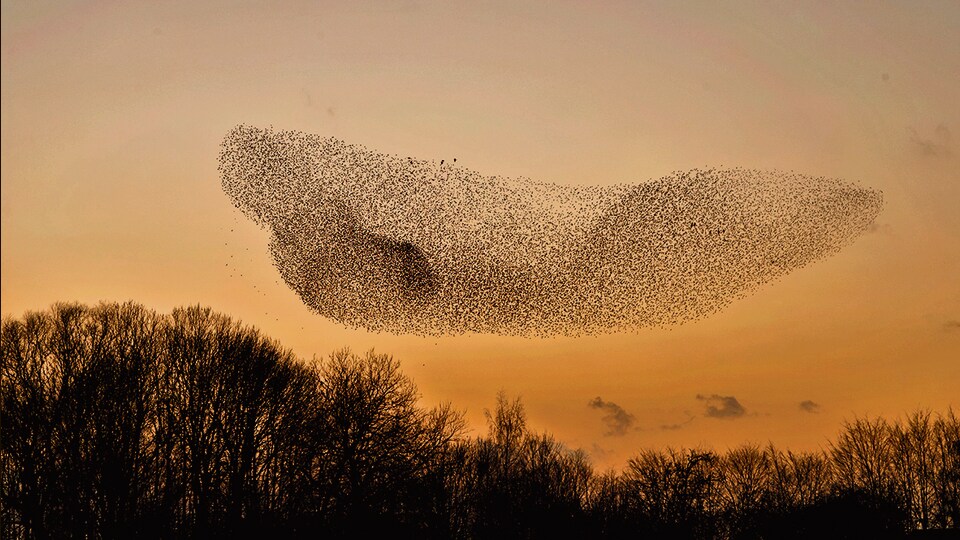
In Sort Sol, a middle-aged woman joins a group of birdwatchers, marvelling at the solidarity among starlings as they form “an O, an X, two Vs” while soaring the skies. She eventually learns to read the messages that the starlings are trying to convey through their formations.
The author is at her imaginative best in Cocoon. Here, she drills into her readers that humans can and will cross all boundaries to exploit and will not spare even their own. A young man named Poltu, who visits his friend Nilanjan’s silkworm research facility in the forests of Jangalmahal, gets bitten by a silkworm. He starts noticing changes in his body. One day, Nilanjan pawns his friend to turn his family’s ancestral business into a profitable venture once again.
Ganguly’s love for the natural world and her worry about the crises that engulf it today holds up a mirror to our times with her speculative stories often appearing to be in the realm of the possible. Or just about. Readers are bound to shudder at the possibilities presented by cloud-seeding; the possibility of the sea gobbling us; the possibility of strong whirlwinds flattening our concrete jungles.
Losing, about a woman whose singing of the Raag Malhaar brings rain, is particularly moving. Her larynx is severely damaged as the weather department compels her to sing continuously in parched regions with no rainfall. They won’t let her go as none of her pupils can replicate her magic. One of them is promising but, so far, her singing has had no impact on local weather reports, which she studiously tracks to gauge the impact of her voice on cloud behaviour.
“Mrinalini knows that the prime minister had hoped to accompany her on her live performances and reap all the benefits of it, use it to boost his image among the country’s non-resident citizens. He wouldn’t like Mrinalini’s decision,” Ganguly writes, telling us how everyone is busy pursuing their own political and non-political agendas, uncaring about the impending doom. This is in stark contrast to the animal world, or among aliens inhabiting other planets, who communicate telepathically, and show no signs of violence. Ganguly emphasises that they are a “much more advanced civilisation”.
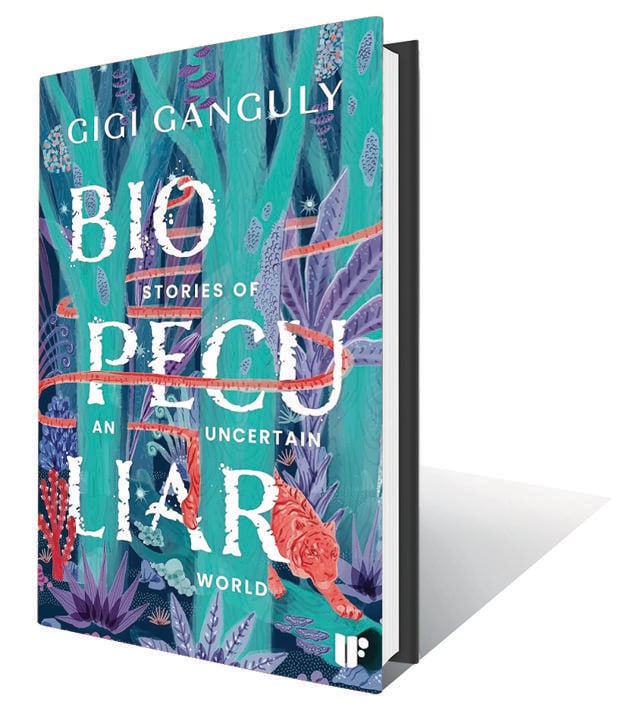
IF is Westland’s new imprint specialising in speculative fiction, and Ganguly’s Biopeculiar: Stories of an Uncertain World is the first book on the list. According to the publisher, IF “will try to look beyond what is possible, predict the future, reconsider the past, step back and look at the present.”
Ganguly’s book is dedicated to Coco, Snoopy, Lizzie, Neffi, Cleo, Zulu, Oli, Orla and Bren -- the cats and dogs who have been a part of her life. Moss features a cat called Shallot, who hisses at a newly bought moss frame. She notices what her humans do not. Eventually, though, she falls under the spell of the moss – which even cat sits Shallot when the human parents are away. Another interesting story is Whirlwind, where Ganguly experiments with the scope and nature of communication.
Biopeculiar is Ganguly’s second book. Her first, a novella, One Arm Shorter than the Other, was published in 2022. These stories will make readers reflect on life and loss, and perhaps persuade them to live mindfully and re-examine their relationship with the ecosystem.
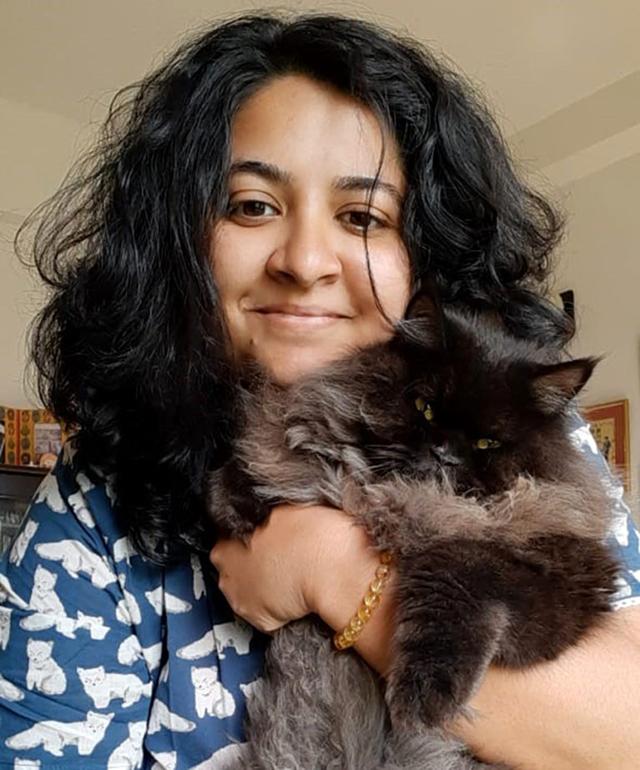
Lamat R Hasan is an independent journalist. She lives in New Delhi.


