
 E-Paper



Review: Go Wild edited by Bijal Vachharajani
With central themes of speciesism and the human-animal relationship, this compilation of essays, short stories and comics celebrates the earth in all its glorious bounty

 Prefer HTon Google


Exactly why aren’t we taking active steps to mitigate climate change? The answer is rather obvious: most have lost the ability to appreciate the planet we live on. Pray, why would anyone feel motivated to fight climate change if they can’t even admire the tree outside the window or a crab on the beach? Unsurprisingly, no one wants to save something they don’t love and appreciate in the first place. Trying to reinstate this lost sense of wonder and love for nature in children and adults, Bijal Vachharajani has compiled a series of essays, short stories and comics that celebrate the earth in all its glorious bounty.
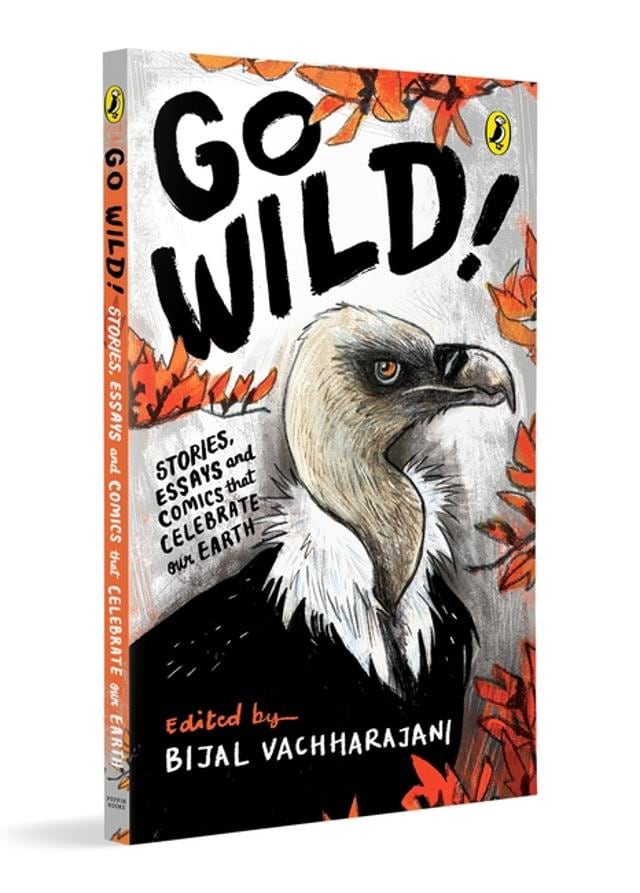
“I am fed up that human beings are changing our planet Earth in a way that impacts our present and future,” the author writes. She lists the reasons why she edited Go Wild. The first (and perhaps the most compelling reason) being “Nature is awesome and there is no Planet B”. The stories, comics and essays in this book celebrate the animals, insects, reptiles, birds and other species with whom we share the planet. The central theme of some of these pieces is speciesism and the human-animal relationship.
Among the comics, Rajiv Eipe’s Mantis, Praying, etc is the wittiest with the reader encountering a ‘Greying Mantis’ (a praying mantis as an old woman complaining “I said no running around the house”) and a ‘Straying Mantis’, who is on leave from office. And then there is the ‘Betraying Mantis’, who stabs another insect who says ‘Et Tu Mantis’?
A collection of photographs featuring a sentient wheelchair that visits forests and spends time under trees in an effort to connect with nature, Salil Chaturvedi’s Places My Wheelchair Likes To Go interweaves the themes of climate action and disability rights.
READ MORE: Review: Savi and the Memory Keeper by Bijal Vachharajani
Lavanya Karthik’s comic Home Sweet Rest Stop portrays places in the city (balconies, window sills, empty spots around buildings) where pigeons make their nests and bees build their hives. In what can be called one of the most impactful lines in the book, Karthik writes: “In rest stops like these, the wild world finds ways to let us in on its mysteries and remind us that we are part of a greater family, that we have more in common with other animals than we realize. For a brief moment, we get to feel a tiny bit wild ourselves”.
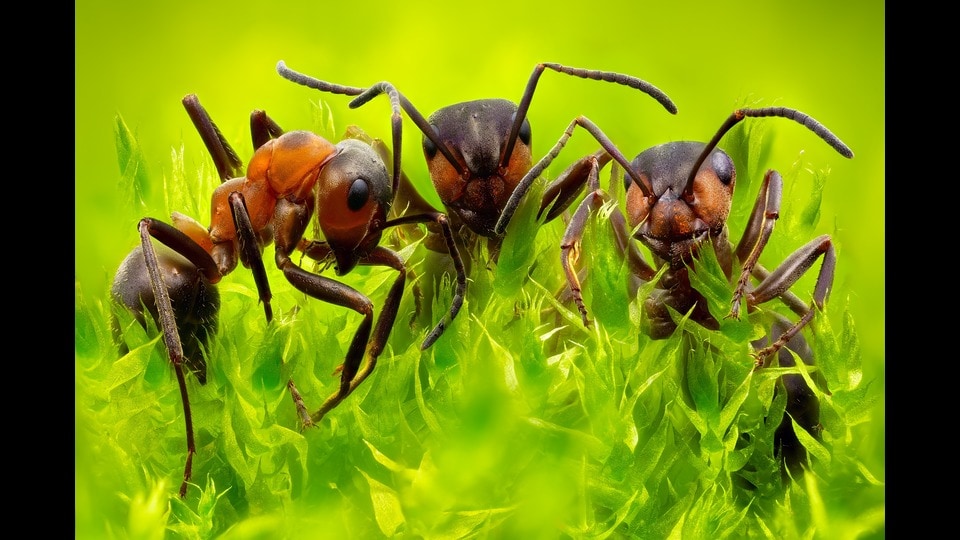
Of all the short stories in this volume, perhaps the most intriguing is Anita Roy’s Matryoshka doll-like The Vulture Story where two kids stay over at the home of a ‘weird’ aunt with a pet vulture. In a story within the story, at bedtime, the aunt narrates a tale about an eagle who swallowed the sun and saved the animals of a forest from imminent death. Ranjit Lal’s For Queen And Colony, which follows two ants, Mishri and Meethi Boli, as they try to win over the Queen of the colony, ‘Rani Sahiba’, by defeating their nemesis, Ms Khatri Chabuk, is likely to delight children. There’s even an ant responsible for checking Aadhar and ration cards at the colony’s entry gate called Ms Hisaab Kitaab.
The compilation’s insightful essays include Meghaa Gupta’s When Plants Made History which chronicles the plants that have kept humanity alive through many tumultuous centuries.
Seema Mundoli and Harini Nagendra’s A Tale of Three Cities, which touches on the water crisis in Delhi, Mumbai and Kolkata, sounds the alarm for India’s fast-depleting water levels. This is clearly a problem in the country’s urban centres. If the lakes in Bengaluru are being converted into stadiums, buildings and golf courses, Yamuna in Delhi struggles with toxic foam and filthy sewage. The story of Kolkata that presents how the colonial British government used the marshy wetlands of the Hooghly river to dispose of Calcutta’s waste, is somewhat hopeful.

Shabnam Minwalla’s The Banyan Tree of BD Kelkar Road, the story of three friends who hatch a scheme to save a beloved banyan tree from greedy builders, who intend to build an apartment complex in its place, interweaves the themes of faith and environmental conservation. How do they succeed in stopping the contractors? Well, let’s just say Ganpati Bappa’s blessings did the trick.
Heartwarming, insightful, and thought-provoking, Go Wild edited by Bijal Vachharajani is just the climate resource needed to instill love and admiration for our planet in both children and adults. That the book is printed on recycled paper with an aromatic scent is a plus.
Deepansh Duggal writes on art and culture. He tweets at Deepansh75.


