Budget 2024: Why you must pay attention to fiscal deficit in Nirmala Sitharaman's speech
The Union Budget 2024 may set ambitious fiscal deficit targets with India's fiscal and revenue deficit shooting up during the pandemic and calming down since.
Fiscal deficit is when there is more total expenditure for the government than its total income. This difference is generally covered by the government’s borrowings over the financial year, and therefore indicates the government’s borrowing requirements.
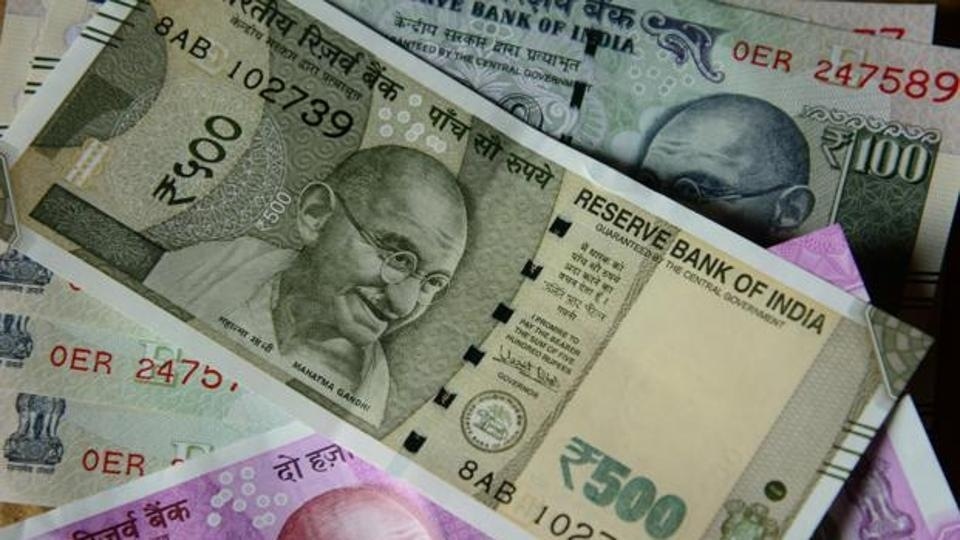
India's fiscal deficit has been gradually reducing after a sharp uptick during the pandemic (Representational photo)
Fiscal deficit can be expressed as an absolute value or as a percentage of the country’s Gross Domestic Product (GDP).
What is revenue deficit?
Revenue deficit is when there is more revenue expenditure like rent, salaries and wages, compared to revenue receipts like those from tax collections over the financial year.
Effective revenue deficit is the amount calculated when grants are subtracted from the actual revenue deficit figure.
What is the difference between fiscal deficit and revenue deficit?
Fiscal Deficit occurs when the government spends more than it earns as a whole, whereas revenue deficit occurs when the actual income of the government is lesser than the estimated income it requires to meet its expenses.
What was India’s fiscal deficit for 2023-24?
India’s fiscal deficit during the financial year 2023-24 was ₹16.53 lakh crore, or 5.6% of the GDP, with estimates for the same time period being 5.8%. This is a generally positive sign since it shows the amount of borrowings required to fund the government’s expenditure is lesser.
What has India's fiscal deficit been like in the past?
India's fiscal deficit, which stood at 4.5% of its GDP in the financial year 2013-14 kept gradually reducing up to 2019-20, when it rose to 4.6% from the low of 3.4% in 2018-19.
The COVID-19 pandemic was one of the main causes for this and the fiscal deficit shot up to 9.3% of the GDP during the financial year 2020-21 due to the unexpectedly high spending on healthcare and economic relief measures.
Ever since 2020-21, the fiscal deficit has been gradually decreasing again. In 2021-22, it was 6.9%, in 2022-23, it was 6.4%, and in 2023-24, it came down to 5.6% of the GDP.
What are the expectations on the Union Budget 2024 surrounding India's fiscal deficit?
The government is most likely to set the fiscal deficit target for 2024-25 at 5.1% of the GDP, according to reports. This is despite the fact that the government also plans to initiate tax rate cuts. However, the cuts are to stimulate consumption in the economy.
Aiding to the government's confidence in keeping the fiscal deficit target around 5.1% is the $25 billion dividend it received from the Reserve Bank of India (RBI).
What has India's revenue deficit been like?
India's revenue deficit in 2022-23 was 3.9% of the GDP, which was a drop from 4.4% in 2021-22. This was a big fall compared to 7.3% in 2020-21 during the pandemic. It was 3.3% in 2019-20 and had been hovering between 2-3% till then from 2014-15. It was 3.2% of the GDP in 2013-14.
Follow the latest breaking news, major developments and agenda-setting stories from India and around the world with the newsdesk at Hindustan Times. Operating round the clock, the desk brings together experienced editors, reporters and correspondents to deliver fast, accurate and contextual reporting across subjects that influence public policy, governance, business, society and international affairs.
The HT News Desk covers politics, elections, government policies, the economy, business and markets, science and technology, the environment, law and order, infrastructure, education, climate issues and geopolitics, while closely tracking developments across states, institutions and global capitals. The team also leads coverage of major breaking news events, policy announcements, court proceedings, natural disasters, public emergencies and significant international developments.
Reports published by the newsdesk are based on information gathered from reporters on the ground, official statements, government agencies, court records, regulatory filings, recognised institutions and other authoritative sources. Stories undergo editorial scrutiny and verification processes to ensure accuracy, fairness and relevance, and are updated as events evolve and additional information becomes available.
Whether covering a key political decision in New Delhi, an economic policy shift affecting millions, a landmark court ruling or a major global event, the HT News Desk aims to provide readers with reliable, fact-based journalism that delivers not only the latest developments but also the context and analysis needed to understand their wider implications.Read More

 E-Paper