The interim budget is a temporary budget that is presented only during the years when there is a national election. It is presented in the February of that year just like a normal budget, but the interim budget is valid only till the election results are declared.
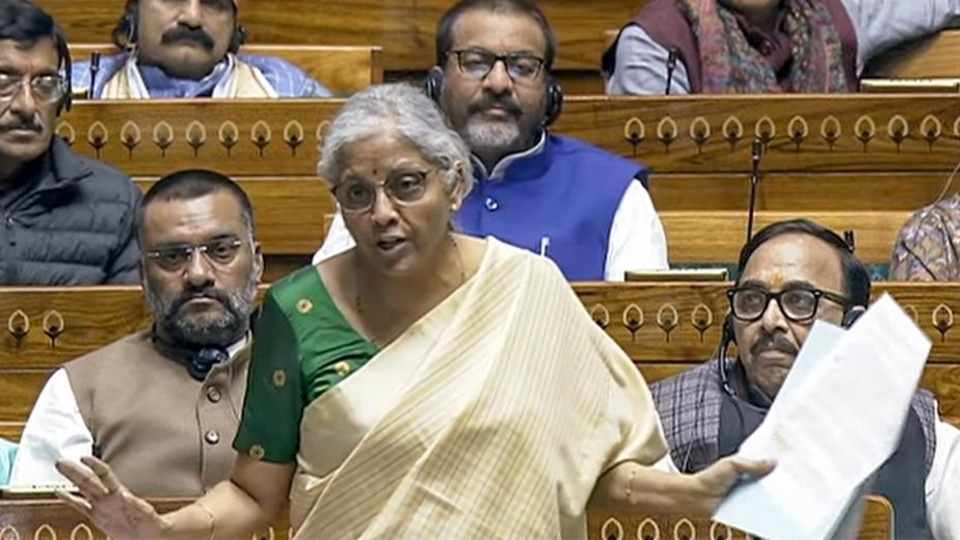
Union finance minister Nirmala Sitharaman speaks in the Lok Sabha during the interim budget session of the Parliament, in New Delhi (ANI)
Post the elections, the new government presents the actual budget for the rest of the year. This usually happens in July, and for this year, it is scheduled for July 23rd.
Why are there two budgets presented during an election year?
An election year sees two budgets being presented in case another party gets elected to power and the newly elected government has different policies, which automatically call for different financial priorities.
The financial year starts from April 1 and ends on March 31 the next year. The budget is however, presented in February, and the elections take place in May, with results being declared in June. The interim budget is presented to plug this gap till the new government takes over.
What is the difference between an interim budget and a vote on account?
The Lok Sabha can authorise the withdrawal of required funds for government expenses such as salaries or for projects during the period for any part of the financial year, including the time just before an election, according to Article 116 of the Constitution.
This is called a vote on account and it is usually not accompanied by any debates in the lower house. It is valid for two months as standard, but can be extended up to four months.
While the vote on account and interim budget terms are sometimes used interchangeably, the vote on account differs from the interim budget because the vote on account contains only the government’s expenditures, whereas the interim budget contains both the revenue as well as expenditure estimates.
The interim budget is also quite comprehensive and just like a regular budget, can describe the state of the economy, as well as the growth estimates for the next year. None of this is the case with a vote on account.
The government can also legally revise tax rates in an interim budget, but cannot do so in a vote on account.
Follow the latest breaking news, major developments and agenda-setting stories from India and around the world with the newsdesk at Hindustan Times. Operating round the clock, the desk brings together experienced editors, reporters and correspondents to deliver fast, accurate and contextual reporting across subjects that influence public policy, governance, business, society and international affairs.
The HT News Desk covers politics, elections, government policies, the economy, business and markets, science and technology, the environment, law and order, infrastructure, education, climate issues and geopolitics, while closely tracking developments across states, institutions and global capitals. The team also leads coverage of major breaking news events, policy announcements, court proceedings, natural disasters, public emergencies and significant international developments.
Reports published by the newsdesk are based on information gathered from reporters on the ground, official statements, government agencies, court records, regulatory filings, recognised institutions and other authoritative sources. Stories undergo editorial scrutiny and verification processes to ensure accuracy, fairness and relevance, and are updated as events evolve and additional information becomes available.
Whether covering a key political decision in New Delhi, an economic policy shift affecting millions, a landmark court ruling or a major global event, the HT News Desk aims to provide readers with reliable, fact-based journalism that delivers not only the latest developments but also the context and analysis needed to understand their wider implications.Read More

 E-Paper