E-Paper



Nothing ear (1) review: The dark mode adoption declares that time is relative
For a long period of time, post the first-generation Apple AirPods, everyone seemed to be in autopilot mode and churned out one wireless earbud after another in white colour. That’s what the Nothing ear (1) attempted to change

 Prefer HTon Google


There are two ways of looking at it. Six months in the world of tech is a long time, or, six months is too short a time to learn anything new. It seems that Carl Pei’s tech startup, the London-based Nothing, doesn’t subscribe to either of these lines of thought. Neither is six months a time frame long enough (to move on in the product launch cycle and forget about the existing products) and neither has it proved to be too short a time frame to learn something new. The Nothing ear (1) in the black edition, seems to be proof.
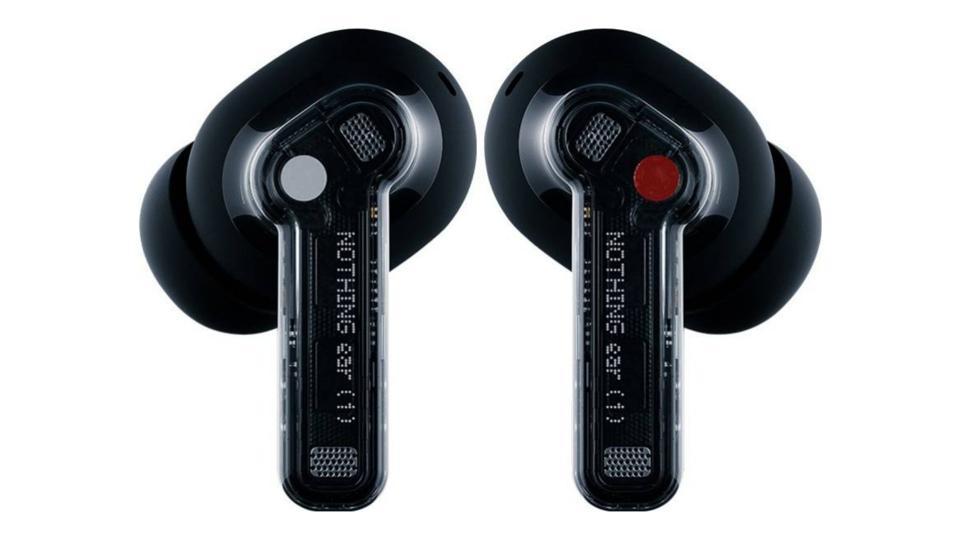
It was in July when Nothing ear (1) wireless earbuds arrived, amid much excitement. And here we are, at the fag end of 2021, revisiting that chapter but it doesn’t really feel the same. By same, I mean monotonous. Or mundane. For a long period of time, post the first-generation Apple AirPods (and quite some time that has elapsed since), everyone seemed to be in autopilot mode and churned out one wireless earbud after another in white colour. Or at least none that really stood out. That’s what the Nothing ear (1) attempted to change. And continues to.
The very visual appeal of the Nothing ear (1) is the transparency of it all. The design lets you peek inside the earbuds and get a glimpse of the technology that’s at play. Not something you’d see every day in the world of tech. Transparent phones, laptops and tablets aren’t exactly as common as one may have imagined a few years ago. Yet, Nothing’s first product challenged that notion and did something from the left field. The basics of that craftsmanship haven’t changed with the Nothing ear (1) in black colour. There is no easy-way-out with the design.
The switch from white to black isn’t a simple colour change thanks to a new piece of plastic. It is now black and transparent, complete with the eartips as well as mesh grille for the audio drivers, the hinges of the charging case as well as the base of the case itself. This is mostly matte black, which should mean your earbuds will be a tad less susceptible to fingerprints but you’ll still need to be careful about dings and scratches.
It is not all about the looks either. The Nothing ear (1) have come a long way with the sound, since the first tryst with our playlists. Mind you, the hardware remains the same. That is, an 11.6mm dynamic audio driver in each ear. Well in the ballpark — the OnePlus Buds Pro have 11mm dynamic drivers while the unique bean-shaped Samsung Galaxy Buds Live (if you are okay with that form factor) get 12mm audio drivers in each ear. The software has made all the difference.
A lot has been tweaked in the last few months with regular updates, which means the Nothing ear (1) black edition will get instant advantage of the gradual education the white coloured Nothing ear (1) earbuds gained. The active noise cancellation (ANC) has been tuned to work better in noisier environments, connectivity is more consistent, battery charging stats are reported accurately and in general, any tweaks to the sound you do via the companion app (free for Android and iPhone) have a more profound reaction. The app continues to offer acceptably detailed sound and noise isolation controls.
The Nothing ear (1) black edition costs the same as the white version, that is ₹6,499. Both will continue to be on sale. For once, a special colour option doesn’t sport a higher price tag. The carbon neutrality aspect, verified by third-party certification companies, adds a cool greener element to it.
It isn’t an easy place to be, where the Nothing ear (1) and the Nothing ear (1) black edition are sitting. Around them, the competition landscape includes the very competent OnePlus Buds Pro, the Jabra Elite 3 and for a bit more money, the price-recorrected Sony WF-1000XM3 and the Google Pixel Buds A-series (if you don’t mind the lack of ANC). The dual colour options do give it an advantage, something it already had with the transparent design. The fact that the Nothing ear (1) has a significantly improved sound signature too, reaffirms things. The price advantage it has over most rivals we have listed above, may just be the proverbial cherry on the cake.