
 E-Paper



30mm monsoon showers spell trouble for Chandigarh’s periphery
Residents struggle with flooded homes, roads Khuda Lahora, Dadumajra, Maloya, Zirakpur and Panchkula

 Prefer HTon Google


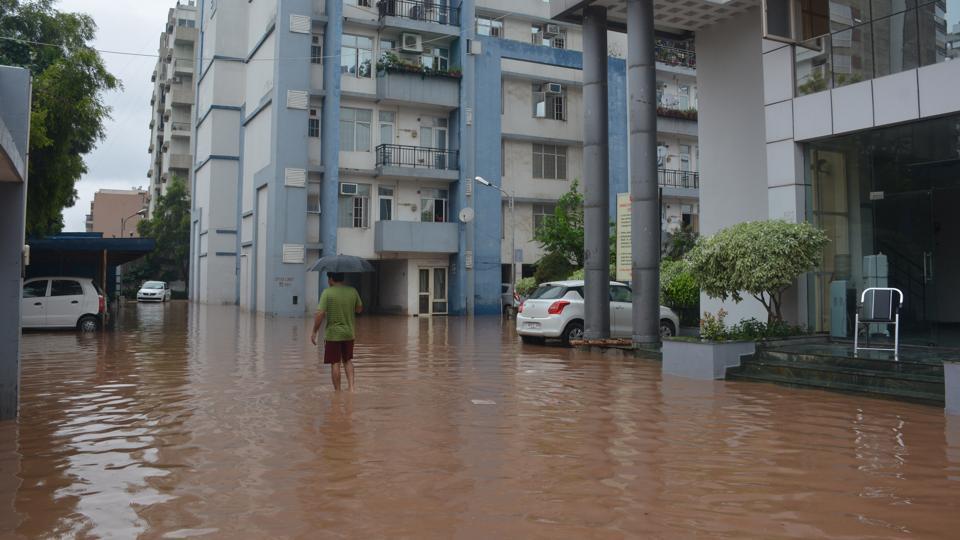
Waterlogged roads and houses were the order of the day in various parts of the tricity on Wednesday following 30mm showers.
According to the India Meteorological Department (IMD), 17.2mm rainfall was recorded till 8.30am and another 13.6mm through the rest of the day.
The continuous rain resulted in waterlogging in several areas, especially in Chandigarh’s periphery, including Dadumajra, Maloya and Khuda Lahora.
A road connecting Chandigarh to New Chandigarh near Maloya was barricaded by the police as water in the Patiala Ki Rao rivulet overflowed onto the road. Waterlogging was reported in some sectors as well, particularly in Industrial Area, in the morning hours.
Located on the banks of Patiala Ki Rao rivulet, several houses in Khuda Lahora Colony 1 were inundated with rainwater. Residents were left panicked as the muddy water entered their homes early in the morning.
“Within half an hour, water was knee-high inside the houses and on the streets. It receded by 6am, but again entered the houses around 11.30 am. It finally cleared out by 1pm,” said Rohit Thakur, a local.
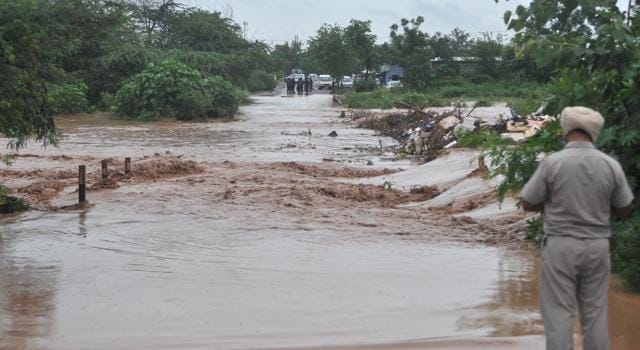
Residents complained that a bridge over the rivulet, connecting to the botanical garden, caused floods in the areas. PC Rana, general secretary of the Residents’ Welfare Association (RWA), said, “The rivulet bed has risen because of silting over the last 15 years. Desilting of the rivulet and the bridge’s removal is urgently required. The authorities had the bridge removed partially, but still water gets blocked and overflows into the colony.”
Water from overflowing Patiala Ki Rao rivulet also entered houses in Nayagaon and New Chandigarh in Mohali.
Several housing societies, roads and markets in Zirakpur were inundated following the morning downpour. The worst-affected were some housing societies in Dhakoli, including Sushma Square, Golden Sand Society and Maple Apartment, where knee-high water was standing through most of the day.
The boundary wall of Highland Society in Baltana collapsed due to the rain.
Zirakpur MC’s executive officer Sandeep Tewari said teams were on duty since morning. “Most of the rainwater comes from Panchkula side and since Zirakpur is a low-lying area, it is affected the most. At most places, we drained out the water with the help of pumps,” he added.
Similar scenes were also witnessed in Panchkula, where residents complained of damage to furniture and vehicles as rainwater entered their houses.
Naresh Saini, vice-president of the Sector 19 RWA, said nearly 200 houses in the sector were impacted: “People could not sleep at night due to the rainwater on their floors. Their electronics and furniture were damaged.”
“The Citizens’ Welfare Association has been requesting the municipal corporation to clean and repair road gullies in the city before monsoon. But even this year, MC failed to act,” said SK Nayar, president of the association.
Sukhna Lake’s water level three feet below danger mark
With constant rain upstream, the water level in Sukhna Lake rose by nearly four feet in the last 48 hours.
It touched 1,159.90 feet on Wednesday, only three feet below the danger mark of 1,163, when the flood gates of the lake have to be opened.
Last year, the opening of the flood gates had led to flash floods in Baltana area of Zirakpur.
“We were keeping a close watch and have already alerted the authorities in Mohali. The water level in the lake rose in the morning hours and then stabilised. The level increase or decrease will depend on intensity of rainfall in the hilly catchment area,” said CB Ojha, UT chief engineer, said.
Ghaggar reaches danger mark
The Ghaggar river in Dera Bassi reached the danger mark of seven feet, prompting Mohali deputy commissioner Girish Dayalan to review the necessary arrangements in low-lying areas near the river.
The Dera Bassi sub-divisional magistrate (SDM) was directed to sound alert in downstream areas of the river, chalk out an evacuation plan in case of flooding and be ready with evacuation centres.
Dayalan also reviewed the arrangements made by food and supply, irrigation, power and drainage departments, besides municipal corporation and police for tackling flooding.
In Panchkula, the administration has imposed Section 144 of the CrPC near rivers to prevent accidents.
Mercury plunges to 26.8°C
Due to the showers, the maximum temperature dropped from 31.2°C on Tuesday to 26.8°C on Wednesday, six degrees below normal. At 25.6°C, the minimum temperature was two degrees above normal.
An IMD official said monsoon activity will intensify over the next 48 hours due to which the temperatures will remain on the lower side.
Since monsoon’s onset on June 13, Chandigarh has received 241mm rainfall, against the normal of 385.5mm, a 38% shortfall.


