
 E-Paper



Guest Column| Why Haryana needs its own capital
Haryana needs a separate modern capital city to prevent further erosion and eventual eclipse of its cultural identity in the shadow of its big brother, Punjab, and the national capital region (NCR), and to propel its economic growth to the next level.

 Prefer HTon Google


In 1955, while inaugurating the Punjab high court building, then prime minister Jawaharlal Nehru highlighted the significance of a new capital for the state. He expressed his contentment that the people of Punjab did not choose an old city as their capital. He believed that doing so would have made Punjab a backward and stagnant state. Instead, he believed that a new capital would help Punjab take a significant step forward.
On November 1, 1966, Haryana was established as a new state on linguistic basis. It was a sandy tract of land with little development. Unfortunately, Haryana’s journey towards modernity and growth has been hindered because it does not have its own capital and high court.
A capital is not just the administrative headquarters of a state or a country. It represents the state’s unique cultural identity, economic prosperity, and people’s aspirations. A state’s cultural identity comprises its collective memories, experiences, relationships, values, shared history, characteristics, and beliefs that make its people unique and distinct from others. This identity creates a sense of self, oneness, and pride that drives the state’s people to greater heights in every sphere.
Haryana has always been a historical, geographical and cultural entity and not a full-fledged political or administrative unit. Even today, it has not attained its proud status of a state with its own capital and high court. Therefore, Haryana needs a separate modern capital city to prevent further erosion and eventual eclipse of its cultural identity in the shadow of its big brother, Punjab, and the national capital region (NCR), and to propel its economic growth to the next level.
Myopic political leadership
Unfortunately, the political leadership of Haryana has been myopic and unable to grasp the far-reaching importance of a new capital for the state. For their short-term political exigencies, they have compromised the long-term conveniences and benefits of the people by conflating the issue of a new capital with other issues of water and territory, turning it into a Gordian knot. Therefore, no serious cooperative effort based on goodwill and the good of the people has been made to find a solution to this issue. Neither of the brother states has benefited from this political imbroglio.
There are numerous reasons why Haryana needs its capital or at least a functioning capital. Several Indian states have multiple capitals to ensure fair governance and equal economic growth for their people.
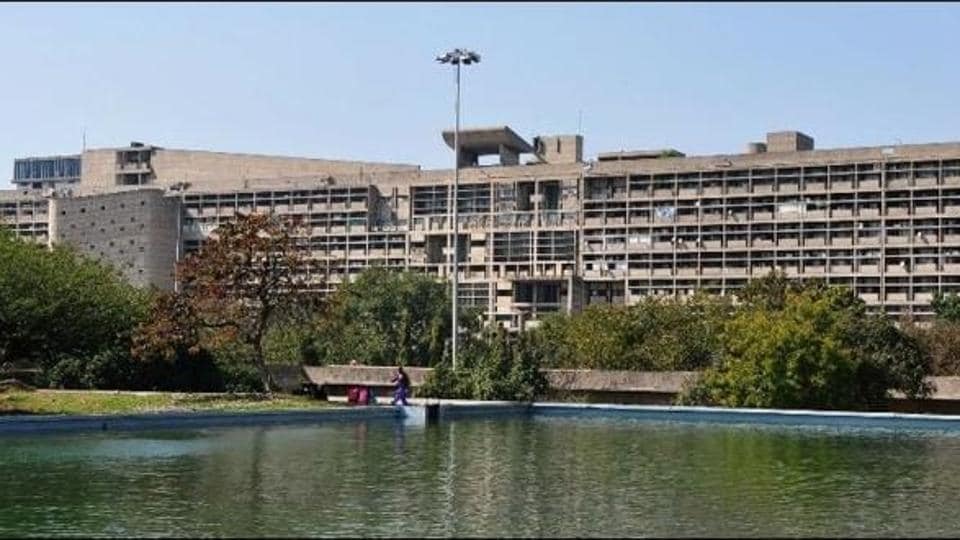
Chandigarh, as a union territory, is the administrative headquarters of Haryana, but it is too far for most Haryana residents to access. As a result, Haryana has no administrative control over its capital, which leads to legal disputes or embarrassing situations. While the city provides a comfortable and safe environment for political leaders and officials, for the average Haryana resident, it can be an inconvenience and costly to travel for small administrative or judicial tasks, with thousands of rupees spent on road tolls. The state’s capital should be administratively convenient, culturally compatible, and emotionally satisfying.
Haryana’s educated youth is experiencing significant unemployment, which is the highest in the country. This frustration, helplessness, and hopelessness have led many to turn to drugs, crime, or migrate to other lands. The younger generation is tired of divisive and transactional politics and seeks transformational and developmental politics. They look forward to opportunities offered by the new capital city, which may lead to an unimaginable inflow of investment worth lakhs of crores for building futuristic infrastructure. This could generate massive employment opportunities for the state’s youth. The new city should have excellent connectivity and proximity to the national capital and be planned as a knowledge hub of international repute, surpassing Gurugram. As a result, this will also lead to developmental activities in surrounding backward areas.
Grain to brain economy
Though Haryana is still a primarily agricultural state where more than half of its population depends on agriculture, dwindling land holdings and other factors are causing farmers, farm labourers, and agri-artisans’ income to fall each year. It is essential to take extraordinary measures to lift them out of perpetual poverty, and the only way to achieve this is to create a knowledge hub in Haryana to convert its grain economy into a brain economy. Haryana can accomplish this goal through its new capital.
One of the main reasons Haryana remains culturally, socially, and intellectually backward is that it lacks administrative control over its capital, making it impossible to create institutions or organisations to preserve the memory and spread the ideas and ideals of its icons such as Raja Nahar Singh, Pt Lakhmi Chand, Balmukund Gupta, Rao Tula Ram, Ch Matu Ram, Seth Chhaju Ram, Dr Ramdhan Singh, Sir Chhotu Ram, and many others contributed to making Haryana society an embodiment of social harmony, brotherhood, strong moral norms, and interdependence.
Social integration and emotional bonding among the people of Haryana are lacking due to the absence of cultural activities at the state level. Additionally, the growth of a common Haryanvi language and literature has not occurred to the desired extent. The state capital is a melting pot of different regional cultures, but the preservation of Haryana’s rich cultural heritage is necessary, which may not be feasible without a capital of its own.
As Haryana approaches its 57th anniversary on November 1, it is evident that a significant amount of time has been wasted. A new capital city is necessary to symbolise the resurgence of Haryana and as a reassertion of its proud past.chopramohinder54@gmail.com
The writer is a retired Haryana civil servant. Views expressed are personal


