E-Paper



Delhi govt for larger water share: 1994 MoU can’t meet demand
Delhi water minister Atishi calls for a revised water share from the Yamuna due to increased population, as the 1994 agreement nears renegotiation next year.

 Prefer HTon Google


Delhi water minister Atishi on Monday called for a revised allocation of water share from the Yamuna for the Capital while pointing out that the 1994 water sharing agreement, which divides Yamuna water to various North Indian states, is coming to an end.
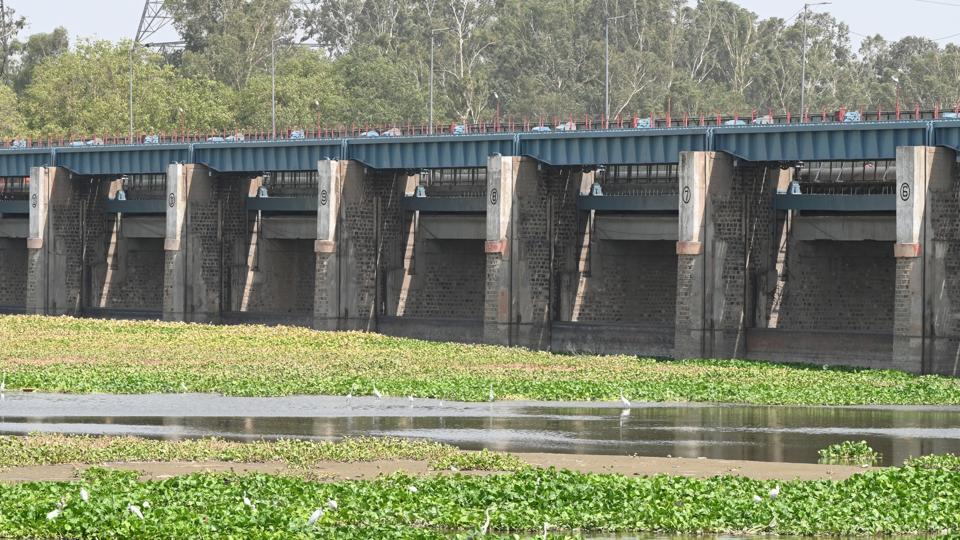
The agreement includes a provision that it can be revisited after 2025 if any of the partners wish to, and is coming up for a renegotiation next year. While inspecting the depleting water level at the Wazirabad barrage, the minister said the surface water sources coming through the Yamuna and the Ganga were the only reliable ones. She said that the water shares were allocated by accounting for the population density three decades ago, which has increased many times.
“The memorandum of understanding period for the 1994 agreement is coming to an end. When the renegotiations occur next year, Delhi will put forward its demands based on the large population growth that it has witnessed. Delhi should be allocated a larger quota to prevent annual supply shortages in summer,” said Atishi.
According to the agreement, 0.724 billion cubic meters of Yamuna water is allocated to the Capital and the share varies during three periods — July to October, November to February, and March to June.
This agreement dealt with the allocation of the surface flow of Yamuna up to Okhla. The Upper Yamuna River Board (UYRB) was also constituted in 1994 to enforce the agreement and the board operates as a subordinate office under the ministry of Jal Shakti. The agreement can be revisited in 2025 after completion of 30 years.
The water allocation between various North Indian states, including Uttar Pradesh, Uttarakhand, Himachal Pradesh, Haryana, Delhi, and Rajasthan, is made based on the MoU signed by the riparian states on May 12, 1994. The minister said that Delhi’s population has especially spiked in unauthorised and resettlement colonies.
A senior Delhi Jal Board official said there was a dispute between Haryana and Delhi over the classification of irrigation and drinking water.
“The Wazirabad plant is also fed raw water from Haiderpur via Munak Canal. We are only drawing around 20 mgd of water from the barrage area by making special arrangements and recycling water. Wazirabad and Chandrawal are both impacted. According to the interpretation of the 1994 agreement, Haryana is releasing enough water. The allocation via the Yamuna channel is zero. But the demand in Delhi has grown and it needs additional water,” the official added.
On allegations of a high distribution loss, Atishi said there is no leakage in the section carrying water from WTPs to underground reservoirs and non-revenue water should not be confused with leakages and wastage. “New WTPs can only be built after more water is allocated to Delhi as the development and operation of a WTP is a costly affair,” she added.