
 E-Paper



Delhi govt says omicron patients can isolate at home according to revised rules
Delhi health minister Satyendar Jain on Wednesday said according to the health ministry’s new guidelines the number of isolation days has been reduced from 14 to 7 for all newly detected patients that are either asymptomatic or have mild symptoms

 Prefer HTon Google


Delhi government from Wednesday will allow Covid-19 patients infected with the Omicron variant to also isolate at home, following the union health ministry’s new guidelines.
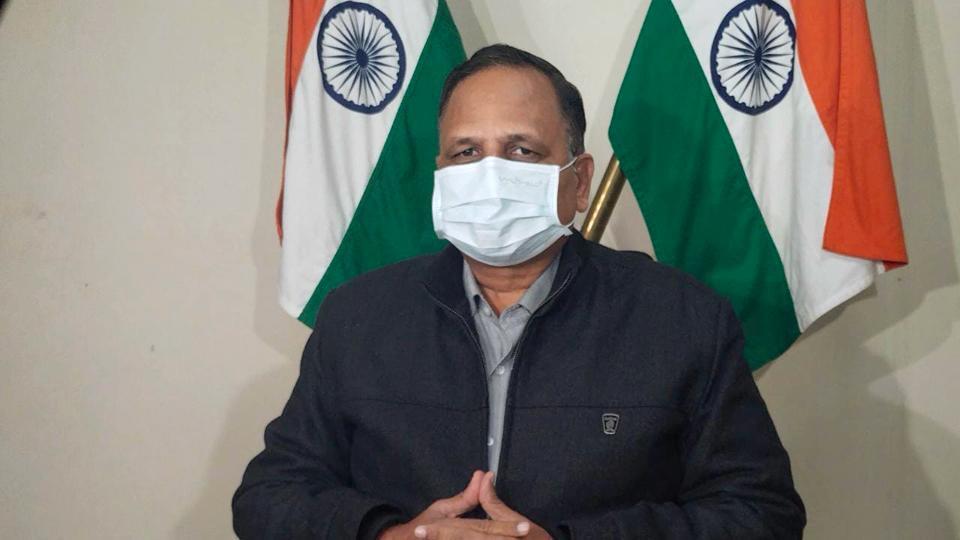
Senior Delhi government officials said following the centre’s home isolation guidelines, the home care for Omicron patients will be handled by the same private firm that was roped in by the government during the second wave.
Delhi health minister Satyendar Jain on Wednesday said according to the health ministry’s new guidelines the number of isolation days has been reduced from 14 to 7 for all newly detected patients that are either asymptomatic or have mild symptoms.
“According to the union health ministry’s guidelines, Covid patients now have to isolate themselves for seven days instead of 14 days. In these seven days, if the patient shows no symptoms for three straight days, then they can be discharged from the home isolation without getting a Covid test done,” Jain said.
The new set of guidelines released by the centre said that for a patient to be eligible for home isolation, they should be clinically assigned as a mild or asymptomatic case by the treating medical officer. The caregiver of the patient should ideally be fully vaccinated and be available to provide care on 24x7 basis. A regular communication link between the caregiver and the medical officer is required for the entire duration of the home isolation.
Elderly patients (those aged above 60 years) and those patients with co-morbidities such as hypertension, diabetes , heart disease and chronic lung, liver or kidney disease will only be allowed to isolate at home after proper evaluation from the treating medical officer.
A senior Delhi government official said on Wednesday that while the Capital will largely follow the Centre’s guidelines, all district magistrates have been asked to handle the existing home isolation cases. All the new isolation cases will be handled by a private healthcare service provider, which was managing the care of home isolation patients in Delhi on behalf of the government in the second wave.
“The DMs will handle the existing home isolation cases and the private agency, which was handling the home isolation care for us in the second wave as well, will handle the new isolation cases. They will essentially call the patients every day and take stock of their health, if they need a consultation with a doctor that will be arranged etc,” the official said.
On Wednesday, after the centre’s guidelines were issued, all district magistrates were directed to allow home isolation for Omicron cases. Till now, for Omicron cases—the latest Covid-19 variant of concern, which is known to be 5.4 times more infectious than the Delta variant—only institutional isolation was being allowed even for asymptomatic and mild cases.
Health experts has underlined the need for revised home isolation policy for Omicron cases so that as the infections continue to surge, needy patients are not denied admissions.
Dr JA Jayalal, former president of the Indian Medical Association, said home isolation should be the focus of the governments for the Omicron wave.
“The hospital beds should be reserved for severe cases; for patients that require oxygen and ventilator support. Otherwise the healthcare system will collapse,” Dr Jayalal said.
Dr Jugal Kishore, head of community medicine department at the Safdarjung Hospital, said that streamlining of hospital beds will be required considering the new Omicron variant is highly infectious. He also said that if a member of your family is tested positive of this new variant, there is no need to panic as the symptoms are usually mild and period for which symptoms are seen among patients is also shorter—around two to three days.
“In this variant we are seeing that symptoms are mild and for this we do not need to hospitalise patients. While transmission of this variant is high, there is no need to panic. Even if you happen to contract the infection, this will help your body build better antibodies. Scientists world over are saying that getting a mild infection is a good way to build antibodies,” Dr Kishore said.


