
 E-Paper



DMRC launches bike taxi service at 12 Metro stations in Delhi
Under the initiative, bike taxis can be availed of through the Delhi Metro Rail Corporation’s (DMRC’s) Momentum 2.0 mobile phone app

 Prefer HTon Google


The Delhi Metro Rail Corporation (DMRC) on Monday launched a bike taxi service at 12 Metro stations to improve last-mile connectivity, and will offer dedicated women-operated taxis to women commuters, officials aware of the development said. These services will be available from 8am to 9pm.
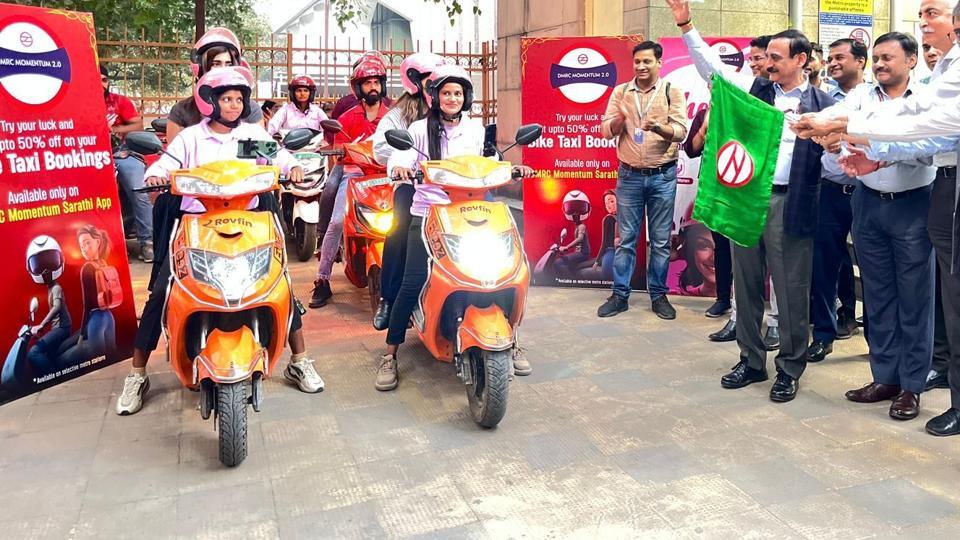
Under the initiative, bike taxis can be availed of through the Delhi Metro Rail Corporation’s (DMRC’s) Momentum 2.0 mobile phone app. The “SHERYDS” option will ensure women operators for only women passengers, and the rest can avail of rides through “RYDR” service on the same app, officials said.
“The bike taxi service has been introduced by DMRC in partnership with a private company. A total of 50 SHERYDS and 150 RYDR operators will be operating from these stations in a radius of around three to five kilometres. Over 100 stations will be covered in a month and remaining in next three months,” said Anuj Dayal, principal executive director of corporate communications, DMRC.
The 12 stations where the service is being currently launched are at Dwarka Sector 21, Dwarka Sector 10, Dwarka Sector 14, Dwarka Mor, Janakpuri West, Uttam Nagar East, Rajouri Garden, Subhash Nagar, Kirti Nagar, Karol Bagh, Millennium City Centre Gurugram and Palam.
DMRC said the SHERYDS initiative has been designed to meet the needs and preferences of women Metro commuters. “It also empowers women to travel independently at their convenience with safety to their destination. It offers women drivers an opportunity to become breadwinners,” Dayal said.
Further, all bikes under this initiative are electric ones and will significantly reduce the carbon footprint too, Dayal said.
The Delhi government introduced the Delhi Motor Vehicle Aggregator and Delivery Service Provider Scheme in November 2023, which legalises bike taxis in Delhi, but only allows electric bikes to ply, curtailing the presence of petrol or diesel-fuelled bikes. The scheme also set timelines for other bike types to convert or switch to electric. Further, all existing aggregators operating in Delhi were supposed to register within 90 days, by March. However, by July, only around 25 aggregators registered their fleets.
Officials said that as their goal is to keep the services affordable, they have set a minimum charge of ₹10 per ride, followed by ₹10 per kilometre for the first two kilometres, and ₹8 for every subsequent kilometre.
DMRC said the goal was to not travel large distances, but rather keep small radiuses, allowing people to bridge the gap between the Metro stations and their houses. “RYDR too will keep riders within a specified radius, which ensures both safety and reduced travel time,” a DMRC official said.



