E-Paper



Union minister reviews steps to curb pollution in NCR
According to officials aware of the matter, the minister said a participatory and coordinated approach by all states will yield positive results this winter, even as all stakeholders focused on tackling stubble burning in Tuesday’s meeting.

 Prefer HTon Google


Union environment minister Bhupender Yadav on Tuesday convened a meeting on combating air pollution with environment ministers of NCR states and Punjab, and reviewed the steps being taken by each state to act on sources of pollution in their respective regions.
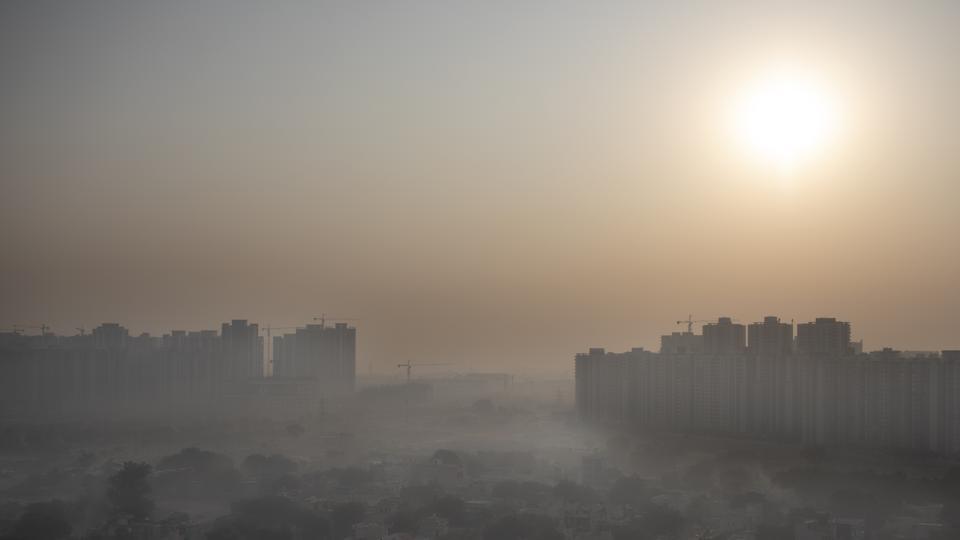
According to officials aware of the matter, the minister said a participatory and coordinated approach by all states will yield positive results this winter, even as all stakeholders focused on tackling stubble burning in Tuesday’s meeting.
Members of the Commission for Air Quality Management (CAQM), environment ministers of Delhi, Haryana, Rajasthan, Uttar Pradesh, Punjab and senior government officials attended the meeting. Minister of state for environment Ashwini Kumar Choubey was also present, the officials added.
During the meeting, CAQM made a detailed presentation on different aspects and the challenges in controlling air pollution in NCR. The aspects covered by the federal body included agricultural stubble burning, industrial pollution, use of diesel generator sets, vehicular pollution, electric mobility, dust from roadside, and construction and demolition activities.
Delhi-NCR plunges into an air emergency every year during winters when fumes from stubble burning, vehicular pollution, unabated construction and demolition and dust from roadside combines with meteorological factors that make dispersion of pollutants difficult and throws a noxious blanket of smog over the region.
Officials said the issue of stubble burning was identified as the prime concern for all stakeholders, with the action taken and the actions planned being highlighted by each state.
“An update was provided regarding availability and allocation of machinery by the state governments, and they have informed that they have involved local bodies and are innovatively providing the machinery to the farmers to promote in-situ methods of handling crop residue,” said an official. Expansion of the total area under bio-decomposer solutions was also identified as an important strategy towards in-situ stubble management, he added.
Officials added that Yadav was also informed about the action taken to increase green cover, which in turn will reduce dust pollution. So far this year, 27 million saplings have been planted across NCR and 240.9km of roadside area was greened, officials said. In addition, 60 dust control and management cells have been set up by road owning and maintenance agencies across NCR.
State ministers also apprised Yadav of the progress made in NCR to shift industries to PNG and other approved fuels, while on the vehicles front, states were directed to ensure all vehicles have a pollution under check (PUC) certificate. They also reiterated their commitment to manage air pollution and to implement directions of CAQM and the Union ministry to address the issue.
Rai seeks full ban on crackers
Delhi environment minister Gopal Rai, after attending the virtual meeting on Tuesday, said more than two-thirds of the air pollution that comes into Delhi is from sources located outside the capital. He added that the Delhi government is asking for a collective and cohesive approach to combat air pollution in NCR.
Rai said like Delhi, firecrackers need to be completely banned in all NCR states. While Delhi has a complete ban on all types of firecrackers, Haryana and UP have permitted the use of green firecrackers on Diwali.
“A Regional Implementation Committee should be formed for the NCR states, which can continuously monitor the pollution in this region. Environment Ministers of NCR states are requested to form a team of higher officials to visit different polluting sites and get the CAQM guidelines followed,” Rai added.