E-Paper



Delhi: UPSC aspirant, 26, electrocuted on waterlogged road in Patel Nagar
The deceased was found stuck to an iron gate near the Patel Nagar metro station due to electric current

 Prefer HTon Google


A 26-year-old man was electrocuted to death upon coming into contact with an iron gate during heavy rain in Patel Nagar, central Delhi, on Monday, police said. The man may have slipped on the waterlogged street and grabbed the gate for support, getting electrocuted due to an exposed motor wire, they said.
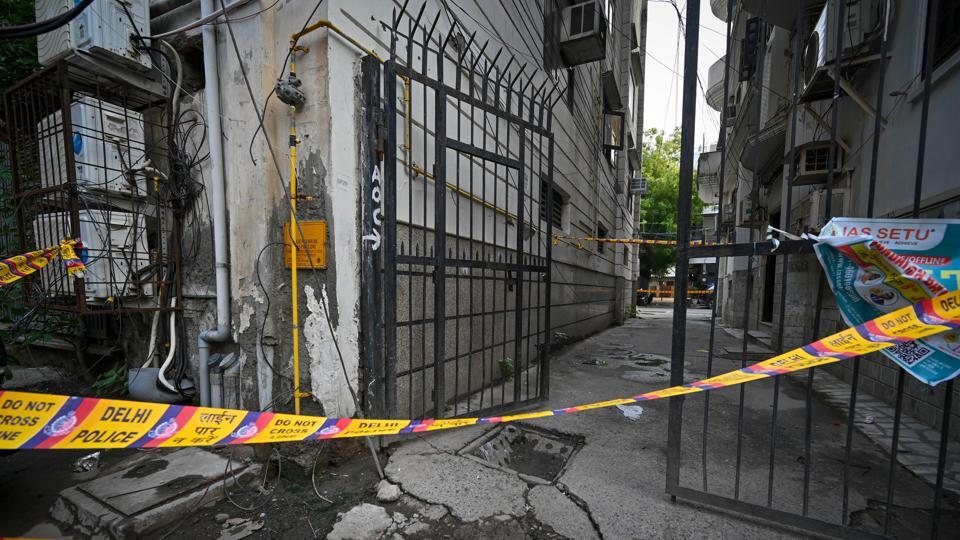
The deceased was identified as Nilesh Rai, an aspirant for the Union Public Service Commission (UPSC), who died just 50 metres from his paying guest accommodation. The incident took place around 2.40pm on Monday and an FIR was lodged, police said.
Also read: Rain lashes parts of Delhi, Noida; IMD predicts more showers today
Deputy commissioner of police (central) Harsha Vardhan said, “We received a call about the electrocution at 2.43pm. A person was found stuck to an iron gate near the Patel Nagar Metro station due to an electric current in the gate. There was waterlogging on the road. The victim was taken to RML hospital, where he was declared dead.”
Rai is survived by his two sisters and parents, who live in Ghazipur, Uttar Pradesh. His father Narender Rai is an advocate and his mother Neelam Rai is a primary school teacher. Rai completed his engineering from Bengaluru, but later decided to become an IAS officer.
Rai’s landlord, Atul Dua, said his wife called him at 2pm, telling him that a man was stuck to the gate. Dua used a scooter and plastic pipes to rescue Rai. “It was difficult to rescue him since the religious thread on his wrist was stuck to the gate. When I finally managed to pull him, I saw his face and was shocked. It was Nilesh…” Dua said.
Dua said, “He was a sweet, hardworking, and smart boy. We last spoke 2-3 days ago, and he told us he had cleared the prelims. He was living here for at least two-and-a-half years.”
Dua said Rai was returning from a library and stopped to have tea at a stall in the vicinity before heading home.
A day after the incident, the street was still inundated with water and the entire lane was filled with exposed wires lying around the ground or hanging from poles. The iron gate, where Rai died, is surrounded by multiple wires, including those used for earthing.
At RML hospital, Rai’s cousin, Indu Bhushan, a lawyer, said, “We are all shocked. He was the only son. He had appeared thrice for the UPSC exams and was finally able to clear the prelims test. We were all happy for him. How could this happen? Why were these exposed wires close to the house? We want police to investigate the case and make arrests.”
A TATA Power DDL official attributed Rai’s death to electric current leakage from a damaged motor wiring. “Upon receiving the information, our breakdown team promptly arrived at the site. We urge the public to follow safety guidelines during monsoon,” the spokesperson said.
Public outcry
Residents’ welfare associations (RWAs) said they should be brought on board to coordinate with local discom teams given that monitoring loose wires is the need of the hour. “Every monsoon, we see such instances across Delhi. There is a need for greater accountability from all parties concerned, be it the road or landowning agency and the discom,” Atul Goyal, president of the United Residents Joint Action (URJA), an apex body of over 2,500 RWAs in Delhi, said.
Aam Aadmi Party (AAP) leader and Rajya Sabha MP Swati Maliwal, in a post on X, said: “A UPSC student died after getting electrocuted on the road following rain in Delhi’s Patel Nagar. This is not an accident, it is a murder caused by the failure of the government system. Is there no value for the lives of common citizens? What answer will that child’s parents get? He died while walking on the road, sorry?...”
The Delhi unit of the Bharatiya Janata Party (BJP) also held the government responsible for the death. Praveen Kapoor, Delhi BJP spokesperson, said Rai died due to the negligence of AAP and demanded a compensation of ₹1 crore to the family.
Also read: Once infamous as Delhi’s drugs hot spot, Sagarpur gets a new lease of life
The incident was the third rain-related electrocution death in the last month, since monsoon hit the national capital. On June 28, when Delhi received over 200mm of rainfall, a 39-year-old man was electrocuted in Rohini’s Prem Nagar after he came in contact with a live wire on a waterlogged road. On July 13, a 34-year-old woman was electrocuted on a waterlogged road in northeast Delhi’s Bhajanpura.
A BSES spokesperson said safety drives are being carried out across the city. “Safety inspections are being carried out on electrical equipment, including substations, feeder pillars, distribution boxes, and fencing across BSES areas to identify and rectify hazardous conditions, if any, and ensure the safety of the infrastructure,” the spokesperson said, adding illegal wires were being removed and jumbling of cables on electricity poles was also being sorted.