
 E-Paper



Lucknow air begins to get poor already
Lucknow's air quality is declining, nearing 'moderate' levels as Diwali approaches. Authorities are urged to implement pollution control measures.

 Prefer HTon Google


The air quality in the state capital has started going down slowly and that does not augur well, as Diwali and winter - when air quality takes a big hit - are to follow.
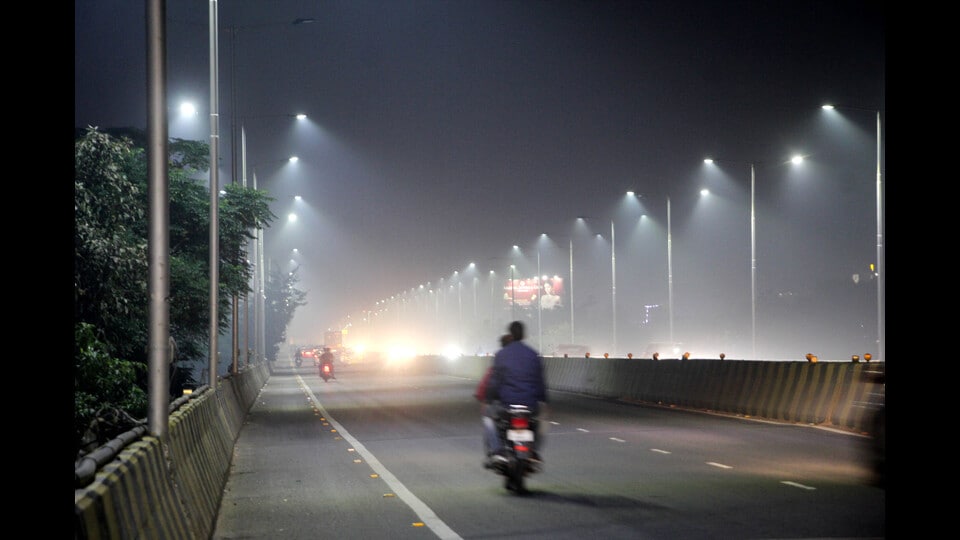
Lucknow’s AQI, which was under the satisfactory category with the index value under 100 a week ago, has now slowly started going down with AQI inching towards ‘moderate’ from October 16.
This year, the Uttar Pradesh Pollution Control Board (UPPCB) has written to departments like Lucknow Municipal Corporation (LMC), Lucknow Police’s Traffic Department and Public Works Department (PWD) for a slew of measures to be implemented before the situation gets worse.
“We are working with several departments, some of them being LMC, PWD and Lucknow traffic department, to check pollution in their respective ambits. For example, we wrote to LMC for regular sprinkling, and to mend broken roads, a big source of pollutants. Similarly, the traffic department has been asked to check traffic in areas where bottlenecks exist. Bottlenecks lead to air pollution due to vehicles. Likewise, the PWD has been requested to mend roads, follow standard procedures during construction and decrease it needed,” said Umesh Chandra Shukla, the regional officer at UPPCB adding that this will be done under the district magistrate.
Central Pollution Control Board (CPCB) classifies AQI between 0-50 as “good”, between 51 and 100 as “satisfactory”, between 101 and 200 as “moderate”, between 201 and 300 as “poor”, between 301 and 400 as “very poor”, and over 400 as “severe.
The AQI on October 22 (Tuesday) was 164.
Air already bad
The central and state pollution control boards have set up six live monitoring stations at Talkatora, Lalbagh, Kendriya Vidyalaya, Gomti Nagar, Kukrail, and BR Ambedkar University to monitor pollution.
Data from these stations revealed that PM2.5 and PM10, two key pollutants used to calculate AQI, remained in the ‘poor’ category. Talkatora recorded the highest, with an average of 214 and a maximum of 326 PM2.5 during nighttime.
The AQI at other stations was much lower compared to Talkatora but still showed a surge in the pollution level. Live stations at BR Ambedkar University and Gomti Nagar recorded an AQI of 157; however, the maximum PM 2.5 value reached 303 and 295 at night. Likewise, Kendriya Vidyalaya live station and Kukrail Picnic spot showed 148 and 144, with PM 2.5 values reaching a maximum of 308 and 221 at night. Data for the Lalbagh station was not available.


