E-Paper



BMC publishes first ever climate budget report with ₹10k crore provision
BMC releases its first Climate Budget Report for 2024-25, allocating 32.18% of ₹31,774.59 crore to climate issues, aiming to tackle climate change challenges

 Prefer HTon Google


MUMBAI: In a first, the BMC on Wednesday published its first ever Climate Budget Report, also known as the Green Budget book, for the financial year 2024-25. Out of the allocated ₹31,774.59 crore under the head of capital expenditure for various projects, a provision of ₹10,224.24 crore ie 32.18% of the budget is for climate issues.
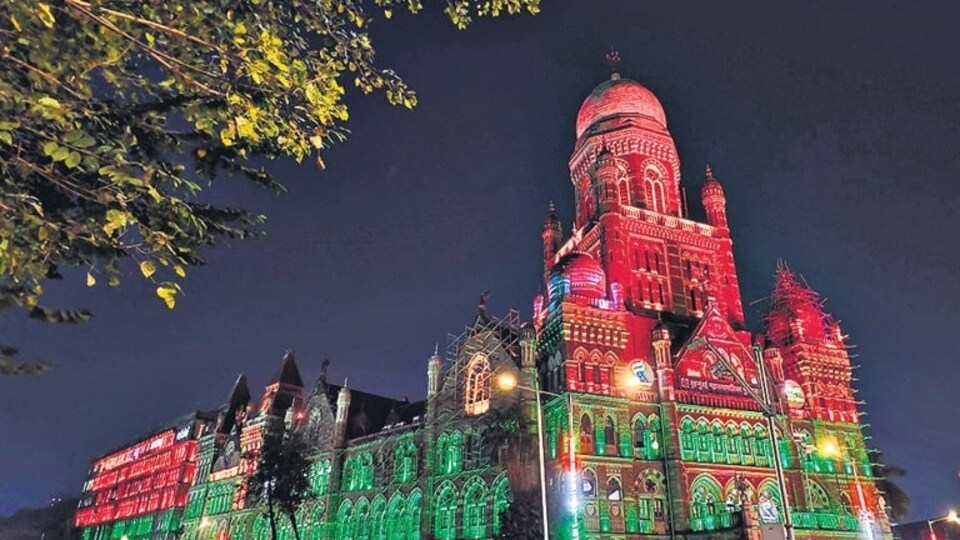
Globally, Mumbai is the fourth city, along with Oslo, London and New York, to launch a climate budget. The climate budgeting process in Mumbai required the participation of more than 20 BMC departments.
The largest share of the environment budget is for urban flood and water resource management, which includes departments of rainwater channels, sewage projects, sewage operations, Mumbai sewerage projects, water supply projects and sanitation-related activities in solid waste management. The climate budget report aims to strengthen the governance system to deal with the challenges of climate change in Mumbai.
Minesh Pimpale, deputy municipal commissioner (environment and climate change) explained the objectives of the budget, which will be implemented through 20 BMC departments. “We will check whether the projects that are undertaken are environmental-friendly not, and accordingly works will be prioritised,” he said. “The broader aspect of this exercise is to stop the temperature rise in Mumbai.”
Mumbai has seen a warming trend since 1973 with an increase of 0.25°C per decade, with 200 days annually classified as ‘extreme caution events’ since the mid-90s. Dense settlements, low vegetation cover and reflective building materials increase the risk of heat exposure.
Pimpale further added that the BMC was seeking to embed climate-budgeting into the existing municipal budget cycle, work towards developing a robust Monitoring, Evaluation and Reporting (MER) system and strengthen climate impact analysis to measure the progress of the city’s emission reduction and resilience targets over time.
As per its commitments in the Mumbai Action Climate Plan (MCAP), the BMC is currently working towards updating Mumbai’s greenhouse gas emissions inventory and putting together a report to understand the progress since MCAP was first launched in March 2022. MCAP is a roadmap for the city to achieve the goals of the Paris Agreement to reduce Mumbai’s greenhouse gas emissions and integrate climate adaptation strategies to better manage increasing climate risks in Mumbai.
The pathway scenario exercise will provide evidence based on which the city has set emission reduction targets for the energy, transport and waste sectors. According to the BMC’s report, Mumbai has an overarching mitigation target of reaching net-zero emissions by 2050. Interim and long-term targets include 30% emission reduction by 2030, 44% by 2040 and net zero by 2050 against base year emissions (2019). If no action is taken, emissions are expected to increase 170% between 2019 and 2050. The most ‘ambitious yet achievable’ trajectory for Mumbai’s scenario forecasts an emission reduction by 27% by 2030 and 72% by 2050, as highlighted in MCAP.
Based on the data and information received from 20 departments, the climate budget team has grouped and categorised budget items into direct and enabling actions. Direct actions have further been divided into quantified and not quantified actions. Mumbai is one of 13 global cities that has been part of C40 Cities’ climate budget pilot programme since September 2021 while the city was still developing MCAP.
The BMC’s climate-relevant departments include Environment, Disaster Management, Solid Waste Management, Education, Storm Water Drains, Mechanical and Electrical, City Engineers, Development Planning, Gardens, Markets, Public Health, Information Technology, Transport, Roads and Traffic, Bridges, Hydraulic Engineering, Water Supply Project, Sewerage Project, Sewerage Operations, and the Mumbai Sewage Disposal Project.