
 E-Paper



‘No accountability for biggest genocide after World War 2’: Ramesh Sharma
Ramesh Sharma’s 1986 feature film, New Delhi Times, won four national awards, including the director’s award for the best debut film

 Prefer HTon Google


Ramesh Sharma’s 1986 feature film, New Delhi Times, won four national awards, including the director’s award for the best debut film. Since then, however, Sharma has preferred making documentaries.
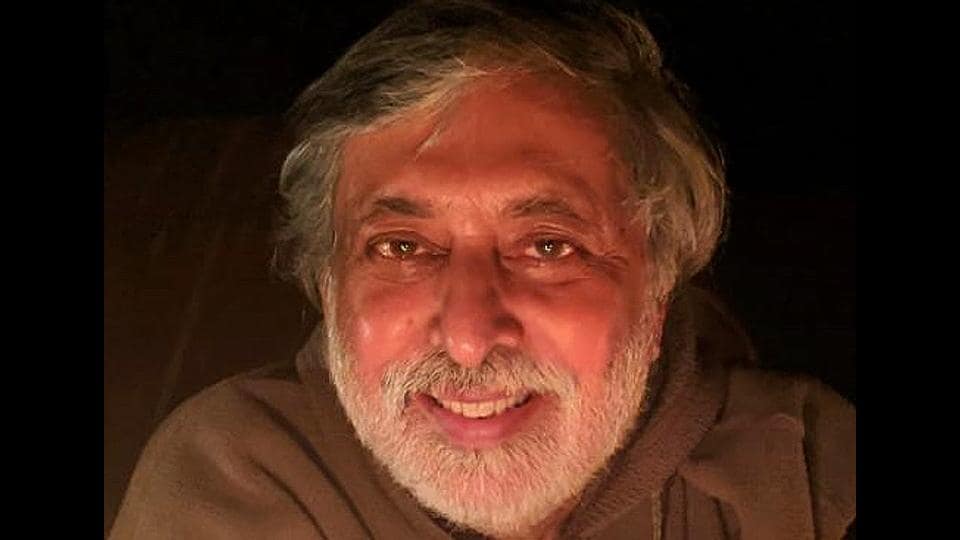
The 71-year-old filmmaker’s latest, Chronicles of the Forgotten Genocide: The Kissinger Doctrine, is a disturbing expose of the role played by the world’s two most powerful men—the then US President Richard Nixon and his adviser Henry Kissinger—in the 1971 genocide of Bengalis in what was then East Pakistan.
The 100-minute-long documentary, to be screened by documentary group Vikalp at Prithvi Theatre on November 24, relies on original audio tapes, telegrams and documents to show how US foreign policy helped in the killing of three million innocents.
Excerpt from an interview with Jyoti Punwani:
Why did you think of making this film now?
While researching for my film on Gandhi (Ahimsa - Gandhi: The Power of the Powerless), I began to feel that every problem in the world, and all the genocides after World War 2—Vietnam, Cambodia, East Timor—came from colonialism and American imperialism. The US could get away with this by saying that if we don’t intervene, the Soviet Union will dominate.
Then came the 50th year of Bangladesh’s independence. It struck me that in our own neighbourhood, the biggest genocide after World War 2 had taken place. But there had been no accountability, nor had the world taken note. The main criminals were never punished.
Your film has interviews with many Americans who were in the know of what was happening then. How did you trace them? How long did you spend researching all this?
It took a lot of time. For me, a good documentary means good research. It’s like providing footnotes in a book. You must prove you have the information.
I call mine an investigative documentary. It tears apart the veil of secrecy of US policies, which the world accepts because of the brutality of American power.
My consultant, the journalist and author Lawrence Lifschultz, helped contact a number of people, including the author Kai Bird, who’d been in Dhaka at that time.
I got lucky. The international awards won by my documentary on Gandhi, and the two Emmy nominations received by my documentary on Daniel Pearl (The Journalist and the Jehadi), meant a lot. I also got lucky because of Julian Assange. A lot of documents got declassified thanks to him.
While researching, I discovered that an Australian specialist, Dr Geoffrey Davis, had been invited to Bangladesh to conduct late termination of pregnancies (brought on by rapes committed by the Pakistani army). His interviews, conducted by the well-known feminist Germaine Greer, were in the Melbourne University archives. The university allowed me online access to the tapes, which I’ve used. Dr Davis had expected to deal with only a few cases. He was surprised at the number of abortions he had to perform, in the thousands.
So, I managed to get a lot of material from people who were there at that time. Of course, I spent a lot of time in the Library of Congress and the National Security Archive.
Did anyone refuse to talk? After all, Kissinger was alive then, yet they’ve called him a war criminal and worse.
That’s the great thing about America, its First Amendment. It protects everything you say.
Were the Bangladeshis equally willing to talk? Did they still recall everything?
When I went to Bangladesh, Sheikh Hasina was in power, so that made things easier. Everyone spoke openly. Though I could sense they didn’t like Hasina much, Mujibur Rahman was still very much respected. And the people I met had very clear memories of those days.
But when I wanted to go a second time, I couldn’t. I was scared of my own safety as well as that of my interviewees. People who’d helped me were in jail. Some still are, including journalist and freedom fighter Shahriar Kabir. I’m surprised that Muhammad Yunus, a Nobel Peace Prize winner, has put journalists in jail.
Were the rape survivors willing to speak on camera? Only one has done so in the film.
I’ve used only one; there were many who spoke. These rape survivors live a horrible life. But because Mujibur Rahman declared them war heroines, biranganas, and gave them lifelong pensions, their families tolerated them.
There are four voices missing in the documentary. Those of Kissinger himself, of the Pakistanis, of the Indians and your own.
I sent Kissinger six emails; he didn’t reply to any. I don’t think I needed a Pakistani voice. The main players were dead. Given the stature of the Americans I’d interviewed, I didn’t want to interview juniors in Pakistan. I’d have liked to interview Anthony Mascarenhas (Pakistani journalist whose article, Genocide, was published in Britain’s Sunday Times), but he’s dead too. I’ve quoted from his book.
Though I’ve seen some writings in Pakistan regretting what they did in 1971, the dominant feeling there is of denial. It was all done by India, they say.
That’s also the reason I didn’t want Indian voices, including my own. I’ve used only two Indian journalists who were there: the bureau chiefs of UNI and The Statesman.
I didn’t want to make any editorial comment; I wanted them to be hanged by their own words.
What do you feel about the way Bangladeshis are erasing the history of how their country came into being?
Germaine Greer says in her interviews that in 1975, after they killed Mujib, the intel agencies destroyed all the evidence of what happened in 1971. They’re going further now; they even burnt down Mujib’s home. Thank god we’d filmed it.
Do you see a parallel in India, where the government is trying to relook at history?
Well, it’s not quite the same. There, they are rewriting history with a lot of violence and wickedness. Here, we have a far more pluralist society. They have to do it more carefully.
Who’s your target audience?
Young people who could use the documentary to rethink the idea of the USA as a great power.
Stay updated with all the Breaking News and Latest News from Mumbai. Click here for comprehensive coverage of top Cities including Bengaluru, Delhi, Hyderabad, and more across India along with Stay informed on the latest happenings in World News.


