E-Paper



Experts urge a relook at emissions inventory for better AQI forecasts
The EWS was widely off the mark for Saturday, forecasting an AQI of ‘very poor’ which would deteriorate to ‘severe’ by Sunday.

 Prefer HTon Google


Centre’s Air Quality Early Warning System (EWS) once again failed to make an accurate forecast of the air pollution situation in the Capital, hampering the ability of the Commission for Air Quality Management (CAQM) to take pre-emptive action.
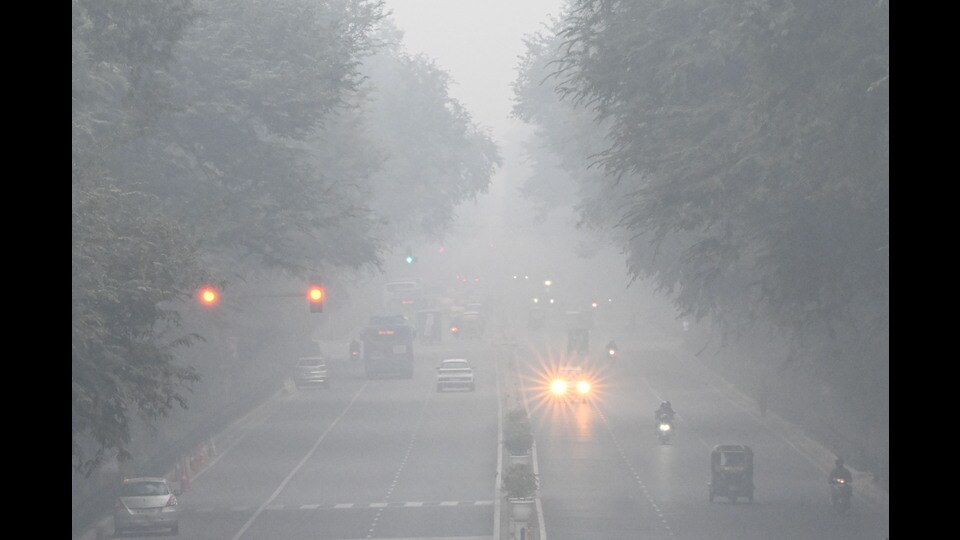
On Saturday morning, Delhi’s air quality deteriorated to the ‘severe’ category and had entered ‘severe plus’ range — an AQI of over 450 — by evening. But the EWS was widely off the mark for Saturday, forecasting an AQI of ‘very poor’ which would deteriorate to ‘severe’ by Sunday.
Set up in October 2018, the forecast system is important for the CAQM to take action under the Graded Response Action Plan (Grap). Based on forecasts, the CAQM can implement measures under Grap stages 2, 3 and 4 up to three days in advance — which could help control pollution peaks. However, if a forecast is inaccurate, Grap implementation would come far too late, experts said.
For instance, the CAQM only invoked Grap-4 late Saturday night, when the situation had already spiralled out of control. On Sunday, pollution remained alarmingly high — registering at 461 at 4 pm on Sunday, higher than the 431 at the same time a day earlier.
EWS comes under the Ministry of Earth Sciences, but is managed by the Indian Institute of Tropical Meteorology (IITM) in Pune, which also runs the Decision Support System (DSS). IITM officials did not comment on why EWS was failing to give accurate forecasts.
The model, said Sunil Dahiya, founder and lead analyst at the environmental think-tank Envirocatalysts, “assumes improvement based on the current stage of Grap and, so if implementation is poor, that improvement does not take place”.
This is not the first time this season the model has failed to make accurate forecasts — particularly for ‘severe’ AQI days. Last month, the Capital witnessed a three-day severe spell between November 11-13, but EWS failed to forecast ‘severe’ air on all three days. Instead, for all three days, it had forecast ‘very poor’ air.
More recently, Delhi’s AQI improved to ‘poor’ on December 9, dipping below 300, but the forecast for the day showed AQI would stay ‘very poor’.
An AQI of 51 to 100 is classified as “satisfactory”, and between 101 and 200 is classified as “moderate”, between 201 and 300 is “poor”, between 301 and 400 is “very poor”, and over 400 is “severe”, according to the CPCB.
“We have seen that EWS and the Decision Support System (DSS) are also reliant on an older emissions inventory, meaning despite dynamic weather forecasts in place, the overall end-product is inaccurate,” Dahiya said.
An emissions inventory is a record of the amount of pollutants discharged into the atmosphere from various sources over a specific time and area. Using an outdated inventories combined with current weather data can lead to significant errors in estimating pollution sources, experts said.
Dipankar Saha, former head of CPCB’s air laboratory, said the model needs a relook. “We need to check the calibration and also update the emissions inventory. Additional factors are also not being taken into account — for instance, the fact that sprinkling of water adds more moisture to the air and that eventually makes the air heavier. In the absence of strong winds, that water will do more harm than good by not allowing particulate matter to disperse,” he said.