
 E-Paper



Herbal park to come up at Chandra Shekhar Azad Park
Officials of the Chandra Shekhar Azad Park have decided to develop a dedicated herbal park within the premises of this vast park, to propagate practical knowledge, especially among youngsters, about the rich treasure of herbs of the country and their uses

 Prefer HTon Google


Officials of the Chandra Shekhar Azad Park have decided to develop a dedicated herbal park within the premises of this vast park, to propagate practical knowledge, especially among youngsters, about the rich treasure of herbs of the country and their uses.
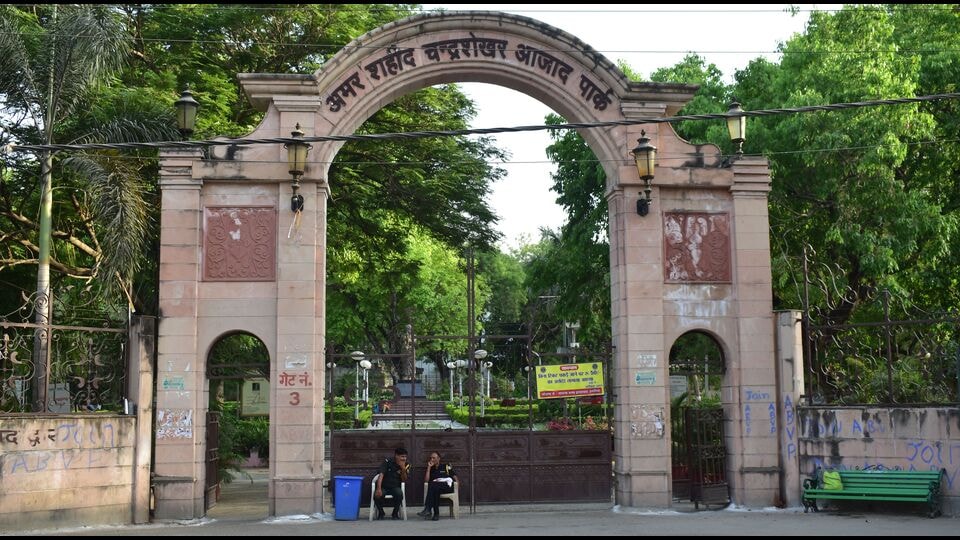
A brain child of divisional commissioner Sanjay Goyal, the park that covers an area of about 133 acres, will have a wide range of herbal plants, many of which were used prominently in different households as safeguards during the pandemic.
While many of these herbs are conducive to the Prayagraj climate, there are others which are grown either in rainy areas or in cold climates.
“We are preparing a proposal that will be put before the divisional commissioner who had floated this idea in which over 130 plant varieties, known for their medicinal value, will be planted,” said Chandrashekhar Azad Park garden in-charge, Umesh Chandra Uttam, confirming the plans.
Herbs like lemon grass, mulethi, turmeric, aloe vera, fenugreek, rosemary, mint, thyme, tulsi, ginger, garlic, black pepper, bay leaf (tej patta) etc, will not only be grown by the authorities but its importance and other relevant information will also be disseminated among visitors, he said.
“We will not only grow these medicinal plants which thrive in the Prayagraj climate but also other plants like cardamom, black pepper, kesar and sandalwood etc which are not grown in the hot climate of the district,” Uttam said, adding that this would be possible through the technique of shed-net house and poly-house.
“The shed-net house is an area covered with a green net and we have machines to artificially produce mist and foggy conditions. As a result, the temperature can be controlled and made suitable for the growth of even kesar, which is known to be grown only in Kashmir,” he said.
Similarly, we will plant saplings of sandalwood, which have not been seen by many of us, he added.
Likewise, through the use of a poly-house, authorities will keep conditions warm enough for the growth of plants which need a warm climate.
To start with, the herbal garden will be developed in an area of around 2 acres.
“The idea is to let the younger generation see for themselves what these plants look like. They have seen products of plants, have heard the names, or, have seen the fruit but cannot identify the plant if shown, these would be shown to them and detailed information about it would be given,” said Uttam.


