
 E-Paper



‘Meghalayan Age was erroneously chosen’: Top climatologist on Holocene debate
Scientist Raymond S. Bradley said that while local pride is understandable, science must take precedence.

 Prefer HTon Google


When the International Union of Geological Sciences (IUGS) announced in 2018 that the youngest subdivision of the Holocene epoch would be called the Meghalayan Age, a ripple of pride passed across the northeastern hill state of Meghalaya.
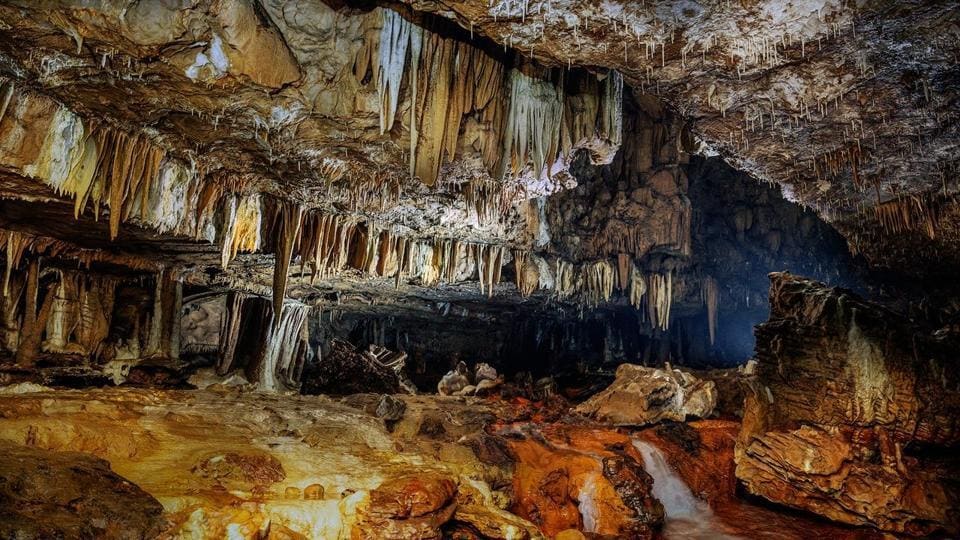
The Mawmluh Cave near Cherrapunji in Meghalaya’s East Khasi Hills district, became the “golden spike” — the official reference site to mark a new boundary in Earth’s geological timeline, dated to about 4,200 years ago.
The Holocene is the epoch we live in today, beginning about 11,700 years ago after the last Ice Age ended. Scientists divided it into three parts — the Greenlandian, the Northgrippian, and finally, the Meghalayan.
Each was supposed to mark a major global climate event. Meghalaya’s name entered world geology because a stalagmite in Mawmluh Cave was thought to record a dramatic drought 4,200 years ago, a marker for the youngest of these ages.
But the science behind that classification is now under scrutiny. In an exclusive exchange via email with Hindustan Times, Raymond S. Bradley of the University of Massachusetts Amherst expressed surprise that the naming had stirred such pride in Meghalaya, even as he stood firm in his view that the boundary was flawed. “I had no idea that the naming of this boundary had resulted in such a local reaction. Unfortunately, it was erroneously chosen,” he said.
Bradley is Distinguished Professor Emeritus at the University of Massachusetts Amherst, where he led the Climate System Research Center. Put simply, he is a scientist who studies how the Earth’s climate has changed over centuries and millennia, often using natural records such as ice cores, stalagmites, and tree rings.
Bradley’s work has taken him from Greenland to the Arctic, always with a focus on how past climate shifts can help explain today’s changes. It is this expertise in reconstructing ancient climates that has placed him at the heart of the global debate over the Meghalayan Age.
In his recent report published in the Journal of Geography (Chigaku Zasshi), on August 4, Bradley challenged the very foundation of the Meghalayan Age. At the heart of the controversy is whether the so-called “4.2 ka event” really happened on a global scale. Some earlier studies suggested a catastrophic drought led to social collapse in parts of the Middle East, and that a similar signal could be found worldwide.
Bradley is not convinced. “There is nothing similar at 4,200 years ago — no worldwide change in climate and no triggering factor like there was at 8,200 years ago,” he explained, contrasting it with the earlier and well-documented cooling caused by the collapse of North America’s ice sheet.
The Mawmluh Cave, which gave the age its name, is at the centre of this debate. “The sample of stalagmite that was used was not adequate to define the boundary,” Bradley said. “It was found right at the tip of the stalagmite where changes were not easily defined and where chemical changes may have occurred. Later samples, where the supposed boundary was in the middle of the sample, did not show the same story.”
Other records from India and beyond indicate only gradual shifts in rainfall, not the sudden global drought needed to justify a geological boundary. What happens next is a matter of scientific housekeeping. Under IUGS rules, no revision can be made until a decade after an age is ratified — meaning 2028 at the earliest. But Bradley is clear about what should follow: “I think it will probably fade away, but the Commission should rescind their decision altogether,” he underscored.
For Meghalaya, the naming of the age was a moment of immense pride. It put the state on the scientific map in a way few could have imagined. Bradley, however, insists that while local pride is understandable, science must take precedence. “Unfortunately, it was erroneously chosen,” he said. His words highlight the tension between symbolism and evidence — a reminder that while names can travel far, science is judged on data, not sentiment.
What does the debate say about science itself? Bradley’s answer is disarmingly candid: “Science often moves in steps — sometimes it’s one step forward, two steps back! That is the case here. Eventually, things get worked out correctly but it often takes the accumulation of information to clarify things,” he said.
Whether or not the Meghalayan Age survives in the annals of geology, Meghalaya has already found itself at the crossroads of a global scientific debate. For locals, the name symbolised recognition. For scientists like Bradley, it now symbolises how evidence can overturn even the most celebrated designations.
And as he told this writer in his email response, with both precision and humility: “I expect the Meghalayan terminology will not survive for long in the scientific literature.” In the end, the caves of Sohra may or may not anchor a geological epoch forever — but they have already carved their place in the story of how science works, corrects, and evolves.


