E-Paper



LIGO-India could be ready before 2030 deadline, says project scientist
Prof Rana Adhikari said the project has entered the construction phase, with groundwork underway at the Hingoli site in Maharashtra after years of planning, land acquisition and technical clearances.

 Prefer HTon Google


Pune: India’s ambitious LIGO-India project, expected to place the country at the forefront of gravitational-wave astronomy, could be completed before its official 2030 deadline if construction progresses as planned, according to Prof. Rana Adhikari, one of the leading scientists behind the international LIGO collaboration.
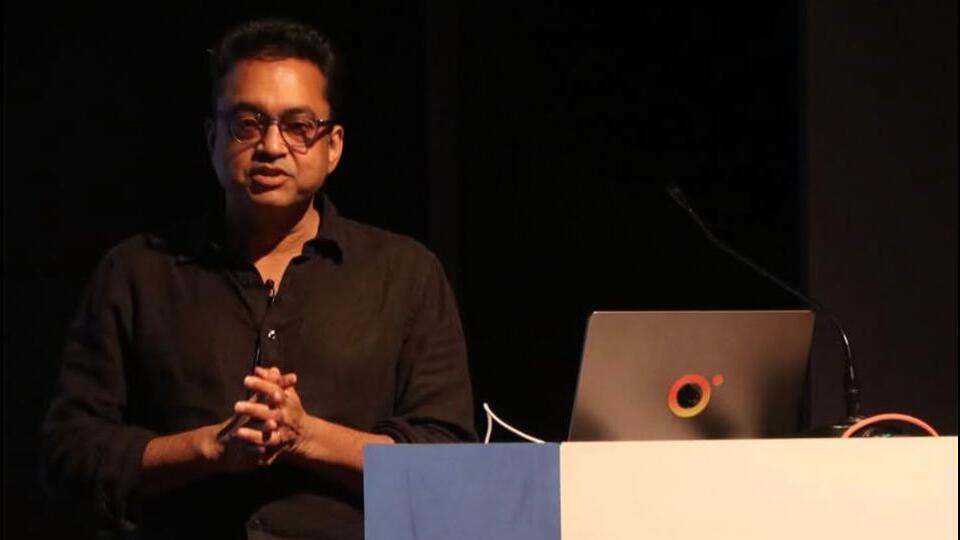
Speaking to Hindustan Times on Friday, during a visit to the Inter-University Centre for Astronomy and Astrophysics (IUCAA) in Pune, Adhikari said the project has entered the construction phase, with groundwork underway at the Hingoli site in Maharashtra after years of planning, land acquisition and technical clearances. “The land has been acquired, roads are being developed, and the construction contractor has been appointed,” he said.
The ₹2,600-crore project will make India part of the global network of gravitational-wave observatories alongside the United States, Italy and Japan. It will detect ripples in space-time created by violent cosmic events such as merging black holes and neutron stars.
For Adhikari, LIGO-India is as much an engineering mission as a scientific one. He said that among the biggest engineering challenges will be building two ultra-high-vacuum steel tubes, each four kilometres long and about a metre in diameter, arranged in the detector’s characteristic L-shape.
“The detector is L-shaped because a passing gravitational wave stretches space in one direction while compressing it in the perpendicular direction, as Albert Einstein predicted,” Adhikari explained. “Building something four kilometres long that is perfectly aligned and almost completely empty of air is an enormous engineering challenge.”
Explaining why Hingoli was selected after years of surveys across the country, Adhikari said the site offered the best balance of scientific and logistical requirements. “It has to be a quiet place because the detector is extremely sensitive to vibrations. Land availability, accessibility, and the state government’s support for the project also had to be factored in,” he said.
Unlike the first-generation LIGO detectors in the United States, LIGO-India will incorporate technological improvements developed over the past decade. “Within a few years, I think it will become the most sensitive detector in the world,” Adhikari said.
One of LIGO-India’s major upgrades will be the use of quantum squeezing, a technique that reduces the background noise created by the quantum nature of laser light.
“My career has been about understanding noise and making it quieter,” Adhikari said. “The amazing thing is that the signals are already there. If we can make our instruments quieter and quieter, we keep discovering new things.”
Adhikari believes LIGO-India could transform the region around the observatory by creating opportunities in precision manufacturing, optics, lasers, electronics and vacuum engineering.
“My hope is that the surrounding region develops along with the observatory. If I were an entrepreneur, I would look at what this project needs and build businesses around it,” he said.
Looking beyond construction, Adhikari believes the project’s greatest legacy may not simply be scientific discoveries but also proving India’s capability to execute one of the world’s most demanding scientific experiments.
“When Einstein wrote about gravitational waves, even he believed they would never be measured,” Adhikari said. “Many people told me India cannot do it. Once we prove we can do something this difficult, the next generation won’t ask whether India is capable. They will simply ask what impossible problem they should solve next.”
Adhikari highlighted that the project will require engineers and technicians with specialised training. “You don’t necessarily need a PhD. If you have a background in physics, mathematics or engineering and you are passionate, even one or two years of specialised training can make you valuable.”