
 E-Paper



Sutradhara’s Tales: Pune talims’ enduring history
The famous ‘red earth kusti’ grounds of Maharashtra were made on sound health principles so that injuries to bones and skin were minimised

 Prefer HTon Google


Amongst various medieval institutions of Pune, the prominent institution for encouraging physical capacities and wrestling were “talims” of Pune. Foundation of traditional wrestling and associated gyms -talims in Pune were laid during days of Peshwa Madhavrao I. Before his times, Nanasaheb Peshwa is known to have provided financial assistance towards establishment of talims in Pune.
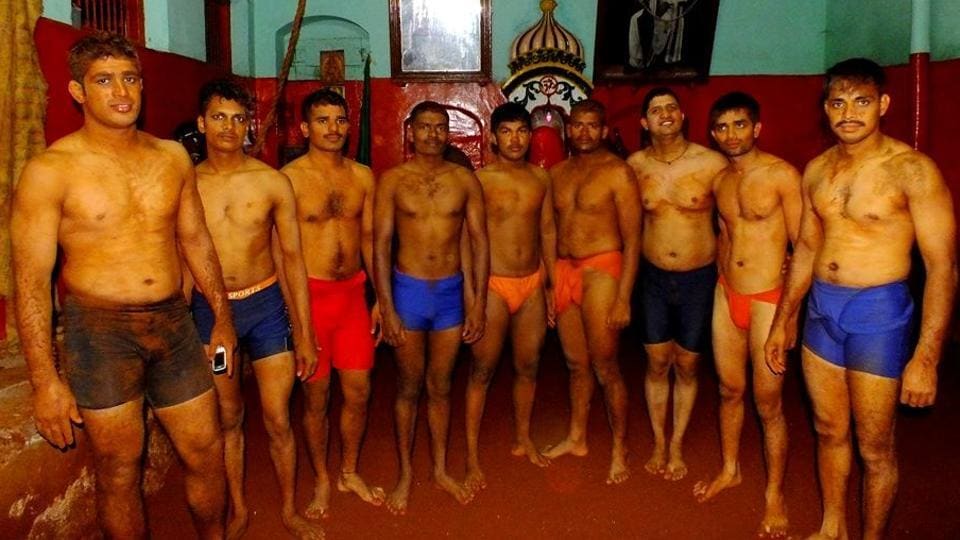
The daily maintenance and running costs of talims were provided for. Few older talims were renovated and expanded during Madhavrao’s reign. Renowned wrestlers were awarded regular stipend to meet their high maintenance training regime.
The famous ‘red earth kusti’ grounds of Maharashtra were made on sound health principles so that injuries to bones and skin were minimised. The ground was prepared with exotic items as dried roses and bakul flowers, rose water, camphor, lime juice, cinnamon, cloves, oil, buttermilk, etc. The akhara or talims would typically consist of such elaborately curated wrestling court.
The vastads/ustads were masters appointed for the training of wrestlers or pugilists. The children were trained from a young age and would accept the ustad as their guru. Talims had various traditional equipment for training, including rounded stones, wooden clubs and ropes and practiced physical exercises in the form of “Danda- Baithak” and Surya Namaskar.
Aspiring wrestlers generally swore to “brahmacharya” (abstinence) and worship lord Hanuman and lord Shiva. ‘Virya’ or semen is considered as the strength of a wrestler and hence is not to be wasted away!
The wrestlers or jethis are required to follow a specific nutrition rich diet called ‘Khurak’ (includes milk, milk products, almonds, thandai, eggs, non-vegetarian food, nuts) which was sponsored by Peshwas.
Wrestlers from north India would come to Peshwa darbar and challenge the wrestlers in Pune; it was known as “Khamb Thokne”. The wrestling matches were typically held in front of Shaniwarwada grounds in presence of Peshwas and villagers from neighbouring villages would flock to enjoy the matches. Dasra and Holi were the typical festivals to host such events. The match-winning wrestler would be typically awarded with golden or silver bracelet, anklet or ceremonial headgear. Dasra award was ₹150 for the winning champion, according to one record. It was a matter of great pride and would excel the person’s status in society.
No wonder, many young men from various communities pursued wrestling as a viable career option and represented their affiliated talims in competitions.
One Shivramdada came to Pune from Varanasi in search of greener pastures in 1796 and for lack of opportunity, was employed in sardar Raste’s employment as a water carrier. However, his talent did not go unnoticed and soon he proved his mantle by winning over a famous wrestler from Punjab, Krupalsingh, who had challenged Peshwas and wrestlers of Pune. Peshwas facilitated him and built a talim in Ganesh Peth named as “Guruvarya Shivramdada Talim”.
Another wrestler from Punjab, Chandubhai, came to Pune and requested patronage of Bajirao II. An avid lover of wrestling, Bajirao II arranged a match between Shivramdada and Chandubhai which went for an entire day and still remained non-concluded. Happy with Chandubhai’s skill, Bajirao II ordered construction of another talim near that of Shivramdada’s Talim. These two talims formed the two main training schools of Pune wrestling culture respectively known as “Shivramwale” and “Chandubhaiwale”. The tradition of holding matches between these two schools continued until present in many parts of Pune region.
However, oldest talim of the city is the ‘Chinchechi talim’ established in 1783. This was commissioned by Peshwas, built in what was a tamarind grove hence the name “Chinchechi Talim”. Ravaji vastad, a brahmachari, was the master of the gym who worked for and stayed in the talim till his death. His memorial can still be found on the premises. The talim gained great honour and popularity in the decades of 1920 and 1930 when famous wrestler Ganpatrao Shinde was in his form. Another wrestler, Buwasaheb Ghume, won bronze medal in fourth Asian wrestling championship at Jakarta in 1962. There are many others, including Nageshwar GIrme, who have many national and state-level championships in their name. This talim has continuous history of more than 200 years and now has been expanded into a three-storied building equipped with soil akhada, library, training courts, gym and residential spaces.
There’s an interesting story behind another talim, the Fani Aali Talim that sits in a non-descript bylane in Pune’s Kasba peth, a bustling settlement in the city’s oldest quarters. According to legend, comb makers from Nashik were invited to set up shop in Pune after Sawai Madhavrao Peshwa called for the use of ivory combs for Brahmin women as prescribed in sacred Hindu texts. Kasba peth, the new home of the guests, came to be identified as Fani Aali, which translates to comb and lane in Marathi. Following the defeat of the Marathas at the hands of the British, the artisans lost the Peshwa’s patronage and migrated.
On popular demand, a talim was opened in the area, and a comb shop was converted into a wrestling arena. Today, Fani Aali Talim is now one of the last surviving akhadas in the city and has petite wooden structure standing near Shitole wada.
At first, the British were well disposed towards the talims. But they became suspicious of them after the assassination of British official WC Rand by the Chapekar brothers, and kept a close watch on the talims. They felt these were secret societies for the subversion of British rule. In fact, Lahuji Raghu Wastad’s talim in Ganj Peth was actively involved in anti-British activities.
In spite of this, it was during the Swadeshi Movement that the talims got a fresh lease of life. Lokmanya Tilak helped them to revive as centres for the spread of nationalism. He stressed the need for Indian youth to become physically tough and disciplined through exercise and lathi training. Mahatma Jyotiba Phule too had encouraged many talims in the city of Pune. Around 1947, the traditional talim culture received fresh lease of life through establishment of “Pune Shahar Talim Sangh” that hosted more than 4,000 matches by 1984.
Survey of talims in the city yields founders and members belonging to various communities such as Gavali, Giri-Gosavis, Rajputs, Marathas, Brahmins, cobblers, Mahar, Mang, Muslims and ascetics making it a quite inclusive sport. Though many talims today have converted to modern gyms, many thrive as traditional talims and see steady crowd of youngsters aspiring for military and police services practicing the age-old art!
Saili Palande-Datar is an indologist, environmentalist, history researcher and farmer. She can be reached at sailikdatar@gmail.com


