
 E-Paper



A new chapter in democracy
The new symbolic home of India’s democracy will face three sets of challenges. The tests are formidable but not unsurmountable

 Prefer HTon Google


After a week shrouded in political acrimony, Prime Minister (PM) Narendra Modi inaugurated the new Parliament building on Sunday. The imposing state-of-the-art structure is likely to host lawmakers in the upcoming monsoon session. It marks a new chapter in India’s parliamentary democracy, taking over from the iconic colonial-era building that played witness to the drafting of the Constitution, the first government of independent India, and sundry bends in politics, from powerful one-party administrations to chaotic but dynamic coalition arrangements. The new Parliament is better equipped than its counterpart, which opened in 1927. But as the new symbolic home for India’s democracy, it will have to confront three challenges.
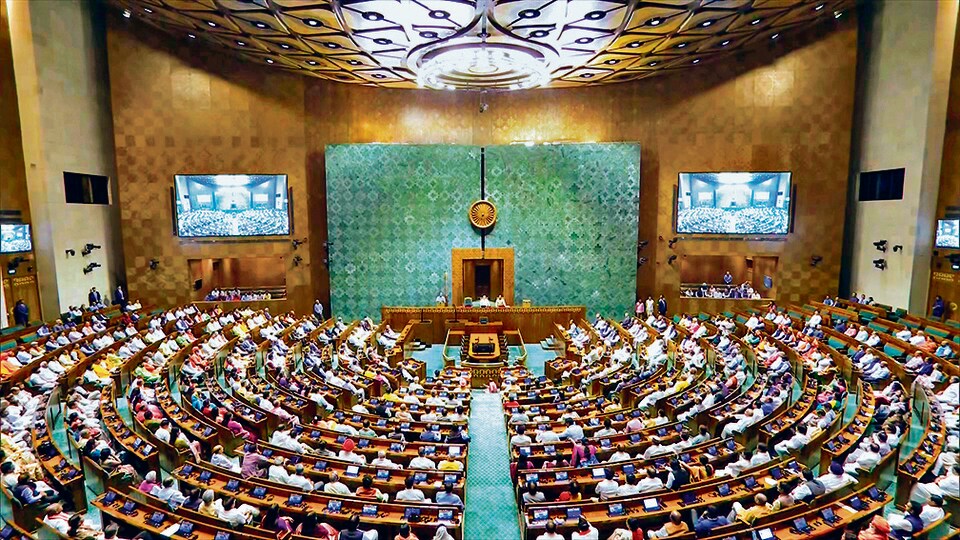
The first is short-term, and likely to manifest in its first seating — the growing chasm between the government and the Opposition, which was conspicuous on Sunday by the boycott of 21 parties. The last few sessions of Parliament were disrupted by members of both the treasury and Opposition benches, indicating that both sides had retreated into their respective ideological positions. The government felt its democratic mandate was being disrespected, while the Opposition was upset by what it saw as the government using its numerical superiority to ram bills through, short-circuiting the parliamentary process. The new Parliament and its officials will have to find a way to break this impasse, and open channels of communication that allow the House to function.
The second is medium-term, and is connected to the bolstering of parliamentary processes. Over the years, the number of bills being referred to standing committees has been dropping, fuelling the perception that the primary function of Parliament — scrutinising bills drafted by the government — was suffering. This impression was further strengthened with pandemonium often replacing debate and discussion in the House. The lawmakers and the authorities will need to look at measures that carve out dedicated time for both sides to raise issues, and for sufficient scope to scrutinise key legislation. The third is the long term — the deadline of 2026 for redrawing parliamentary constituencies and possibly increasing their number. As Mr Modi noted in his speech on Sunday, the new Parliament will one day see far more members seated in its chambers than it does now. But how will this look? Already, there is a consternation that if the population-based representation method is followed, some regions will lose out in relative terms on political heft. The new Parliament, therefore, will likely be the site of a renewed negotiation for calibrating India’s democracy on a scale not seen possibly since the linguistic reorganisation of states kicked off in 1956.
These tests are formidable, but not insurmountable. Just as India’s democracy has withstood adversities in its 75 years, its new home will need to take these challenges head-on, with iron will and sincerity.


