
 E-Paper



Five-Day Lakshmi Puja Guide: How to Perform Diwali and Dhanteras Puja to Invite Prosperity and Peace into Your Home
The Lakshmi Puja festival spans five days, starting with Dhanteras, and focuses on proper worship methods to attract wealth and prosperity.

 Prefer HTon Google


It is said about worship that as is the meditation, so is the knowledge. Therefore, it becomes very important to follow the proper method and procedure of any worship. Following the right method during the five-day Lakshmi festival becomes even more important, as it is one of the most significant rituals of the year. If the five-day worship is done with proper focus and method, it is believed that the worship attains complete sanctity and devotion.
Before explaining the method, I would like to tell you about Goddess Lakshmi herself. After knowing this, it will be easier to understand the blessings of the Goddess of wealth in a symbolic way. According to our Puranas, Goddess Lakshmi was born during the churning of the ocean (Samudra Manthan). Out of the fourteen divine treasures that emerged from the ocean, Lakshmi was one of them. She appeared seated on a lotus flower. In the scriptures, the Goddess is described as having an enchanting and divine form. Goddess Lakshmi chose Lord Vishnu as her husband and began residing with him in Vaikuntha. Worshipping Goddess Lakshmi not only brings wealth and prosperity but also spreads mental peace, wisdom, compassion, and kindness. That is why she is called the Goddess of complete prosperity.

It is important for you to know that in every civilization, there have been deities symbolizing wealth and prosperity. This is because, in this living world, money is necessary for survival. Some people dismiss its importance by calling wealth the dirt of the hand, while others say that since everything is left behind after death, there is no need for money. Such people should understand that in our Vedic scriptures, four goals of human life are mentioned — Dharma, Artha, Kama, and Moksha. Without Artha (wealth), even Moksha (salvation) cannot be attained. Therefore, our Vedic texts describe the methods of earning, saving, and worshipping the Goddess Lakshmi as the divine symbol of wealth.
The five-day Lakshmi Puja begins on Dhanteras, which falls on the Trayodashi date of the Krishna Paksha. This festival continues till Bhai Dooj, lasting for a total of five days. To keep the details of all these rituals from getting too lengthy, we are sharing this article in two parts for your convenience. In today’s part, we will explain the importance of the first three days — Dhanteras, Roop Chaturdashi (also known as Narak Chaturdashi), and Diwali Puja. Read it carefully and try to memorize the method of worship, or make notes for your convenience.
1 – Dhanteras – The Day of Sanatan’s First Divine Physician, Lord Dhanvantari
In one hand he holds a conch, in the second a discus, in the third a pot, and in the fourth hand a herb. This is the divine form of Lord Dhanvantari. He emerged from the ocean during the churning of the sea (Samudra Manthan) in this very form. Later, these four objects became the four pillars of Ayurveda. You will be surprised to know that Lord Vishnu himself declared Dhanvantari as his own incarnation. This story is mentioned in texts like the Vishnu Purana.
Worshipping Dhanvantari Pleases Goddess Lakshmi
According to the story of Lord Dhanvantari and Lord Vishnu, it was Vishnu himself who explained the importance of Dhanteras Puja. This story was narrated by Lord Vishnu to a farmer who was a devoted worshipper of Goddess Lakshmi. The farmer wished to take Goddess Lakshmi with him and kept praying to the Lord for it. When he refused to leave without her and began to cry, Lord Vishnu told him a solution.

Lord Vishnu said, “O farmer, any human living on earth who worships Lord Dhanvantari will never lose Goddess Lakshmi from his home.” The farmer was astonished and asked, “How, Lord? How is this possible?” Then Lord Vishnu explained to him, “Dhanvantari is my own manifestation. Just as I hold the conch, discus, mace, and lotus in my hands, Dhanvantari too carries these symbols. Therefore, seeing Dhanvantari is the same as seeing me. In one hand, like me, he holds a conch; in the second, a discus; in the third, a medicinal herb; and in the fourth, a pot.”
When Lord Shiva saw this divine form of Dhanvantari, he too was amazed. Lord Shiva said, “O Lord, what a beautiful form you have taken! When you brought poison for me, the joy was different; today, as you bring nectar, the joy is of another kind.” This story from the Shiva Purana teaches us that there are two kinds of speech — one harsh, filled with insults and abuse, and the other sweet and kind. Lord Dhanvantari symbolizes sweet speech, in which lies the cure for all the ailments of the world.
How to Perform Dhanteras Puja?
According to the method of worship that Lord Vishnu taught the farmer, Dhanvantari Puja is performed on the Trayodashi (thirteenth day) of the Krishna Paksha in the month of Kartik. For this, first prepare a clean space and apply a coating of cow dung on the ground. If cow dung is not available, purify the place using clean water. Then draw a Chowk on it. Remember, this Chowk is not a decorative rangoli, but a simple square-shaped figure made of flour and turmeric, without using any colors.
It is important to know that flour represents prosperity, while turmeric symbolizes wealth and is considered a sign of Goddess Lakshmi. A few grains of rice and wheat are also placed on this Chowk. Now, place a wooden platform (pata) on it and spread a red cloth over it. Take a plate and draw a Swastika symbol on it using vermilion (kumkum) mixed with water. Then place a coin on the plate. The coin can be made of silver or it can be a regular coin, depending on your capacity. If you have a silver coin used in the previous year’s worship, place a regular coin with it as well.

Now wash the coin with milk and water, then wipe it clean and place it back on the plate. Worship the coin using turmeric, vermilion, henna, abeer, and gulal. Offer rice on the coin and then wrap both coins completely in a red cloth. Light seven ghee lamps made of flour and one oil lamp on the plate. Before placing the lamps, purify the area with a mixture of turmeric and water. After this, offer some ground urad dal repeatedly, followed by vermilion. Place seven pieces of turmeric, three lotus seeds (kamal gatta), and seven pieces of Amarbel (a sacred creeper) over the coins. Then offer red flowers and sweets to the deity. Worship the plate using seven peacock feathers, and then perform aarti using the ghee lamps. With folded hands, pray to Goddess Lakshmi with devotion and concentration.
After the prayer, place one flour lamp near the safe, the second near the cupboard, the third in the kitchen, the fourth in the hall, the fifth near the deity, the sixth near the Tulsi plant, and the seventh lamp near the main door. Keep the oil lamp at the place of worship itself.
2. After Dhanteras Comes Roop Chaturdashi or Narak Chaturdashi Puja
The day after Dhanteras, that is, the 14th day of the Krishna Paksha, is known as Roop Chaturdashi. It is also called Narak Chaturdashi, because on this day Lord Krishna killed the demon Narakasura and freed sixteen thousand maidens from his captivity. Lamps were lit in celebration of this victory. On this day, rituals are performed for freedom from sins and for the attainment of beauty and radiance. Therefore, knowing the correct method of Narak Chaturdashi Puja is very important.
How to Perform Narak Chaturdashi Puja
For this, prepare the worship place in the same manner as you did on the day of Dhanvantari Puja — that is, purify the ground, draw the Chowk, make the Swastika, and place a wooden platform over it. The only difference is that this time, the lamps will be different. On the day of Narak Chaturdashi, a four-faced lamp made of flour is prepared. It can be filled with either mustard or sesame oil. Add a few grains of black or yellow mustard seeds into this lamp. Then, light another separate lamp made of ghee. There is one more important thing to note here.
Place the four-faced flour lamp on the left side of Goddess Lakshmi, and the ghee lamp on her right side. Sprinkle water lightly and remember Goddess Lakshmi and Lord Ganesha. Offer vermilion, sacred thread (mouli), sandalwood paste, abeer, gulal, and henna. Also, offer five pieces of Amarbel, five lotus seeds (kamal gatta), and five pieces of turmeric. Then offer sweets to Goddess Lakshmi as bhog. After offering bhog, bow before the Goddess. Leave the four-faced lamp at the place of worship. Lift the ghee lamp and perform aarti of Goddess Lakshmi. After the aarti, place the lamp back at the worship place and pray with folded hands, saying — “You are the Goddess of beauty, the savior from the sufferings of hell. May you and Lord Narayana always reside in our home.” After this, remember your Kuladevata (family deity), your personal deity, and your ancestors. Then offer red flowers to the Goddess and place them on the coins. Now take the four-faced lamp and move it around the entire house, and finally place it in the center of the main door with all doors open for a while. After some time, close the doors.
After Narak Chaturdashi comes Diwali, which falls on the Amavasya (new moon) of the month of Kartik. According to the scriptures, the Lakshmi Puja on Diwali night should be performed during the Kartik Amavasya. As per the Hindu calendar, this year Kartik Amavasya will begin on October 20, 2025, at 3:44 p.m. and end on October 21 at 5:54 p.m. Therefore, Lakshmi Puja on Diwali should be performed on October 20, 2025.
The Correct Method of Lakshmi Puja on Diwali
Now, I would like to tell you about the main worship of the five-day Lakshmi Festival, which is performed on the day of Diwali. Paying attention to this is very important. Once again, remember that the preparation of the worship place on Diwali night should be the same as you did on Dhanteras and Roop Chaturdashi — purify the area with cow dung or clean water, draw the Chowrang (square), and place a wooden platform over it.
Spread a red cloth on the platform. Light two lamps — one of oil and one of ghee. Place them in the same way as before — the ghee lamp on the right side of Goddess Lakshmi and the oil lamp on the left side. Remember that both the ghee and oil lamps must remain lit throughout the night. Arrange roli, mouli, rice grains, perfume, garland, five or seven pieces of turmeric, five or seven lotus seeds (kamal gatta), Amarbel pieces, and beautiful flowers on a plate. In a small bowl, keep some coriander seeds along with a little jaggery, and in another bowl, keep an Amla fruit (Shreephal). Place the sweets you have brought as offerings (bhog) for Goddess Lakshmi. Also, place the coins you used during Dhanteras and Roop Chaturdashi Puja. Apart from these, keep 11 or 21 earthen lamps as per your capacity. Worship Goddess Lakshmi, pray to her with full devotion, and focus on performing every step of the puja with purity and attention.
After Diwali, two more rituals remain — Govardhan Puja and Bhai Dooj. In the next part of this article, you will learn about the worship methods for these two occasions. Wishing you all a very happy Deepotsav! Shubh Deepavali!
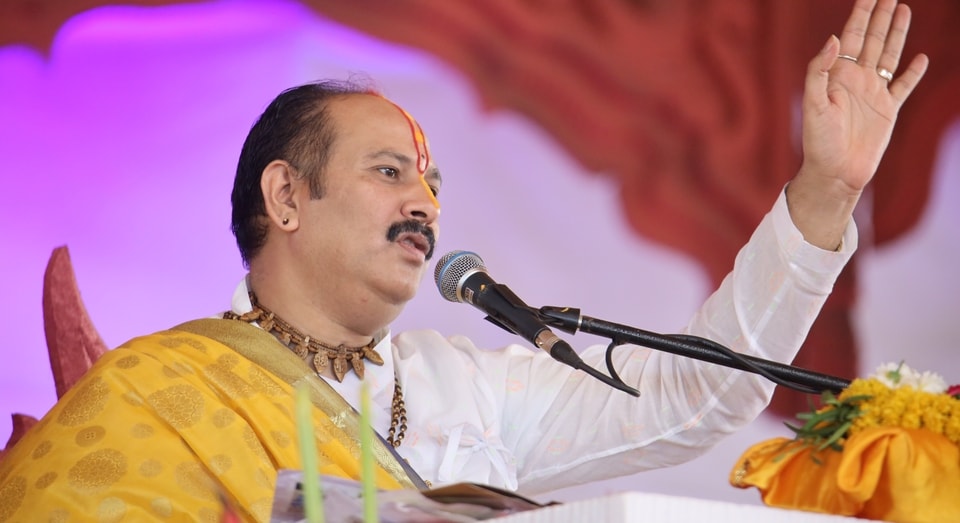
Brief Bio of Pt Pradeep Mishra Ji Maharaj:
Pandit Pradeep Mishra Ji Maharaj is a spiritual orator and the head priest of Kubereshwar Dham in Sehor, Madhya Pradesh. His engaging talks on the Shivmahapurana draw massive crowds, often numbering in the millions. A former teacher, Maharaj Ji's effective communication skills have endeared him to his audience. His insights into worship rituals and spiritual remedies have gained widespread acceptance.
- Pandit Pradeep Mishra, Kubereshwar Dham, Sehore, Madhya Pradesh
Note to readers: This article is part of HT's paid consumer connect initiative and is independently created by the brand. HT assumes no editorial responsibility for the content, including its accuracy, completeness, or any errors or omissions. Readers are advised to verify all information independently.
Want to get your story featured as above? click here!


