
 E-Paper



Myanmar’s prospects: Before and after elections
This article is authored by Rajiv Bhatia, Distinguished Fellow, Gateway House and former ambassador to Myanmar.

 Prefer HTon Google


Four-and-a-half years after the military coup of February 1, 2021, which set aside the results of the November 2020 elections, Myanmar is gearing up again for a new round of elections. The military plans to hold them in December 2025 in three or more phases, with the intention to announce the results early next year.
In comparison to the recent months and particularly the previous period 2022–24, the security situation has improved, but clashes between the regime and the resistance continue and could gather momentum.
The proposed elections will be limited in scope. About half of the country is outside the control of the junta so that it will skip the polls. As a prelude to the elections, military authorities arranged a census which managed to cover only 32 million of the total population of 51 million, thus failing to reach 19 million people due to “significant security constraints.” Holding elections while the civil war is underway in large parts of the country, therefore, has its own challenges as well as limitations.
With about half the country outside its control, the military government plans to hold elections in several phases starting on December 28, 2025, in as many townships as possible. Of the 330 elected seats in the lower house of the parliament, the aim is to arrange polling for 267 seats, though it seems ambitious at this stage. The 2008 Constitution reserves 110 seats for military nominees. Thus, taken together, 377 seats could get brand-new MPs. If elections could be held peacefully and with manageable violence, the elected government, by virtue of its formation, may contribute further to the process of democratisation. The new government is expected to be formed in April 2026.
Another data point: in the 2020 elections, 70 of the 94 political parties registered participated at the national level. However, this time, according to the Union Election Commission, only six political parties would vie for seats in the national Parliament, besides 51 regional parties that will contest seats in the regional assemblies. Aung San Suu Kyi’s National League for Democracy (NLD), the clear winner in the 2020 elections, has been excluded from the forthcoming elections.
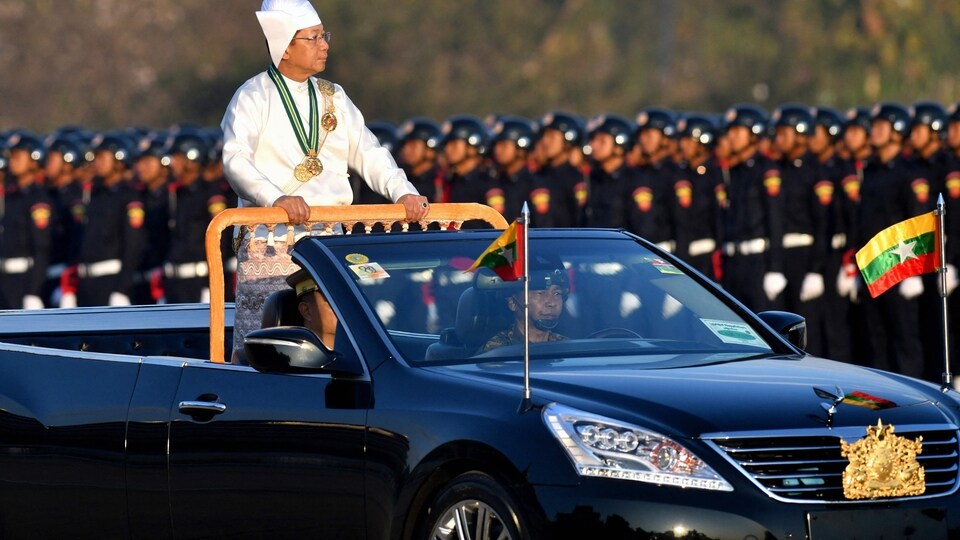
The purpose of elections is for the junta to gain some legitimacy and create the impression that a democratic setup has replaced military rule. However, it is unlikely that power will shift from a single pair of hands – of the strong man, Min Aung Hlaing (MAH), who has ruled the nation, or a part of it, since the coup. Experts, however, are divided on whether MAH would prefer to continue as the commander-in-chief or elevate himself as the next president. Each of the two options may have its own logic. A decision may be taken after assessing how the elections have gone. One point, though, is clear: The quotient of real democracy and freedom will be much less this time than what Myanmar tasted during the period 2011–20.
While election battles will be fought within Myanmar, a debate about them among the nation’s external partners and interlocutors is also important.
ASEAN, which has been engaged in efforts to find a solution to the country’s political and security challenges, has taken the view that elections are not a priority. It insists on the full implementation of the Five-Point Consensus (FPC), comprising, inter alia, the cessation of violence, the release of political prisoners, and the commencement of national dialogue among all political stakeholders. The regional grouping adheres to this approach, although there has been virtually no progress in its implementation. “An election is not part of the five-point consensus,” said Mohammad Hasan, the Malaysian foreign minister, in July 2025.
Western nations have always projected themselves as active defenders of democracy. Mark Fiedrich, the new EU ambassador, reiterated recently that the EU aims “to promote inclusive dialogue opportunities, where possible.” Meanwhile, the joint EU-US approach to democracy in Myanmar has been disrupted by some US actions, such as halting assistance to the National Unity Government (NUG), a loose coalition of anti-regime political forces, and the decision to lift sanctions on certain Myanmar companies or individuals. Even President Donald Trump‘s letter to Senior General MAH conveying the decision to impose tariffs on Myanmar’s exports was seen in a positive light – as evidence of the belated US recognition of the military regime. A recent editorial in Mizzima stated: “US Secretary of State Mario Rubio recently issued a directive not to criticise elections in other countries, which was seen as including Myanmar. This ambivalence undercuts the coherence of western governments.”
In contrast, China’s actions speak for themselves. Senior General MAH’s relations with the Chinese government warmed up considerably, as evidenced by his meeting with President Xi Jinping during the recent visit to China to participate in the SCO summit, as well as in the Chinese military parade. Beijing’s support for the proposed elections is now taken for granted. At their meeting on 30 August, Xi conveyed support for Myanmar’s endeavours in unifying all domestic political forces as much as possible and restoring stability and development. MAH, on the other hand, noted that China has always been “a good neighbour and a good friend to Myanmar,” according to a press release by the Chinese foreign ministry.
On its part, India has joined the fray, based on the assumption that elections are “the only show in town,” as a diplomatic observer put it to this author. At his meetings with MAH, both in Bangkok (April) and Tianjin (August), Prime Minister Narendra Modi implicitly voiced support for elections as long as they are held “in a fair and inclusive manner.” Reports are suggesting that India may consider sending election observers to Myanmar. All this fits in with India’s fundamental approach that Myanmar needs to advance towards “a Myanmar-led and Myanmar-owned process for which peaceful dialogue and consultation is the only way forward.” At the same time, New Delhi continues to support FPC and ASEAN’s centrality in resolving issues facing the region.
The politics of Myanmar and the geopolitics of the region will continue to mould the road to the next elections and what follows them. But, for this analysis to be complete, it is essential to remember the real suffering of the people who have faced violent conflict, displacement, hardships, earthquakes, economic deprivation, and grossly inadequate assistance from abroad.
Finally, their most popular leader, Daw Aung San Suu Kyi, 80, continues to be an ailing prisoner at an undisclosed location. The words of Kim Aris, her son, should haunt everyone: “It is shocking and shattering for this military junta to hold her without fair trial, and with no compassion for her age or health, I ask the world to help me find a path to freedom for her.”
This is a heart-rending appeal for freedom from fear!
This article is authored by Rajiv Bhatia, Distinguished Fellow, Gateway House and former ambassador to Myanmar.


