
 E-Paper



The Putin visit and the 23rd Indo-Russian Summit
This article is authored by Anuradha Chenoy.

 Prefer HTon Google


The visit of President Vladimir Putin’s visit to India (December 4-5) is being deconstructed internationally to analyse the kind of welcome he was given, the deals announced, the purpose it serves, the impact it has, the strategic signalling, and its implications for India, Russia and globally in the current geopolitical context.
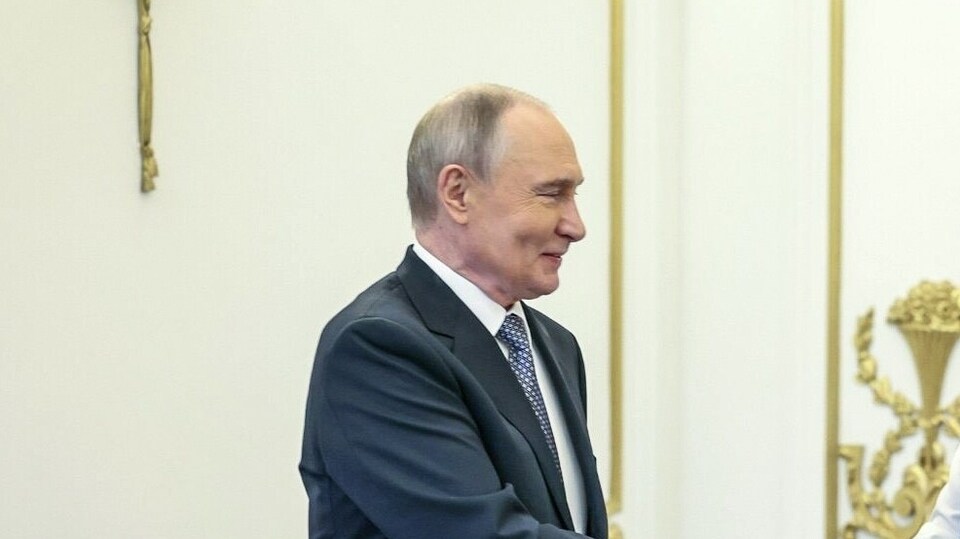
Russia is at war in Europe; Europe sees it as a threat but interestingly the just published US National Security Strategy does not mark Russia as a threat any more. India is facing harsh 50% tariffs from the US, of which 25% is on account of Russian oil imports as part of the pressure on India to disengage with Russia. Russia is facing thousands different sanctions from the West.
The red carpet welcome and ceremonial moments showcased the status India gives to Russia at a juncture of international systemic transition and supply chain disruptions. It signalled India’s stand on its avowed strategic autonomy, its right of choice for an independent foreign policy. India showed that the Indian economy would not go under on account of these sanctions but would diversify and intensify trade and economic options. It is no wonder that the word ‘resilience’ was added to the ‘special and strategic partnership’ used to describe this relationship.
This moment was used for re-affirmation of the friendship and trust marking the 25th anniversary of the strategic partnership between the two, charter future economic relations, and underline the holistic nature of the relationship ‘across the entire spectrum” of foreign policy, besides the strategic, political and military ties of mutual benefit that the Joint Statement outlined.
The tangible commitments include an increase of Indian exports to Russia with the roadmap till 2030. Indian exports are currently at about $5 billion in the overall trade of about $70 billion. Russian oil exports, combined with fertilisers and coal dominate trade. India’s low exports are largely because Indian big businesses have not pushed hard enough to move out of their comfort zone of established trade and value chains with the West. To realise these targets, the Russian side needs to improve the ‘ease of doing business’ in Russia. Sanctions are also a problem for traders. Further, the Russian market is substantially dominated by China. But room remains for Indian products.
A Free Trade Agreement between India and the Eurasian Economic Union (made of the five States of Russia, Kazakhstan, Belarus, Armenia, Kyrgyzstan) is a work in progress. The framework for this negotiation that was initiated in November will enable new markets for Indian business including in the medium- and small-scale sectors and expanding industrial and technological collaboration.
An agreement related to labour mobility of skilled workers was signed during this visit. Russia as is well known faces a demographic crisis and the war in Ukraine which has drawn a large mass as reservists has led to an acute labour shortage as Russia needs to fill at least three million posts in the next few years. This provides opportunity for Indian skilled labour, though requires preparation for cultural acclimatisation.
Both sides agreed to continue jointly developing systems of bilateral settlement through the use of national currencies for bilateral trade. Work is in progress for smoother interoperability of the national payments system and a financial messaging system as well as a central bank digital currency platform.
It needs to be noted that Russia has been selling oil to India in Indian rupees since the 2022 Ukraine war and when Russia faced sanctions and an ouster from the SWIFT financial messaging system. Local currency trade has saved India valuable foreign exchange and powered Indian industry and growth. Local currencies transactions circumvent western sanctions but led to the accumulation of large sums of Indian rupees with Russia.
To tackle this problem of accumulated rupees held by Russia, the Reserve Bank of India altered rules (1924) of the Special Rupee Vostro Accounts (SRVAs) to enable Russian entities to reinvest their surplus rupees into Indian government bonds, treasury bills, equities, Indian stocks, and infrastructure projects. This has become a closed loop system where rupees earned from Russian trade can be invested in India’s growth sectors.
The Modi-Putin talks emphasised payment stability for the oil and defence sectors. This payment system is deepening as the Russia Central Bank and largest lender - Sberbank with branches in India, is on the path of increasing its operations and will invest $100 million over next three years in India’s capital markets and enable Russian investors to access the Nifty50 index.
This meeting reviewed the progress on the India and Russia project of increasing cooperation on nuclear energy, and meetings had been held by the Indian Department of Atomic Energy and the Russian State corporation Rosatom on small modular reactors for civilian energy use. Meanwhile, a third phase of the Kudankulam nuclear power plant is in progress.
Similarly transport corridors like the international North South Transport Corridor, the Chennai-Vladivostok Corridor and Northern Sea Route were discussed while a Memorandum of Understanding on training specialists for ships operating in Polar Waters was signed. India will lease a nuclear powered submarine for about $2 billion according to Bloomberg news (December 4, 25), though there is no confirmation from the Indian ministry of external affairs.
Both leaders expressed satisfaction with the military cooperation, and agreed to encourage joint manufacturing of spare parts, components, and other products for Russian origin arms in India through transfer of technology and setting up of joint ventures. Given that Russian military platforms make up about 60% of Indian defence imports, this will spur Indian Russian ties in a big way.
In the context of military engagements, it needs to be referenced that the Russia-India logistic agreement called the Reciprocal Exchange of Logistics Agreements (RELOS) signed in February 2025 was ratified on December 2 on the eve of this meeting. This pact allows the militaries of both nations to access each other’s bases and ports for refuelling, supplies and logistics for exercises, disaster relief and other purposes. The strategic importance of this Agreement is in its provision that gives India access to critical Russian northern ports and Russian ships to the Indian Ocean Region and allows joint military exercises, and interoperability. This RELOS Agreement is deeper and balances a similar logistics agreement signed with the US in 2016.
The holistic nature of these talks included science and technology and cultural exchanges, expansion in cultural fields like the film industry and enhanced exchange between students, think tanks and institutes on the two sides.
The Russian Indian strategic cooperation in multilateral forums was discussed and the common understanding of the two on the importance of multilateralism, UN reform and their cooperation in forums like the BRICS, Shanghai Cooperation Organization was underlined to indicate how this has assisted in the creation of a multipolar international system that is re-shaping global politics.
It can be concluded that Putin’s high octane visit marks stability, process and resilience of bilateralism between the two countries that have global impacts given this period of systemic international transition.
This article is authored by Anuradha Chenoy, adjunct professor, Jindal Global University, Sonipat and former professor and dean, School of International Studies, Jawaharlal Nehru University, New Delhi.


